Subscribe to our social channels to get the latest news about Hungary!


Manfred Weber, the head of the European People’s Party group in the European Parliament, leads “a pro-war, pro-migration, anti-economy coalition”, Prime Minister Viktor Orbán told Hungarian public radio in an interview in Berlin on Friday.
Orbán also said the openness of the world economy was a key issue for Hungary.
The prime minister said the country’s current living standards could not be kept up “solely from the market provided by ten million Hungarians”. “Isolation from the rest of the world would be tragic,” he added.
Orbán, who is on a visit to Germany, said that country was an ally in striving for an open economy. “It is also a productive country that needs to sell its products around the world, so maintaining an open world economy is in its interest,” he added.
He cited automotive giant Mercedes-Benz as an example of the ties between Hungary and Germany. Orbán said the company was about to create 3,800-4,200 new jobs in Kecskemet, in central Hungary, to produce new models and their parts.
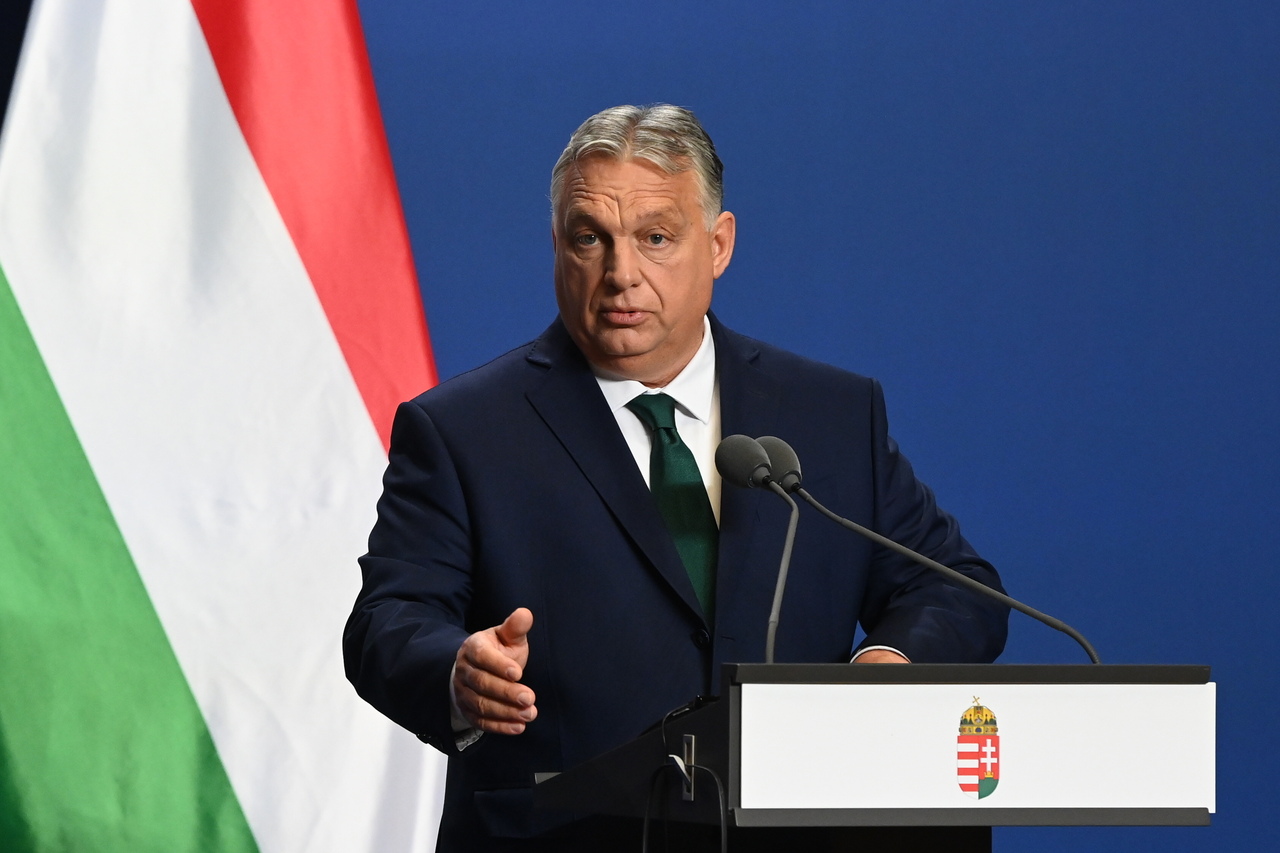
German industry is currently undergoing changes, he said, adding that “the question is whether or not Hungary will have a place in that technological change; and the answer is that yes, it will,” he said. A large part of those developments will be implemented in Hungary, creating thousands of jobs and taking a role in engineering and employee training in the process, Orbán said.
“That’s the first thing I will ensure with the Chancellor,” Orbán said, referring to talks scheduled with Olaf Scholz later on Friday.
Germany’s every chancellor “must give their seal of approval” for Hungarian-German cooperation, Orbán said, adding that the primary goal was to ensure Hungary had a role in German economic progress.
He said the Chancellor was an ally of Hungary in that both countries had an interest in an open economy and in pushing back against “forces in Europe that want the opposite”.
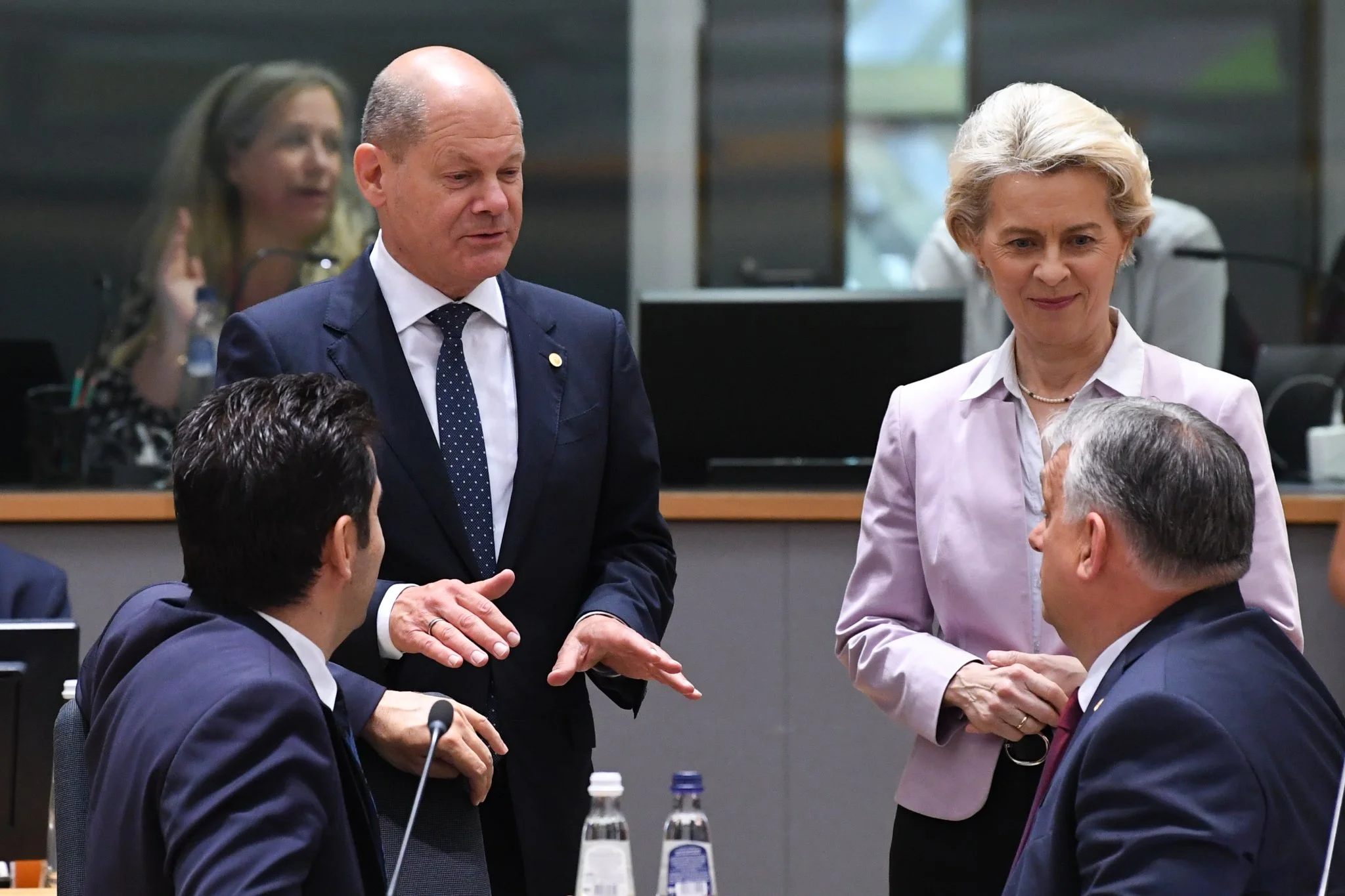
In view of Hungary’s upcoming EU presidency, Orbán said he and Scholz would discuss “great European issues too”, and “the issues Hungary wants to table and how far it wants to take them”. Those issues included Serbia’s EU integration, tax cuts, family subsidies, and improving European competitiveness, he said.
Meanwhile, Orbán said that as soon as the left wing had announced that they had made agreement at an informal EU summit this week, the EPP, “which calls itself right-wing but moves towards the left with every alliance”, joined them, agreeing on a programme “that isn’t good for Hungary and differs from the way Hungarians think.”
“This is a pro-war coalition that has banded together to speed up Europe’s slide into the war,” he said, adding that Germany was undergoing a level of militarisation unprecedented since the second world war.
Another programme of the coalition “is pro-migration; they are the ones implementing the Soros-plan”, he said, adding that American financier George Soros had said in 2015 that one million migrants should be brought into Europe every year, and that he would be happy to bankroll the project.
Orbán warned that Europe’s population was being replaced, with the number of white Christian Europeans dwindling as the number of Muslims was growing radically.
Regarding competitiveness, including issues such as boosting industry, creating more jobs, higher wages and better living standards, the European left-wing coalition “is on the side of tax rises, so it isn’t market-friendly, which isn’t good for the European economy”, he said. The coalition created “is pro-war, pro-migration and anti-economy”, he said.
Orbán said that rather than representing traditional, moderate, conservative and Christian democracy, the EPP was moving leftwards, hence a left-wing majority had formed in Europe.
Orbán said the EPP had won the votes of moderate, right-wing voters in elections over the years but had gone on to form coalitions on the left, and so it was “pushing away” right-wing voters and “stealing” votes on the left, which he called “dishonorable”.
Even though the balance of public opinion had shifted to the right, this was not currently reflected in the power dynamics in Brussels, he said, adding however that “indirect measures” such as forming alliances and agreements on the right would make it “ever stronger”.
Orbán said the last few elections had presented a challenge to right-leaning Europeans, as many were reluctant to vote for the “robust and strengthening” right wing formed by Italian, French and Hungarian parties, among others.
More moderate Christian Democratic voters tended to vote for the EPP, he said.
The EP elections were conducted in nation states, he said, and had brought about a weakening of almost all non-right-wing governments, he added, pointing to the French and Belgian results as examples.
The shift to the right “has happened” but did not lead to a change in power because the EPP “always takes its voters towards left, leading to a left-wing rather than a right-wing majority in Europe”, he said.
Regarding the war in Ukraine, Orbán said the Western world, led by the United States, was trying to defeat Russia without getting directly involved in the conflict by “leaving it to the Ukrainians to fight the war”, once the Russian president, violating all principles of international law, had tried to prevent Ukraine from joining NATO.
The West regarded this as an opportunity to weaken and then defeat Russia, instead of striving to isolate the conflict and curb the fallout of the war, which is the position represented by Hungary, Orbán said, noting that the West wanted to defeat Russia by using Ukrainian soldiers, but this was at the cost of many casualties.
Orbán said the question remained whether Ukraine would become a NATO member, that is whether “there will be a NATO flag or a Russian flag” flying in the Black Sea port of Sevastopol, he said, noting that the Russians did not want to live next door to a country such as Ukraine armed with state-of-the-art NATO weaponry.
Orbán said it was hopeless for Ukraine to win the war as this was exacting a “terrible price”, which was simply not worth it. He added that hundreds of thousands of Russian and Ukrainian soldiers have died so far, and one million children “will soon grow up in the eastern corner of Europe” without a father or whose father had been disabled due to war injuries.
“There will be a generation in a desperate straits, with a standard of living lagging behind that of Europeans for many years in spite of the promised reconstruction,” he added.
Orbán recalled that referendums had been held earlier in Hungary on big political issues such as migration and the issue of gender, providing support for the government.
There was no referendum on the war, but European elections were held, he said. “Throughout the campaign, I said this was about war and peace,” Orbán said, adding that the people had made clear that they did not want Hungary to take part in the war.
“I said the minimum goal that we can achieve is to stop the European train headed for the war, but if we have enough support, I can pull the emergency brake, this train will stop, and we Hungarians will get off. If the lucky stars are in alignment, we can also convince the driver not only to let the Hungarians get off but also to stop the train,” he said.
Orbán said the minimum goal had been achieved, an agreement had been reached with the NATO general secretary that Hungary would not participate in NATO’s Ukraine mission with either money, weapons or soldiers.
“We also talked to the train driver, but could not convince him — he is a strong driver and can only be stopped by Donald Trump,” he said, referring to the upcoming US elections. Meanwhile, the prime minister called Hungary “an “island of peace” in terms of public security, social security and the war, Orbán said, adding that he agreed on this not only with the outgoing NATO general secretary but his successor as well.
At the moment pressure on Hungary to join the war, he said, came not from NATO but from Europe. “This battle must be fought in Brussels.”
Orbán said Manfred Weber, the head of the European People’s party, had only one goal close to his heart: “to do harm to Hungary”.
“In 2019 we prevented him from becoming president of the European Commission,” he said, adding that there were also problems with Ursula von Leyen, who was elected EC president with Hungary’s support, but “she was an apprentice relative to Mr Weber’s hungarophobia”.
“As long as he is there, we can be certain that the European People’s Party is headed by an anti-Hungarian leader,” Orbán said.
He recalled that when Fidesz won the election in 2018, a few days later the Article 7 procedure was launched against Hungary with Manfred Weber’s effective support.
The same thing happened this time, he said: “the pro-peace party” won in Hungary and “the pro-war forces in Brussels immediately hit us with an unprecedented fine,” Orbán said, emphasising the close connection between the migration fine and the issue of war and peace.
He indicated, however, that working groups have been set up to fend this off and find solutions to make those who earn the most from migration and war pay this fine.
Orbán also touched on the issue of migration, citing Germany’s example. “This is a diverse, changed, multicultural world,” he said, where “the migrants arriving here are no longer guests, but, by obtaining citizenship in an expedited procedure, are present in the country by their own right, gradually taking it over.”
He recalled that he had taken a decision in 2015: unless Hungarians demanded that migrants should be allowed in, “we would not let them in, otherwise Hungary would no longer be a Hungarian country. Migration is one of those areas where an error cannot be corrected,” Orbán said.
“I have always advised Hungarians to say no to migration, let us resist the pressure, let us preserve our country as an island of peace,” Orbán said.
Read also:
Featured image: Manfred Weber and Péter Magyar, the leader of the Hungarian opposition


