Subscribe to our social channels to get the latest news about Hungary!


Archaeologists from the Budapest History Museum have uncovered a remarkable medieval cellar beneath Buda Castle, located where the northernmost wing of the royal palace—known as Building A—once stood. The discovery sheds light on 600 years of history and adds another valuable find to the archaeological treasure trove beneath the Castle District.
According to a report by Műemlékem.hu, the excavation at Buda Castle began in 2023 under the commission of Várkapitányság Zrt., when experts discovered a cellar belonging to a 14th–15th century noble residence while dismantling the western extension—added in the 1960s—of the royal palace’s northern wing designed by Alajos Hauszmann. While the ground level has changed significantly due to modern expansions, the underground spaces—mostly natural rock cavities shaped as needed—have preserved secrets of the medieval past.
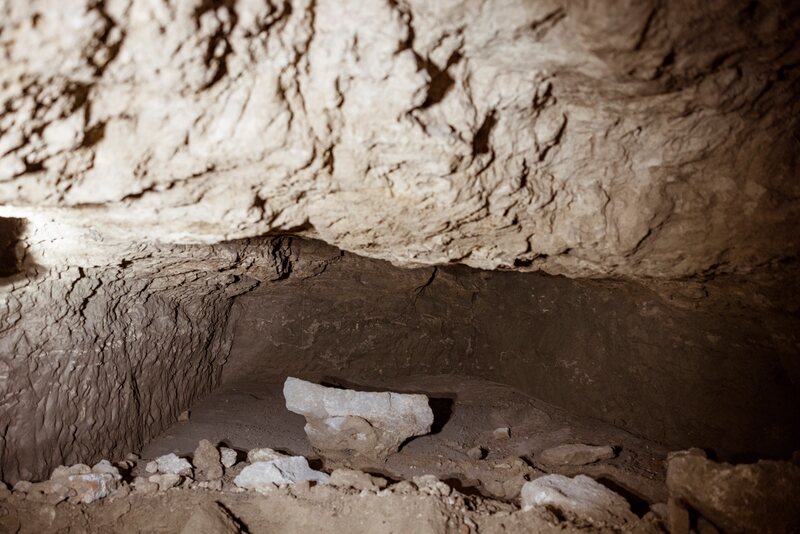
“We discovered a vertical shaft at the site of the former Building A. Using manual tools, winches, and ladders, we removed debris and reached the base, which lies seven meters below the surface,” said Eszter Magyar, lead excavation archaeologist of the Medieval Department at the Budapest History Museum. The L-shaped cellar has one 5-meter-long and 3-meter-wide wing, with an entrance that once opened toward Szent György Street.
So far, archaeologists have unearthed a variety of valuable artifacts, including a finely crafted 15th-century bronze head, blue-and-white tin-glazed stove tiles, and coins from the reigns of Sigismund of Luxembourg, Ladislaus V, and Władysław I. Notable findings also include a silver denar of John Hunyadi, a blade from the time of Sigismund, and ornate window and door frames. Among the animal remains were several parts of a horse skeleton and an intact skull.
The cellar was likely built in the 14th century and served as a storage space for food, thanks to its consistent 11–12°C temperature. During the reign of Sigismund of Luxembourg, the royal palace expanded northward, leading to the demolition of surrounding noble homes. However, the cellars were preserved and gradually filled with household waste and rubble over the centuries. Based on coins found at the site, the cellar remained in use for at least 15 years after Sigismund’s death.
The excavation is ongoing, and experts believe the area still holds many surprises. Just a few plots away, more than fifty years ago, archaeologists discovered the world-famous Buda Castle statue collection. The goal of the archaeological work in the revitalized Buda Castle District is to uncover hidden memories of the past and share the most valuable artifacts with the public through the Hauszmann Story exhibition.
This discovery opens another fascinating chapter in Buda Castle’s medieval history, showing that even the most familiar locations can conceal century-old secrets—bronze heads, coins, and stove tiles—that tell stories of the richness of the past.
Read more stories about Hungarian history on Daily News Hungary!
Read also:
To read or share this article in Hungarian, click here: Helló Magyar


