Subscribe to our social channels to get the latest news about Hungary!


The metro in Budapest is one of the most efficient and reliable ways to get around the Hungarian capital. Serving residents, commuters and the city’s growing number of international visitors, the metro system forms the backbone of Budapest’s public transport network. With four modern lines, easy-to-navigate stations, and a wide variety of tickets available, the metro offers quick connections to major attractions, business districts and residential neighbourhoods. Here is all the key information you need to travel confidently and comfortably.
First opened in 1896, the Millennium Underground Railway (today’s M1 line) is the oldest metro on the European continent and a UNESCO World Heritage Site. Since then, the system has expanded to four lines (M1, M2, M3 and M4) covering significant parts of the city and linking key transport hubs. The metro in Budapest is run by BKK, the city’s official mobility centre, and operates every day from early morning until late evening, with frequent trains during peak hours.

The iconic yellow line runs between Vörösmarty Square and Mexikói Road. It travels just beneath Andrássy Avenue, offering direct access to popular destinations such as the Opera House, Oktogon, Heroes’ Square and City Park. With its vintage carriages and small stations, the M1 remains a favourite among tourists.
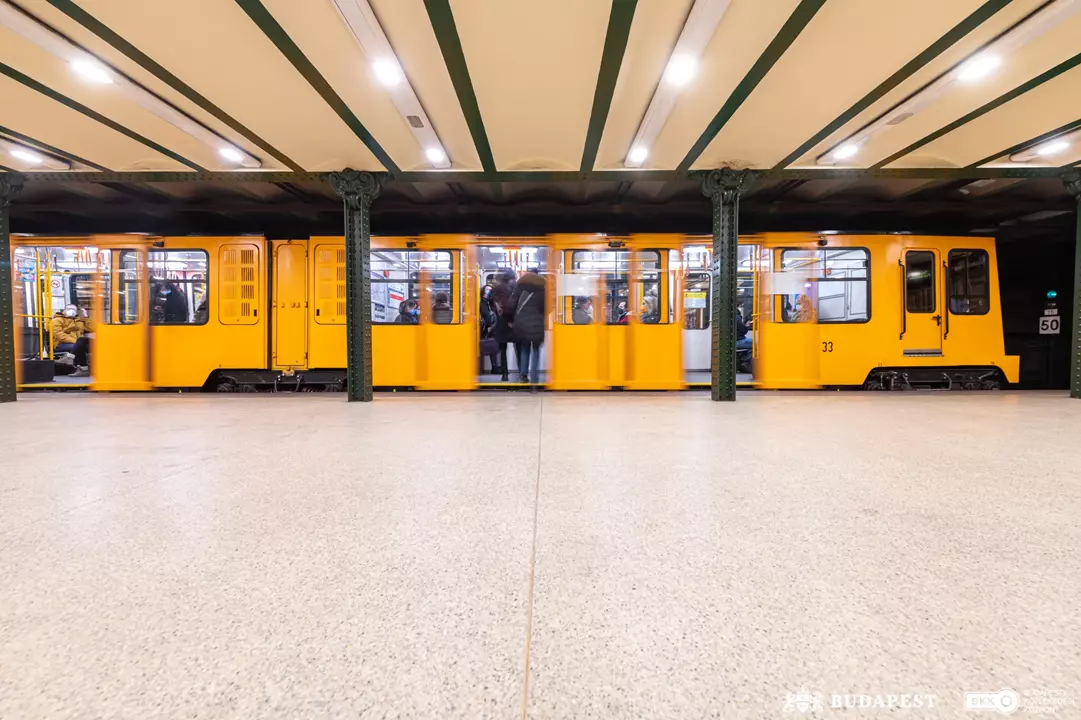
The M2 line connects major train stations Keleti and Déli, running through the city centre via Kossuth Lajos Square, Astoria and Deák Ferenc Square. It is one of the busiest lines in the public transport system, serving both locals and visitors heading to important landmarks such as the Hungarian Parliament.

The longest metro line in Budapest, the M3, runs from Újpest in the north to Kőbánya-Kispest in the south. After a multi-year modernisation programme, all stations are now renovated and fully accessible. The line is especially useful for reaching the airport bus connection at Kőbánya-Kispest.

Completed in 2014, the M4 line features fully automated trains and futuristic stations. It connects Kelenföld railway station in Buda with Keleti railway station in Pest, providing fast access between the two sides of the city.

Budapest offers a flexible range of tickets for anyone using the metro system. Single tickets can be purchased from vending machines at all stations, while visitors staying longer may prefer 24-hour, 72-hour or weekly travel cards. The Budapest Card (a city pass offering unlimited public transport use and discounts at attractions) is another convenient option for tourists.
For the best experience, travellers should download the BudapestGO app, where they can purchase tickets, check live departure times and access real-time information.

The metro in Budapest is designed to be safe, clean and easy to navigate. Most major stations have escalators, lifts and clear English-language signage. During peak hours, trains run every 2–4 minutes, ensuring efficient transport even on the busiest days.
Here are a few tips for smooth travel:

For both locals and visitors, the metro in Budapest offers unmatched convenience. Its fast journey times, well-connected stations, and affordable tickets make it one of the most reliable forms of public transport in the city. Whether you are heading to museums, markets, business meetings or nightlife districts, the metro helps you reach your destination quickly and comfortably.
If you want to explore Budapest like a local, start by hopping on the metro: the easiest and most efficient transport choice in Hungary’s capital.

 ZH
ZH IT
IT DE
DE HR
HR NL
NL FR
FR JA
JA RO
RO RU
RU ES
ES TR
TR

