Subscribe to our social channels to get the latest news about Hungary!


When the Hungarian forint began losing value in 2022, the Hungarian National Bank (MNB) intervened by significantly raising the base interest rate to protect the national currency. Since then, the Bank has been gradually lowering the base rate to help revive the economy’s struggling engine. However, global developments may once again necessitate action to defend the forint, and it appears the Bank is ready to do so.
According to portfolio.hu, the Hungarian National Bank may adopt a more cautious approach to its next base rate decision, expected in October. This caution is partly due to global uncertainties, such as the upcoming US presidential election and ongoing geopolitical conflicts.
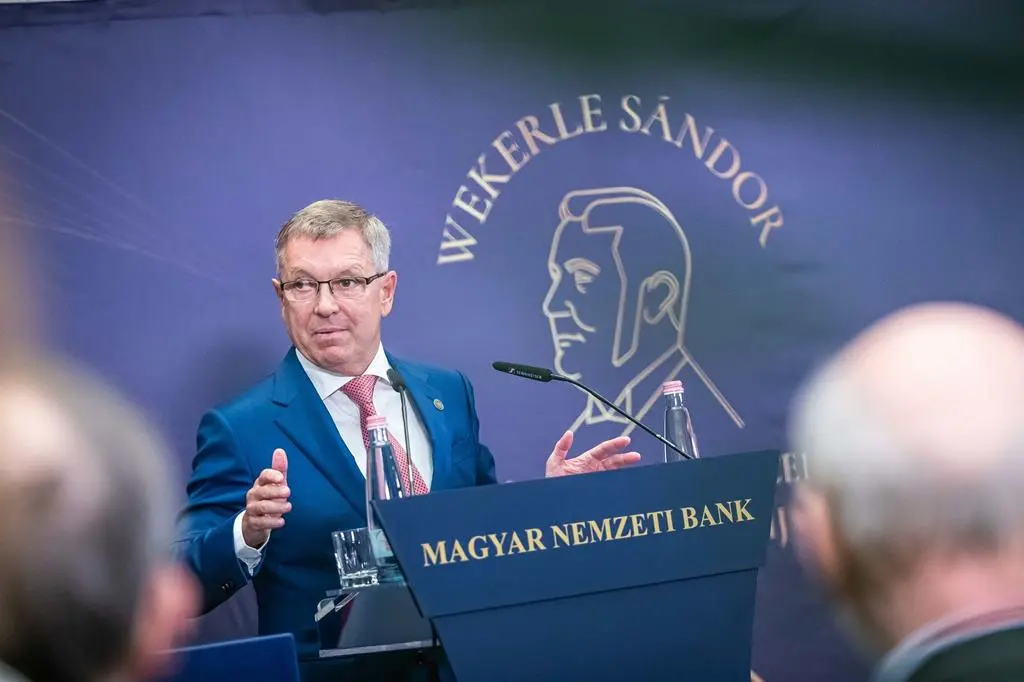
Barnabás Virág, a Deputy Governor of the Hungarian National Bank, elaborated on this during a presentation for investors. He explained that the Bank’s capacity for manoeuvre with regard to lowering the base rate in October is becoming more limited. Key factors influencing the Bank’s decision include inflation in Hungary, regional economic performance, and the global risk environment.
The situation in the Middle East has escalated, China has unveiled measures to stimulate its economy, and the United States has reported stronger-than-expected economic data. These factors have increased the risk of higher inflation, while geopolitical uncertainties have already driven the forint above the 400/EUR level. As a result, the Bank’s more cautious stance is understandable.
As Hungary moves into the campaign period for the 2026 general election, government officials, including Prime Minister Viktor Orbán, have been emphasising the need for economic growth, rising wages, and increased investment. This would require an injection of capital into the economy. However, despite foreign investment, domestic consumption has not risen as the government had anticipated.

Due to the high base interest rate, many Hungarians have opted to keep their savings in banks or even abroad. While the government would like to reduce interest rates to stimulate consumption and boost growth, lowering rates too far could make the forint even more volatile. With numerous global and regional uncertainties at play, the exchange rate could easily rise, leading to soaring inflation—a vicious cycle that would be difficult to break.
Analysts consulted by portfolio.hu believe that inflation continued to decline in September, with the median inflation rate likely to be around 3%. Fresh data on the subject is expected to be released tomorrow. If these predictions are correct, it would mark the first time in 3.5 years that inflation in Hungary has fallen below 3%. The last time inflation was below this level was in January 2021, indicating that Hungary’s inflationary pressures began to mount well before the war in Ukraine.
In December, analysts expect the Hungarian Central Statistical Office (KSH) to report a year-on-year inflation rate of 4.5%, lower than the previously forecast 5%. However, portfolio.hu noted that inflation in December 2025 may end up higher than currently expected. For 2024, yearly inflation is projected to be around 3.8%.
National Bank of Hungary (NBH) rate-setters agreed that continuing disinflation, a looser external monetary policy environment, the country’s improved risk perception, and a gradual improvement in confidence among economic players allowed a “careful” reduction in the base rate at a policy meeting in September, but still argued “in general” for maintaining a restrictive policy stance, the minutes from the meeting released on Wednesday show. The NBH’s Monetary Council voted unanimously at the meeting on September 24 to cut the base rate by 25bp to 6.50pc, after weighing an option to keep the base rate on hold, too.
“The Council considered these options primarily based on the outlook for inflation, economic agents’ precaution and changes in the external monetary policy and risk environment,” reaching a consensus that disinflation was expected to continue over the monetary policy horizon, while pointing to a “somewhat looser” external monetary policy environment, a “slight” improvement in the country’s risk perception and the gradual recovery of confidence among economic agents, according to the minutes. “In the Council’s assessment, all these factors allowed a careful reduction in interest rates. However, members in general argued for maintaining a restrictive monetary policy stance and preserving financial market stability,” the minutes show.
Read also:


