Subscribe to our social channels to get the latest news about Hungary!


As érdekesvilág.hu reports, new HUF 2,000 and 5,000 banknotes will start circulating soon; the bills became legitimate currency on the 15th November but they will appear in the cash flow only from the 1st March in 2017, to give the operators of the payment automats and other cash machines enough time to get ready – said Ferenc Gerhardt, vice-president of the The National Bank of Hungary ( MNB).
The current 2,000 and 5,000 banknotes will stay in circulation until the 31th July in 2017, therefore only the new banknotes will be accepted for payment from the 1st August. Loan-offices and posts offices change the old banknotes to new ones, free of charge, for three years, until the 31th July 2020, the Central Bank for 20 years, until the 31th July 2037.

The graphical characteristics of the banknotes did not change, the renewal serves as prevention against falsification. The short deadline for the changes has been successful so far, the new HUF 10,000 banknotes transact 82% of the turnover, and it is more than 75% in the case of the new HUF 20,000 banknotes – said the vice-president.
Tibor Pataki cash logistics president noted that the renewal of the series started in 2014, the new HUF 10,000 banknotes got into the cash flow in December in 2014, the HUF 20,000 ones in December in 2015. He emphasised that the National Bank of Hungary terminates the old HUF 20,000 banknotes on the 31th December in 2016 but the commercial banks and the post offices change them to new ones for free for another three years, and the Central Bank for 20 years.
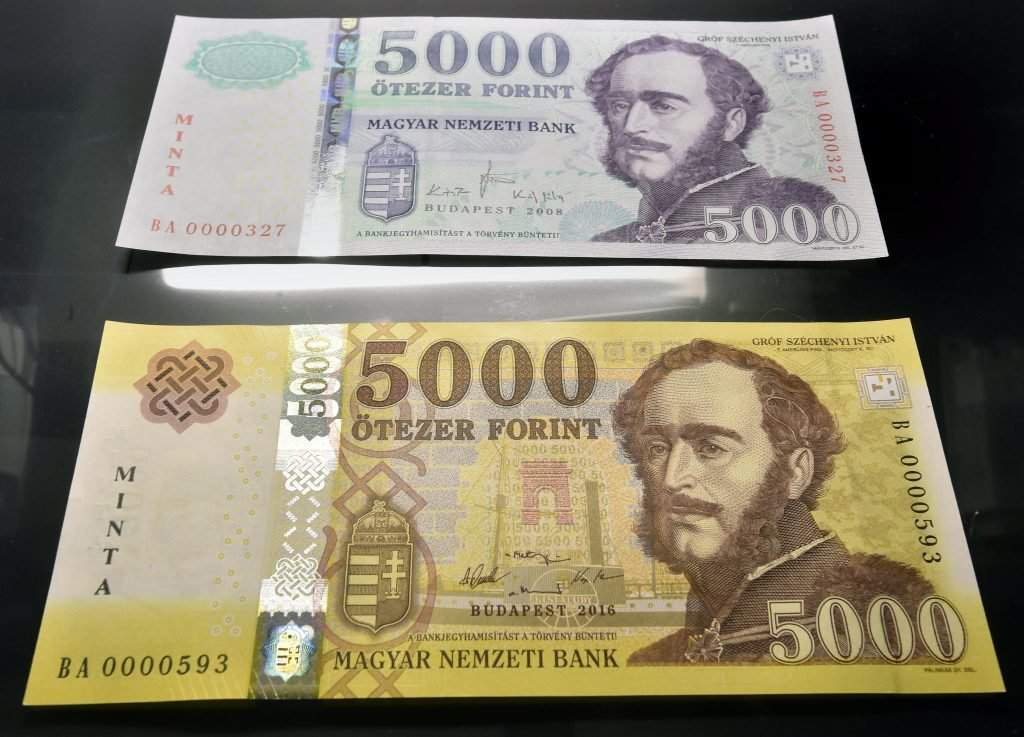
While designing it was taken into account to make it possible for the public and the official cash managements to check the banknotes; former, without any devices, and the latter with devices, such as UV light. It was also important to make it easy for the automats to identify them. He said that MNB regularly checks the cash flow needs and still sees no reason for changing the HUF 500 banknote to coin. It was also mentioned that banknotes falsification shows fluctuation, it is in a state of grace right now. The number of fake banknotes has been over 2,000 for two or three years, but there were years when more than 10,000 fake banknotes were found.
Photo: MTI/Máthé Zoltán
Copy editor: bm
Source: érdekesvilág.hu


