Subscribe to our social channels to get the latest news about Hungary!


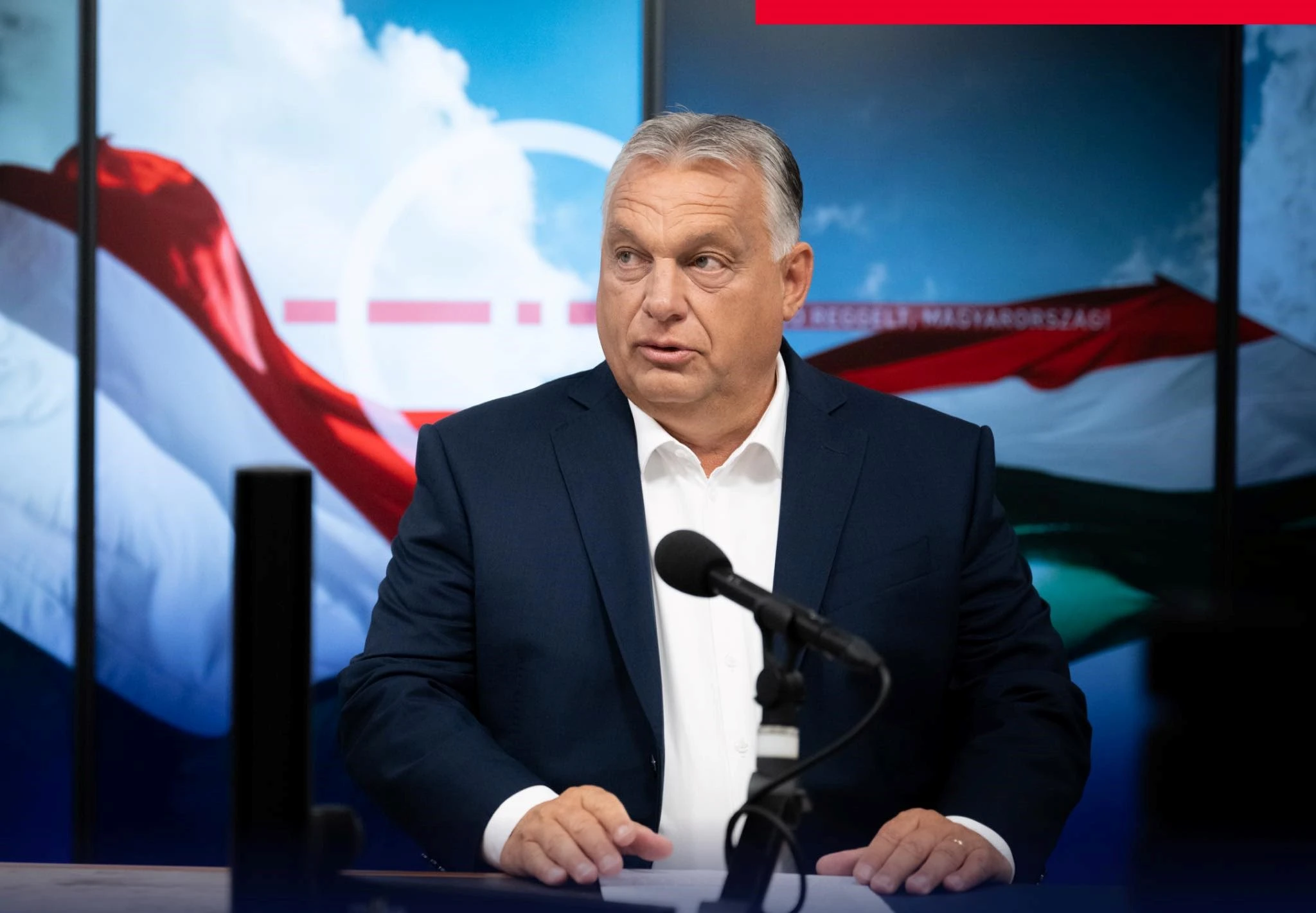
While 2023 was the year of breaking down inflation, 2024 will be dedicated to restarting economic growth, Prime Minister Viktor Orbán said in an interview with public broadcaster Kossuth Radio on Friday.
Economic growth thrives amid lower interests on loans, he said. The third and fourth quarters of 2023 will see a “beautiful prologue of that”, but the process is expected to gather real momentum next year, he said. At the same time, keeping jobs and ensuring that every Hungarian can work in Hungary comes before all other considerations, including curbing inflation and economic growth, he said. “We need a work-based society,” he said. Hungary now has 4.8 million jobholders, one million more than in 2010, he said. August could see a sea-change in the real value of wages as raises are expected to reach or even surpass inflation, which is forecast to be at 16 percent, he said.
“We are working tirelessly” to bring down inflation and to raise wages, so that the latter can catch up with growing prices soon after August, he said. The two will “hopefully” be close to each other by December, he said. “We will have a tough autumn,” he said. Orbán said that when Fidesz took over the government in 2010, it embarked in a two-year “damage control period”. The economy was stable by 2012, and wages were growing at a faster clip than inflation every quarter, he said. “We did not see real wages fall for more than a decade,” he added. The first half of 2023 was the first time that trend broke, he said. “That upended family budgets.” The government is now working for the second half of the year to offset the damage of the first half, he said.
Read also:
At the same time, employees and employers must agree on the degree of wage hikes, and the government can but assist those negotiations, he said. Unwise measures could cause rising unemployment, he said. Price growth so far has been, at least in part, due to skyrocketing energy prices and European Union sanctions on Russia, Orbánsaid. At the same time, “some of the price raises seem unreasonable, especially in multinational companies,” he said. Multinational companies have kept prices much higher than fair profit would have warranted, he said. “That’s why I call them speculants.”
The government will have to show strength to prevent that from happening, he said. Hungary’s competition office will remain a constant presence in trade, and will wield the tools it has to curb inflation, he said. Regarding the utility price cuts, Orbán said that the measure had left 1,078 billion forints (EUR 2.8bn) with Hungarian families between January-July this year. Every Hungarian family is left with 181,000 forints monthly thanks to the cuts to their energy bills, he said. The European Union sees the measure as “too much, they are of the opinion that Hungarian families should pay more and they want to force that on us,” he said.
Hungarian energy prices are among the lowest in the EU, despite the fact that Hungary has no oil and gas fields, he said. EU leaders are facing scrutiny at home “for making their citizens pay more than Hungarians do . so they attack Hungary,” he said.
“I understand their problem, but I can’t take that into consideration: we must protect the Hungarian utility price caps from Brussels,” he said.
Energy security is key to “any sensible discussion on energy and utility prices”, Orbán said. “If there is no energy, the country, the economy and families grind to a halt.”
Energy security comes before any other consideration, and Peter Szijjarto, the minister of foreign affairs and trade, “has so far done an excellent job” of procuring new resources and conducting international negotiations, he said.
Hungary has achieved an exemption from the EU sanctions hitting Russia, and will have to maintain that exemption for years, he said. The Ukrainians “have thrown in the towel”, and gas deliveries have dwindled through the Druzhba pipeline, he said. “And now they’re saying they will stop altogether in 2024.”
The NordStream pipeline was blown up last year, stopping the deliveries of large quantities of Russian gas, he added. Hungary, which continues to import gas, needed to find an alternative route in the south, he said. “Hence the diplomatic offensive” of the last few days, using the opportunity of the World Athletics Championships, he said.
Türkiye is expected to play a key role in Hungary’s energy supplies in the future, Orbán said, adding that the “tap is in the hands of Türkiye and Turkish President Recep Tayyip Erdogan”. All of Hungary’s gas imports go through Türkiye and “if he turns it off, there will be no gas, but if it is open, there will be gas”, Orbán said. As a result, it is vital to strike a deal with Türkiye and “we must be on good terms, and work together in other areas too, if we want to get favourable treatment in energy affairs,” he added.
Energy arrives in Türkiye partly through Azerbaijan, the Azeri president has visited Hungary and Hungary also buys gas from them, Orbán said. He also said that some of the greatest gas reserves in the world are in Turkmenistan and they want to export it to Europe, which “comes in handy for us”. A programme is being prepared on the production of large quantities of electricity in Azerbaijan, which would be brought to Hungary through Georgia and Romania, he said. Cheap electricity could be imported thanks to the cooperation of four countries, he said.
Commenting on talks with Qatar, he said the aim was to enable all European countries to purchase gas transported by boat. He added that he had been involved in three rounds of talks for this purpose. Orbán said he had held consultations with the Emir during the soccer world championships and during the Emir’s recent visit in Hungary, a deal was struck to bring gas from Qatar by boat to Hungary through Croatia.
He said that a country the size of Hungary “cannot afford to be dumb” because “its strength comes from being clever”. Those that look ahead and make plans in good time, will be one step ahead the rest, he added. He said the weight of central Asia was currently growing and the region will most likely play an important role in the next decade. Efforts have been made for over a decade to develop good relations built on common origins and a shared history with these countries and these are now paying off, he added. “We are ahead of others by several years or even an entire decade,” he said.
Orbán also said that people who want to understand the world can participate in the discourse and this will help everyone see the opportunities that Hungary faces. If the opposition helps create quality debates, this could work to the benefit of the country as a whole, he added. He also said that the stadium hosting the World Athletics Championships was “fantastic and friendly”, with audiences and the competitors alike experiencing an atmosphere of fairness where “we are happy to see others’ success and certainly also happy about our own”. The world championships have proven that sports can make very beneficial contributions to people’s quality of life, not only in terms of health but also for community building and creating shared experiences.
The World Athletics Championships and the arena hosting it are among the best in the world, Orbán said. Athletes will spread the good reputation of Hungary worldwide, he said. “Foreigners are now saying we are good hosts, that this is a decent country where everyone is welcome, a friendly country, and . one where the Christian roots of love can still be found,” he said.
The arenas built for sports also serve as venues for other kinds of evens, he said. Puskas Arena saw more concerts this year than football matches, so “the whining about money being squandered and about this being only about sports and the personal hobby of a few people, including the prime minister, is just not true,” he said. Sports venues are community spaces serving all “well-meaning Hungarians” by hosting concerts, conferences and “other huge events”, he said. “The cultural products of the western world don’t stop at Vienna any more, they come to Budapest too,” he added.


His promises are empty. Just ask the teachers and medical staff here.
Went out last night to a bar in Budapest. A young woman asked my wife where she was from and my wife said she was Hungarian. The immediate response of the young woman in Hungarian was that the country has gone down the toilet. Few people are going to buy Orban’s fairy tales anymore and young people don’t see a future for themselves. The best for anyone is to leave Hungary to live in the West while Orban takes Hungary to the east to live a a very grubby existence. People are now saying that workers in the hospitality industry are increasingly surly. The friendliness has disappeared and has been replaced with cheating of customers where possible to squeeze out a few bucks so that they can buy what things they can at grossly inflated prices in Orbanistan.