Subscribe to our social channels to get the latest news about Hungary!


Incredible legends have sprung up around Louis II, Hungary’s last Jagiellonian king, who was born prematurely and died at just 20 years old after drowning in the Csele creek while fleeing the Battle of Mohács. Historians have written that the infant Louis, said to have been born without skin, was placed inside freshly slaughtered pigs—used as natural incubators—to help him survive the critical early weeks of life.
Of course, being born without skin is biologically impossible. However, the less developed a premature infant is, the more fragile its skin appears. In those times, with the limited medical knowledge available, such a condition could easily be described as “skinless.” Hungarian history is also known for attributing grotesque physical traits to less favoured historical figures—traits which occasionally may have some basis in reality.
In Louis’s case, that stigma was tied to the loss at Mohács. Not that the 20-year-old king was personally to blame. Born in 1506, Louis was later saddled—mostly by 19th- and 20th-century historians—with the burden of causing the collapse of Saint Stephen’s state. According to this narrative, that downfall, along with quarrelsome Hungarian lords, led to national decline, the rise of ethnic tensions, the Treaty of Trianon, and virtually every other calamity faced by the Hungarian nation.
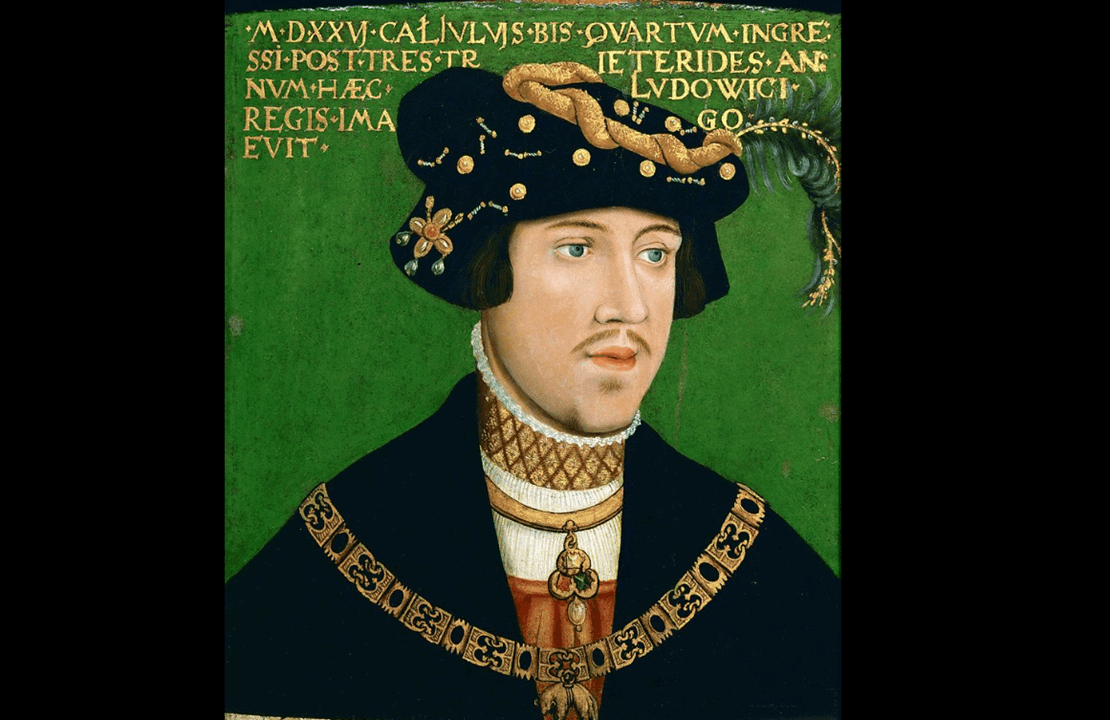
Yet the Hungary of Louis II was essentially the same country once ruled by the great King Matthias. His father, Vladislaus II, was a capable monarch who successfully defended the Bohemian crown against Matthias, took the Hungarian throne through cunning politics, and presided over a flourishing period of Renaissance art and culture (see THIS article for more). In fact, he was the first Hungarian king since Charles I (1308–1342) to provide a legitimate male heir, making 10-year-old Louis’s succession in 1516 unquestioned.
Neither Louis nor the Hungarian nobles can be blamed for the fact that his reign lasted just a decade. At the southern borders, the Ottoman Empire had already defeated all other Christian powers in the Balkans and grown into a superpower in terms of territory, population, and economy. It was only a matter of time before their overwhelming military might challenged Hungary. The Jagiellons were chosen precisely in the hope that Hungary, Bohemia, and Poland together could stem the Ottoman tide.
Bishop and chronicler István Brodarics, who fought alongside him at Mohács, wrote of Louis: “He was a handsome young man, nobler in build than his peers, and so distinguished by unmatched kindness and a natural inclination for virtue that, had he lived to maturity, we could surely have called him our best and most excellent ruler. A gentle soul, not at all brutal. He showed an extraordinary eagerness for truth and honour, and leaned toward good of his own accord. Moreover, he was diligent, honest, and steadfast in arms training, horseback riding, hunting, and other such youthful, knightly pursuits—and a trustworthy keeper of secrets.”
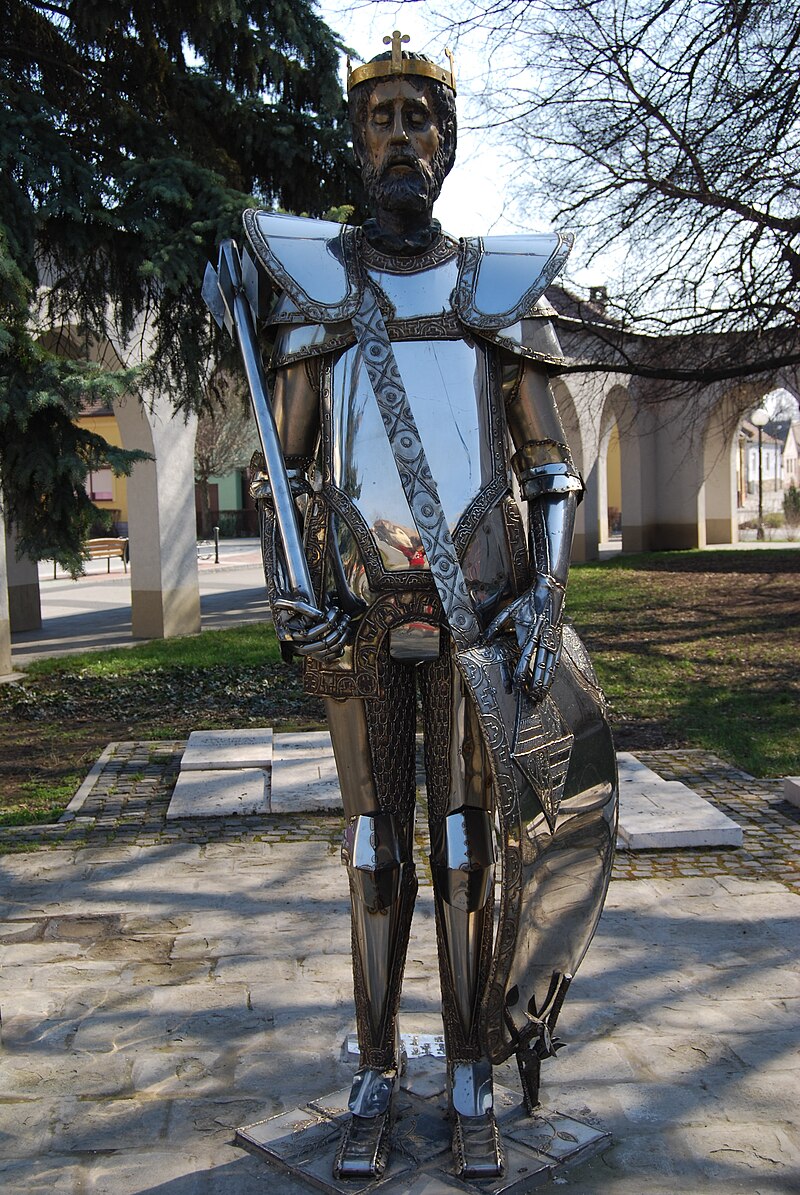
Louis’s birth was eagerly anticipated. By this point, King Vladislaus II had already suffered at least one stroke and had only a daughter, the future Anna Jagiellon. The premature birth was terrifying, and Louis’s mother, Anne of Foix-Candale, died soon afterwards from childbed fever.
Keeping the frail infant alive quickly became the court’s top priority. According to Dr. Lajos Groák, who cites Katona István’s 32,000-page “Historia critica regum Hungariae,” an account by Giovanni Michele Bruto—chronicler to Transylvanian Prince Stephen Báthory—claimed Louis was kept alive in a so-called pig incubator. Telex Észkombájn reports:
“After prolonged debate, doctors placed the baby inside a pig split along the spine and gutted (in sue media per spinam secta atque exinterata) while the animal’s warmth remained. He was then transferred into another freshly slaughtered pig, and then another, until the bleeding subsided and the fragile membrane gradually began to heal, and the skin began developing—all this according to the record.”
Groák’s 1997 article notes that the tale includes several implausible elements and would’ve been an expensive method of incubation. However, he argues that such measures might have been taken to save a royal heir and that pig incubators must have been used at some point, since it’s unlikely chroniclers would invent such a story. Still, historian Szabolcs Varga casts doubt on the tale’s credibility.
To read or share this article in Hungarian, click here: Helló Magyar


