


Hungarian archaeology student uncovers rare bronze figurines at Roman-Era site

Change language:
A major archaeological discovery was reported during July excavations at the ancient site of Brigetio.
In Komárom, among the remnants of a Roman border defense camp, first-year archaeology student Laura Zentai uncovered three unusual bronze figurines. The artifacts, estimated to be over 2,000 years old, likely served as decorative elements on a container, possibly a cistern or other storage vessel.
According to 24.hu, Brigetio was a key Roman military settlement in the province of Pannonia from the late 1st century. Excavations have been ongoing at the site for decades, with participation from Hungarian university students. This summer marked the beginning of fieldwork for Zentai, a student from Mosonmagyaróvár, and she has already contributed significantly with her findings.
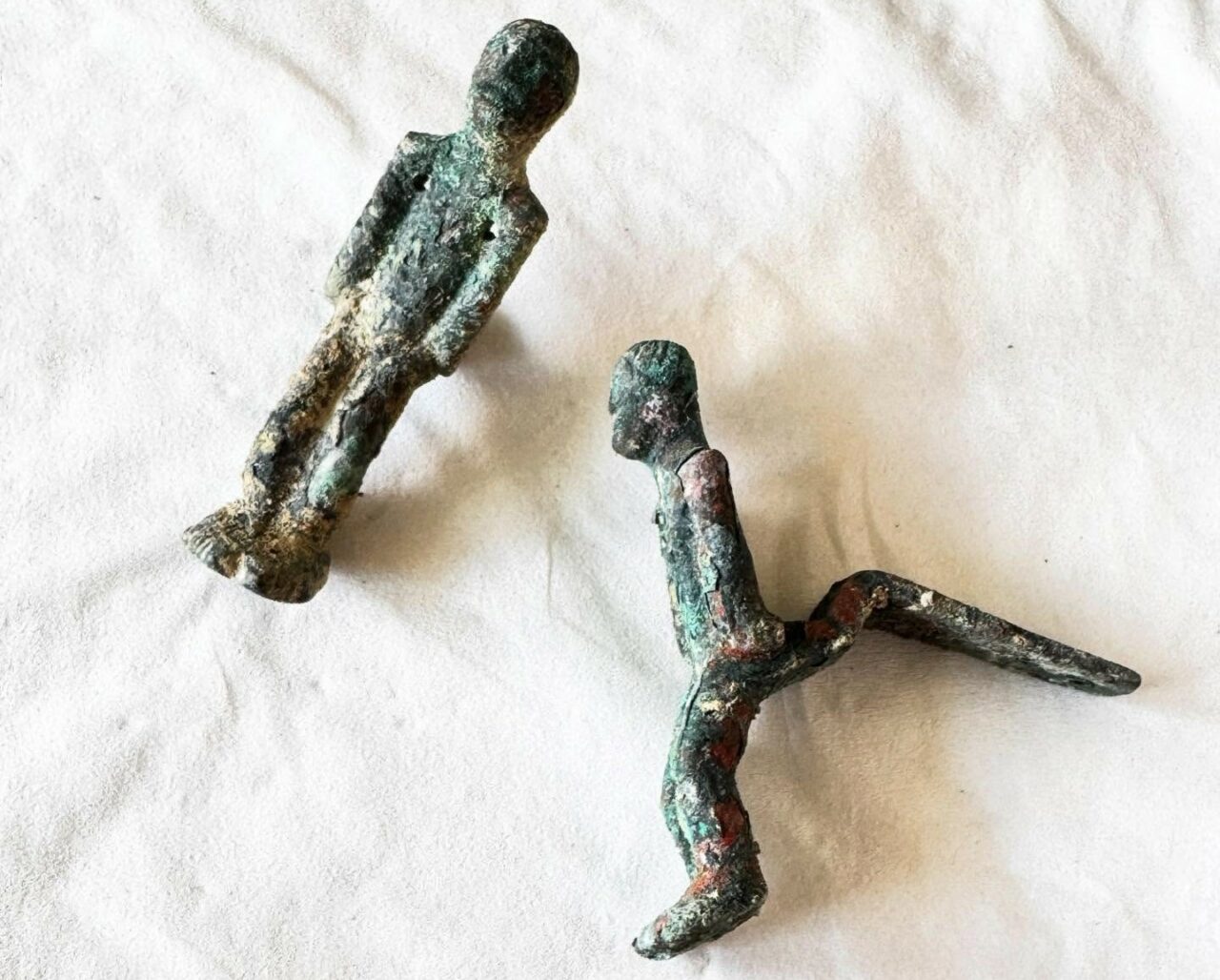
One of the miniature bronze figures depicts a small human form. She later uncovered two more figurines, one of which was fragmentary. The artifacts were found in the ruins of a long-destroyed building, and experts consider these to be exceptionally rare finds.
Based on their size and intricate craftsmanship, these bronze ornaments were not purely decorative; they likely served a functional role—perhaps stabilising the base of a cistern or storage container, as explained in an article by Kemma.hu. Similar discoveries are scarce in Hungary, adding to the significance of this find for understanding the structure and purpose of the Roman defensive camp.