Subscribe to our social channels to get the latest news about Hungary!


After the Hungarian revolutionary army defeated the Habsburg Empire in their spring offensive in 1849, it seemed that everything could be achieved that the March 1848 revolution wanted; independence, constitutional order, liberal reforms in the economy, freedom of thoughts and press. However, the day the Hungarian troops recaptured Buda castle marked the Habsburg emperor, Franz Joseph’s and the Russian tsar, Nicholas I’s, agreement to crush Hungary.
Russian troops took part in the fight for Transylvania before, but Hungarians defeated them. Therefore, “the gendarme of Europe” decided to send an army big enough by itself to destroy the Hungarian army.
But why did the Habsburgs need foreign intervention? How could an undeveloped, poor and unorganised country like Hungary defeat such great power?
The first part of the 19th century in Hungary was the era of reforms. Magnates like István Széchenyi or Miklós Wesselényi realised that the country was poor and underdeveloped. They believed that Hungary must catch up with industrialised Great Britain and France. Otherwise, the country would remain a periphery, a semi-colony of the modern world. Some nobles believed that they needed the Habsburg’s support for the reforms. Others argued that reforms should be introduced even if the Habsburgs oppose them.
Read also: Creative actions in Hungary to show solidarity with Ukraine
Since the Vienna court was conservative, it was difficult to convince them about anything. Thus, the reform process was slow.

The 1848 revolutions created an opportunity to accelerate the establishment of a modern, civic Hungary. After learning about the revolution in Vienna, a revolution broke out in Pest on 15th March. People led by world-famous Hungarian poet Sándor Petőfi, Mór Jókai, Pál Vasvári and others, wanted autonomous state, freedom of thought, press, and liberal economic reforms.
It seemed they won. The first parliament and government accountable for it formed between March and July with the authorisation of the emperor.
However, the Habsburgs only wanted time to reorganise. After they crushed all the other revolutions in the empire, they turned against Hungary. Shockingly for the Vienna court, they suffered several defeats even though they stirred Romanians, Serbians, Croats against the Hungarian government. The Hungarian revolutionary army defeated the Habsburg Empire in their glorious spring offensive in 1849. Moreover, in April, the Hungarian parliament dethroned the Habsburgs.
But nobody supported an independent Hungary in the region despite its victories. The German revolution was crushed, Great Britain and France greeted Lajos Kossuth and Hungary, but thought it important that the Habsburg Empire remain intact in Central Europe. Therefore, no foreign powers sent help to Pest.
On the other hand, the Habsburgs realised they could not defeat Hungary alone.
Therefore, Franz Joseph asked Russian tsar Nicholas I, “the gendarme of Europe”, for help.
The Russians knew that the Hungarians would do everything in their power to save what they achieved. In late 1848, early 1849, Polish general Joseph Bem defeated several Russian armies in Transylvania. Thus, Nicholas decided to send an army capable even by itself to crush Hungary.
As a result, 200,000 soldiers attacked Hungary in 1849 July from the northeast.
That was the same size as Putin’s invasion force: BBC reported on 23rd February that the “new tsar”, Vladimir Putin, gathered 190,000 soldiers close to Ukraine’s borders. If we accept Ukrainian and American reports, almost 100% of that army is already in Ukraine.
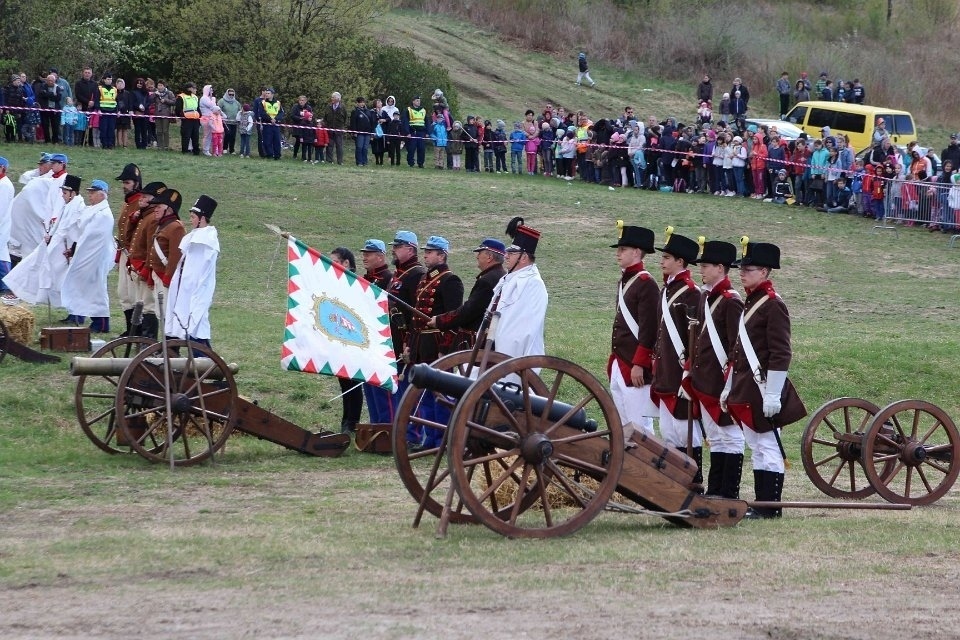
Turning back to 1849, the Habsburgs faced a similarly big army as their own. Based on military historian Gábor Bóna’s calculations, the Hungarian Army reached 170,000 soldiers on July 1849. Artúr Görgei, the leader of the Hungarian Defence Forces, wanted to baulk the Habsburg army to unite with the Russians. Therefore, he attacked Habsburg general Haynau but suffered defeat. As a result, Lajos Kossuth modified the plan and ordered a withdrawal to Szeged.
Despite some minor victories against the Russians, for example, in Tura, the Hungarian army lost most of its strength and supplies during their long march back.
Military experts said that Kossuth’s decision was catastrophic since Görgei could have defeated Haynau and the Habsburg army around the modern, impregnable fortress of Komárom.
Kossuth fled the country in August and made Görgei dictator. Following Bem’s defeat near Temesvár and because of the lack of supplies, he decided to surrender to the Russians. The remnants of the Hungarian army put down their weapons near Világos.
Interestingly, the tsar asked Franz Joseph for mercy, but Haynau wanted to set an example.
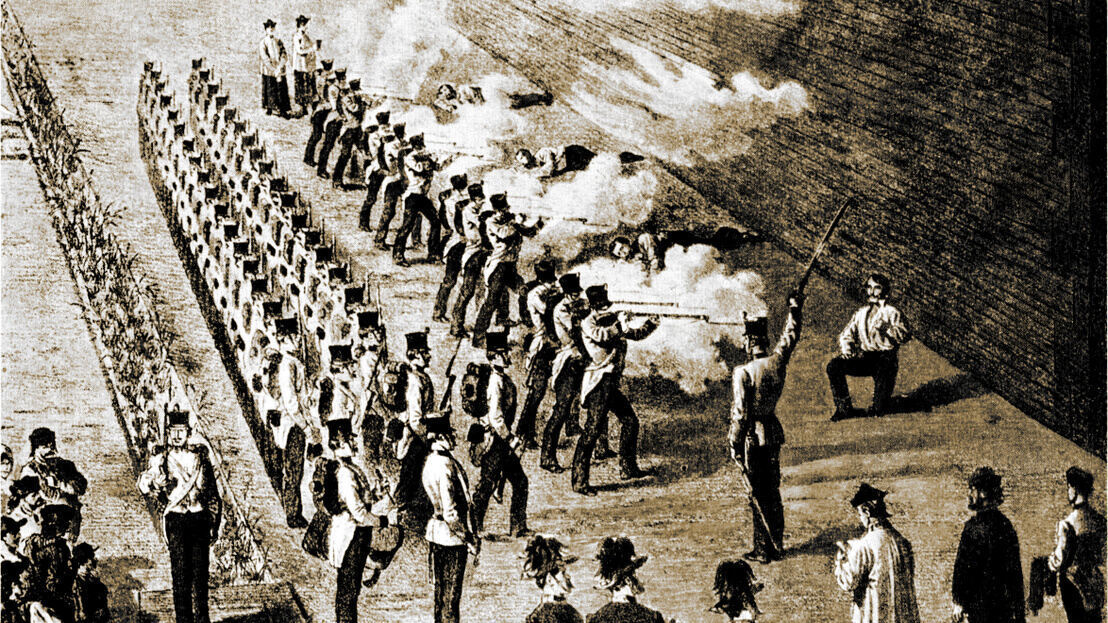
They spared only Görgei’s life because the Russians did not let the Habsburgs execute him. But Nicholas I could not save 13 generals and Lajos Batthány, the first Hungarian PM, all were executed on 6th October 1849. Other military courts condemned 500 people to death and executed 110 of them. Thousands fled, and military rule was introduced in Hungary that kept Hungary in oppression until 1867.


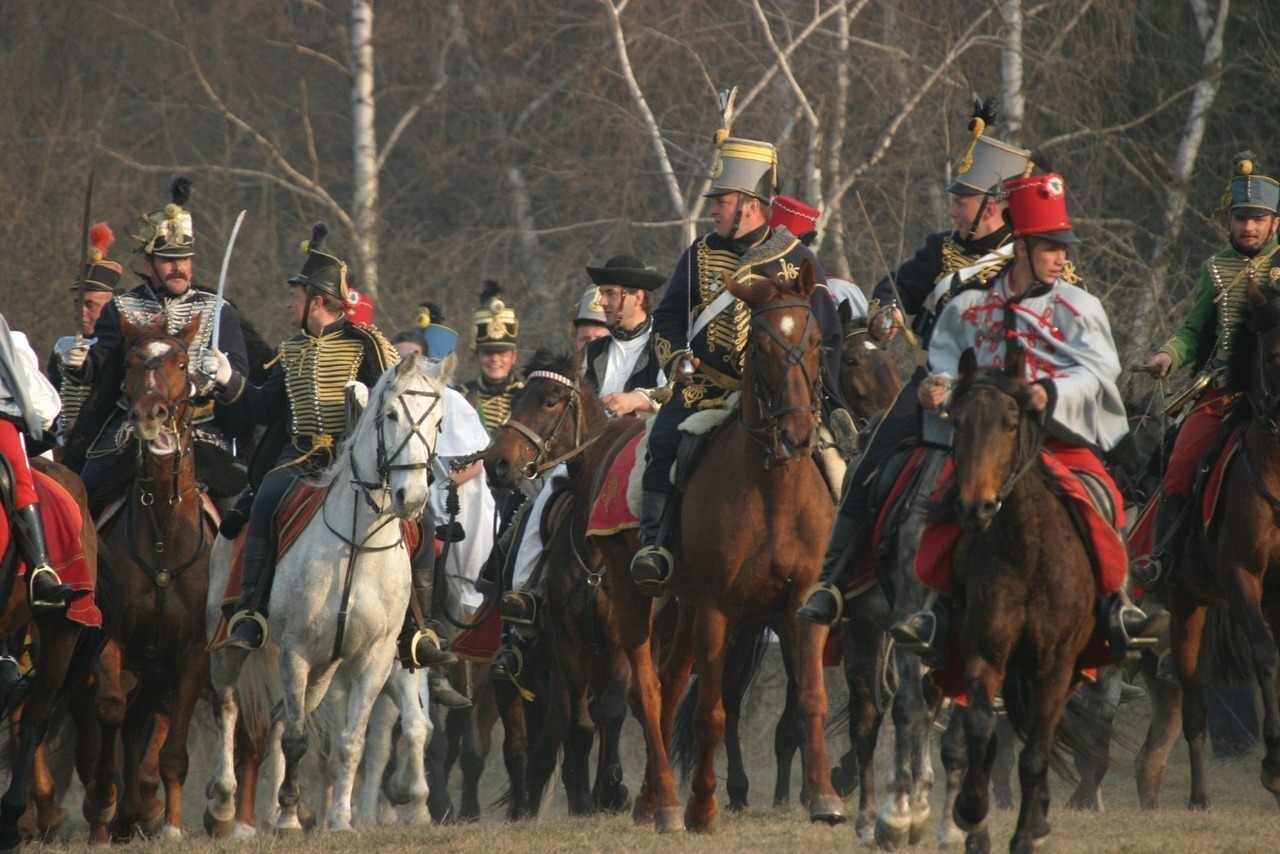
They should have grabbed the tyrant, Franz Joseph, on his way to Russia.