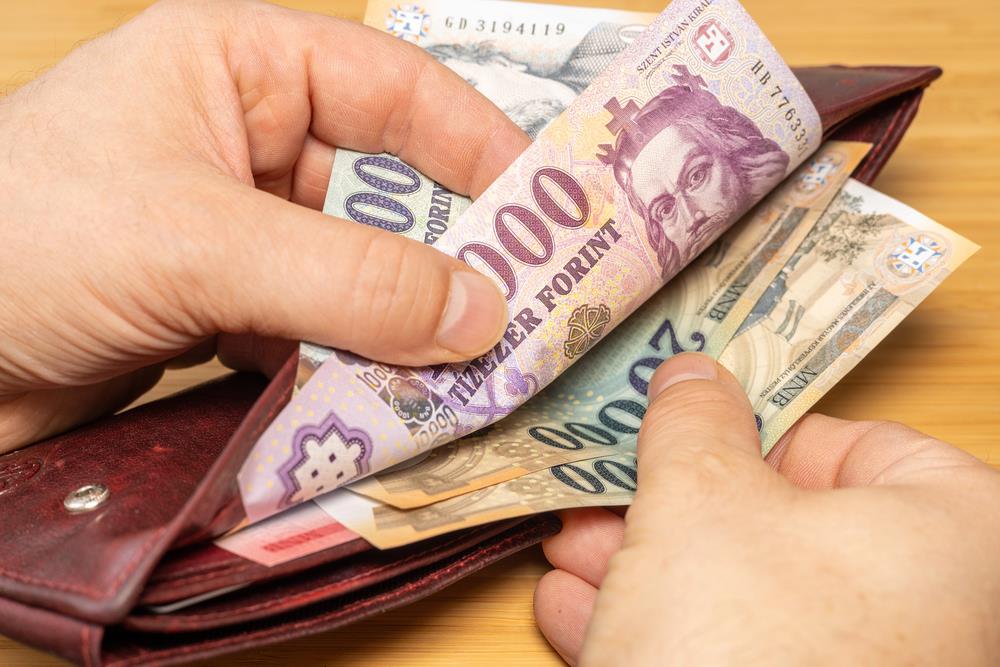
Why Hungarians feel poorer than their neighbours, despite rising wages

Change language:
Hungarians are less satisfied with their financial situation compared to the European Union average, according to fresh Eurostat data on income and living conditions (EU-SILC). The figures highlight wide disparities in how Europeans perceive their financial well-being, with Northern and Western Europe leading in satisfaction, and Southeast Europe, including Hungary, lagging behind.
Hungary’s standing in Europe
In the survey, conducted on a scale from 0 (not at all satisfied) to 10 (completely satisfied), the EU average stood at 6.6 points in 2022, according to Euronews. Hungary, however, scored 6.1 points, placing it below both the European average and its Visegrád neighbours. Czechs reported higher satisfaction at 6.7, while Slovaks and Poles also scored above Hungary.
This places Hungarians closer to Southern and Southeastern European countries such as Greece (5.3) and Croatia (6.2), rather than Western counterparts like Austria (7.3) or Germany (6.8).
Nordic countries top the list, Balkans at the bottom
At the top of the ranking are the Netherlands and Finland, both at 7.6, followed by Switzerland (7.5), Norway and Sweden (7.4). These countries not only enjoy higher incomes but also benefit from stronger welfare systems and a high level of trust in institutions.
At the other end, Bulgaria registered the lowest score at 4.6, followed by EU candidate countries such as Turkey (4.7), Albania (4.8), Montenegro (4.9), North Macedonia (5.1), and Serbia (5.2). Hungary is far from this group but still lags significantly behind Western Europe.
Why are Hungarians less satisfied?
While Eurostat data confirms that higher net earnings generally correlate with higher satisfaction, Hungary’s case shows that income is not the only factor. Despite wages rising steadily in recent years, Hungarians continue to struggle with high inflation, housing costs, and limited savings capacity.