Subscribe to our social channels to get the latest news about Hungary!


The Presidency’s Directorate of Communications held the “Stratcom Public Forum: A Fairer World is Possible” panel in Budapest, Hungary.
At a time when the international system is facing increasing uncertainties, injustices, and global challenges, international organisations are struggling to develop effective solutions to contemporary challenges, and multilateralism is losing ground. In this context, Türkiye’s entrepreneurial and humanitarian foreign policy approach continues to strive firmly for the establishment of an inclusive, transparent, responsible, and multilateral system to create a fairer world. As part of Türkiye’s objective, the “Stratcom Public Forum: A Fairer World is Possible” panel, which was pioneered by our President Recep Tayyip Erdoğan with the motto, “The World is Bigger than Five” and held in Budapest, Hungary, by the Presidency’s Directorate of Communications, hosted discussions about ways to make the international system fairer by putting international law, human rights, legitimacy, and dialogue at the forefront.
A sizeable international audience, including academics, journalists, representatives of non-governmental organisations, and bureaucrats, attended the event.
Ambassador of Türkiye to Budapest Gülşen Karanis Ekşioğlu delivered the opening remarks at the panel, which received a message from the Presidency’s Head of Communications Fahrettin Altun as well. Karanis Ekşioğlu stressed in her address that the institutions of the past are inadequate to fulfil the requirements of the present and that regional cooperation is a useful way to overcome these shortcomings. Highlighting the injustices brought about by the international system, Ekşioğlu stated that Türkiye has a multilateral and diverse agenda based on President Erdoğan’s motto, “A Fairer World is Possible.”
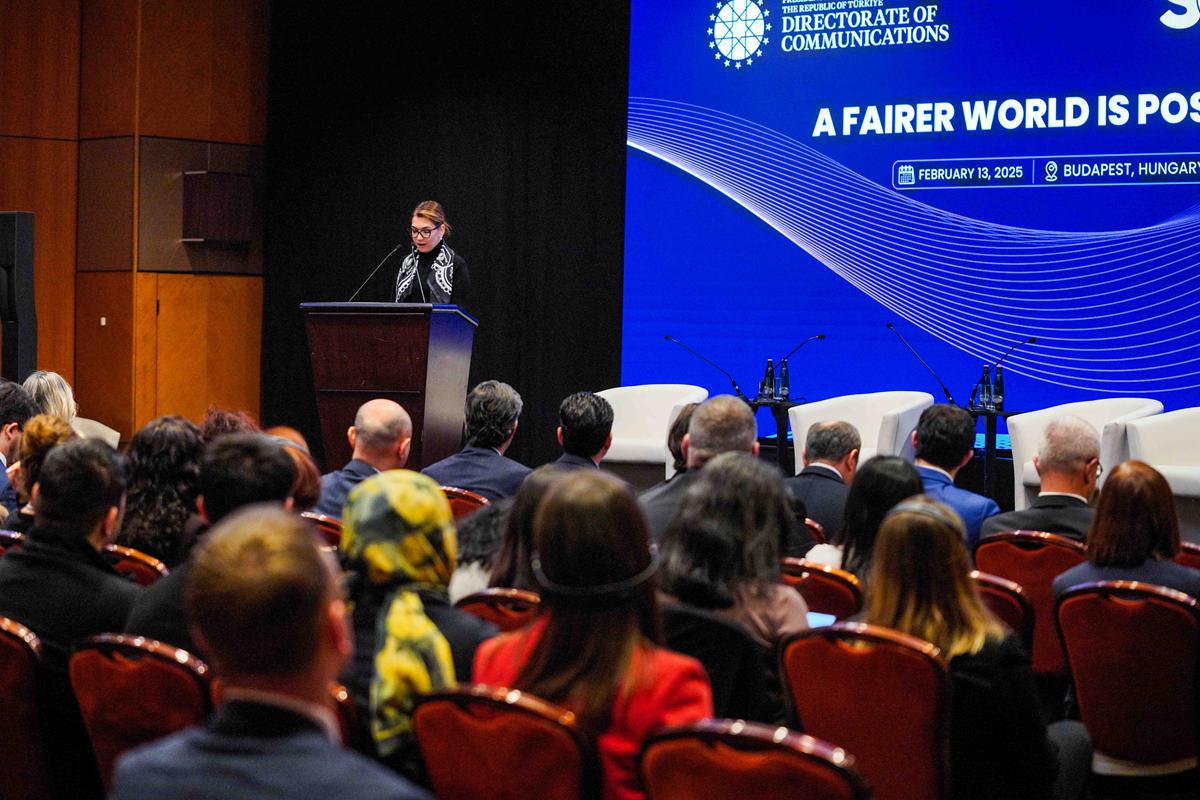
The panel “Stratcom Public Forum: A Fairer World is Possible” commenced following the opening remarks. The panel, moderated by Kırıkkale University faculty member Prof İslam Safa Kaya, featured Prof László Vasa from the Hungarian Institute for Foreign Affairs and Trade, Rodrigo Ballester from the Mathias Corvinus Collegium (MCC), Dr Zoltán Egeresi from the Ludovika University of Public Service, and coordinator İdris Kardaş from the Centre for Combating Disinformation as keynote speakers.

Prof Kaya conveyed significant messages regarding the preservation of global justice during the panel discussion. According to Kaya, President Erdoğan’s motto, “A fairer world is possible,” is a beacon of hope for equality and justice on a global scale rather than merely a call. Kaya emphasised that justice needs to be guaranteed on a societal and international level in addition to on an individual one. He also underlined that everyone should have equal rights and that equality and human rights are the cornerstones of global justice. He said that issues of inequality in fields such as health and education pose an obstacle to ensuring justice at the local level. Kaya stated that the existing international systems are unfair to developing nations and that justice should be served in a more inclusive manner. Kaya continued by stating that international collaboration and solidarity are essential for a fairer world and ended his speech by saying, “A fairer world is possible; we must act together to achieve it.”
According to Prof László Vasa, market demands and globalisation have raised the demand for quickly evolving communication technologies, necessitating the development of digital infrastructure and more reliable solutions. He said that investments like smart transport networks and 5G corridors are essential to Europe’s ability to compete. He also noted that the demand for global connectivity is growing due to security risks and climate change.
He underlined that connectivity is influenced by economic and security needs in addition to geopolitical factors. Prof Vasa pointed out that countries are on the path to generating greater international impact by building stronger collaborations and emphasised the importance of inclusive infrastructure investments, digital collaborations, and programs that promote interpersonal connections. He concluded his remarks by adding that adapting to the rapidly evolving world requires a constant flow of communication and flexibility.
Rodrigo Ballester highlighted that despite the essential efforts towards creating a fairer world, the rhetoric of “having more power” still dominates geopolitical language, stating that power and interests are at the forefront of international affairs and geopolitics. He pointed out the outdated structure of the United Nations (BM) and urged criticism of its continued dominance by five nations after eight decades. Ballester pointed out that the UN has been surrounded by ideological influences and red tape, which is the reason behind international organisations often acting towards their own ideological and bureaucratic objectives instead of the interests of their members. He also argued that the UN requires a restructuring, which can be facilitated if members forefront their national interests again, and that European states and others around the globe should pursue more effective diplomacy by focusing on their interests. Ballester added that fostering international collaboration beyond ideological perspectives would yield greater impact and be more productive. He concluded his remarks by underscoring that national sovereignty remains the greatest guide in international affairs and that the UN and other international organisations should act without undermining their purpose and sovereignties.
Dr Zoltán Egeresi began his remarks by overviewing various theories in international affairs and giving a short account of historical developments. Drawing a historical line from the past to the present, he stated that academics began collaborating in the early twentieth century to prevent the outbreak of new wars. Explaining three main branches in international affairs, namely, realism, liberalism, and constructivism, and pointing out that the behaviours of the actors in this arena have not changed much, Egeresi stressed that international dynamics may maintain their course. He underscored that the post-1945 international balance of power has changed with the emergence of new rising powers. Egeresi went on to say that the number of conflicts worldwide has surged in recent years and is getting harder to predict. He noted that every state, regardless of its standing, often seeks to amplify its political influence depending on the circumstances and that states with strategic power can leverage their status to be more effective. He concluded his remarks by stressing the necessity for the existing international system to be reformed and emphasised the importance of maintaining these changes on the international agenda to create a fairer and more stable world.
Speaking on the significance of combating disinformation and ensuring global justice, İdris Kardaş underscored the necessity for revising and reforming the current structure of the United Nations (BM). Kardaş pointed out the threats posed by the existing system by arguing that the continued existence of this international mechanism, which generates injustice, cannot reliably prevent a tragedy similar to the one in Syria from happening in other countries. Adding that it is imperative to develop a new strategy to effectively solve this issue on a global scale, Kardaş stressed that civil society should also be included in these debates, which should not be confined behind bureaucratic and academic doors.
Kardaş noted that disinformation, a significant challenge of our time, serves as a mechanism that deepens injustice. He pointed out that Türkiye has made great strides in this field and that the accurate and fair dissemination of information will contribute to global peace.
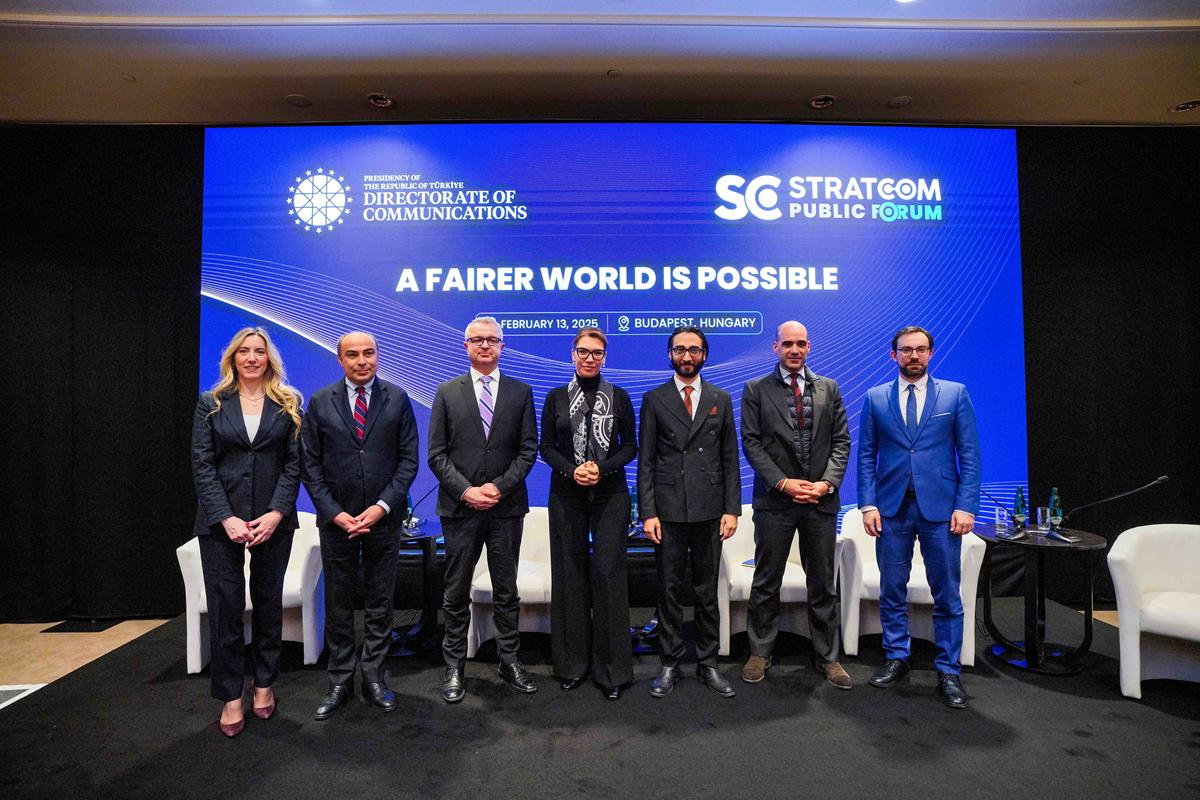
Academics and public officials also participated in a roundtable meeting as part of the panel. Following the event’s conclusion, the attendees screened a documentary on the life of painter Devrim Erbil, the official site said.
read also:


Greedy globalists from western EU particularly the Davos crowd are against fairer global system.