Subscribe to our social channels to get the latest news about Hungary!


As summer approaches, everyone is asking the same question: what kind of summer does 2025 hold for us? The latest seasonal forecasts and climate models paint a clear—and hot—picture for Hungary and much of Central Europe.
Meteorological models from leading international agencies—including ECMWF, the UK Met Office, Météo-France, and others—are in strong agreement: summer 2025 will be significantly warmer than the long-term average across most of Europe, especially in Central Europe and Hungary, Időkép writes. Temperature anomalies of +1 to +2°C above the 1993–2016 average are likely, with Hungary among the regions expected to see the most pronounced warming.
There is a 70–100% chance that temperatures this summer will fall into the hottest third of historical records for the region, making a hot summer almost certain. While much of Europe will experience above-average warmth, the increase in Central Europe, including Hungary, will be among the highest on the continent.
The start of summer will bring mild to warm temperatures, with daily highs ranging from 18°C to 24°C at the beginning of the month, climbing to 26–30°C by the end. Rainfall is moderate, with occasional showers and thunderstorms, but these are typically brief and followed by clear skies.
July is expected to be the hottest month, with daytime highs in Budapest and much of Hungary reaching 27–29°C, and nighttime lows around 16–18°C. Rainfall will be limited—expect only 3 to 8 rainy days in Budapest, with most days remaining dry and sunny. There will be an average of 9–11 hours of sunshine per day, perfect for outdoor activities, but also increasing the risk of heatwaves.
The heat is forecast to persist, with above-normal temperatures continuing throughout the month. The risk of drought and heatwaves will remain elevated, especially in the second half of summer.
The main factor behind this hot summer is the dominance of high-pressure systems over Central and Northern Europe, which block cooler air masses and promote stable, dry, and hot conditions. This pattern increases the likelihood of heatwaves (they will be more frequent and intense than in recent years) and drought (reduced rainfall could lead to drier soils and increased wildfire risk, especially in rural areas).
Hungarian climate scientist Diána Ürge-Vorsatz, vice-chair of the UN’s Intergovernmental Panel on Climate Change, has highlighted that Central Europe—including Hungary—will experience the most significant temperature increases in Europe this summer.
Without significant reductions in greenhouse gas emissions, Hungary will continue to see more frequent and severe heatwaves, with summers potentially resembling those of North Africa by the end of the century.
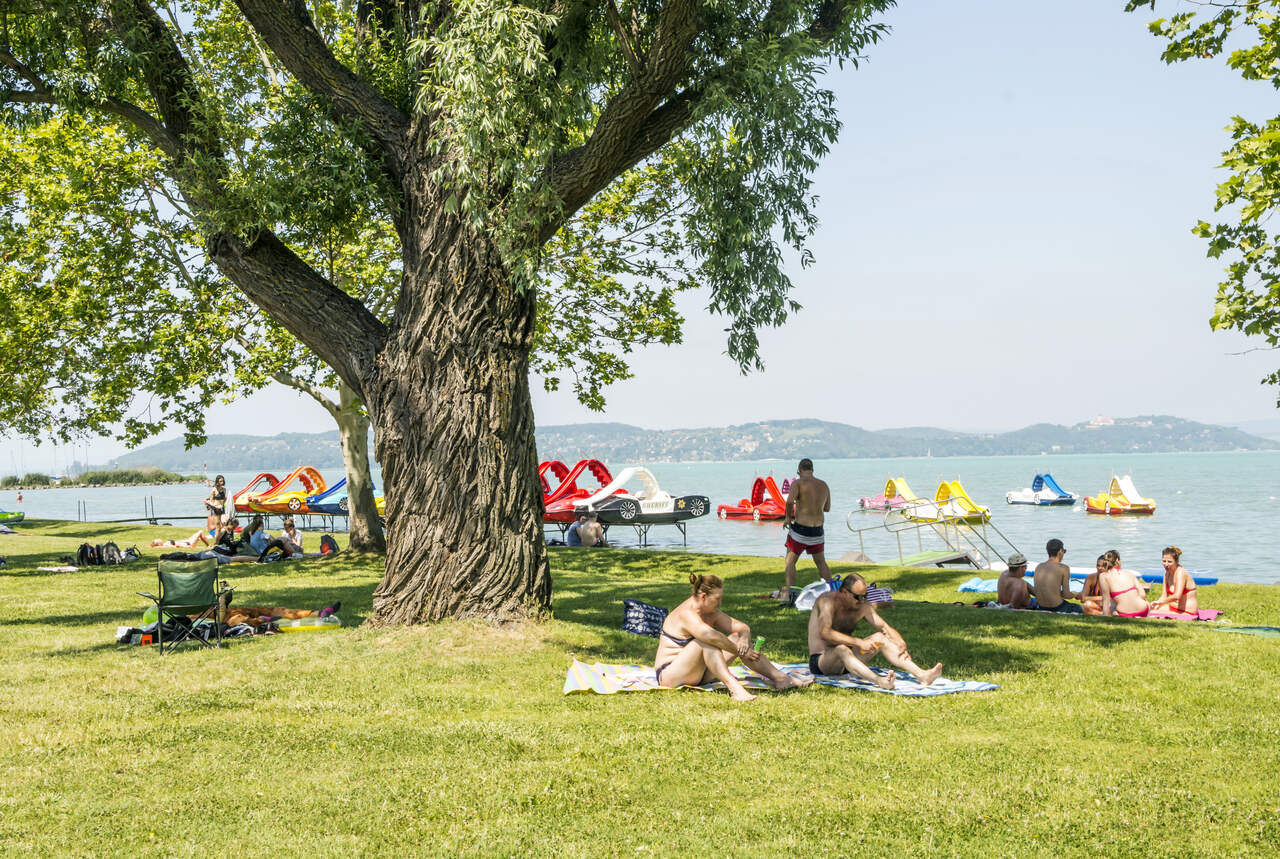
Summer 2025 in Hungary is shaping up to be one of the hottest in recent memory, with a high probability of above-average temperatures, limited rainfall, and increased risk of heatwaves. Whether you’re living in Hungary, visiting for the summer, or just following the weather from abroad, it’s wise to prepare for a long, hot season ahead.
Read more about weather forecasts in Hungary HERE.
Read also:


I remember when no one had air conditioning in Hungary. We would visit and stay with my in-laws on the second floor of their house. Having insect screens on their windows was something new. Sleep was difficult in the summer and I remember looking at the themometer showing 29C at night. I started renting apartments with air conditioning when we visited. We finally bought our in-laws an air conditioning unit. I finally wrote off the months of July and August since 2019. I have now written off early September as well.
I think that’s a wise choice. Last summer was truly awful with relentless, punishing heat. I, like a lot of people, had to escape. Although it’s high season for tourism, if the trend for exceptionally hot summers remains (and it shows every sign of doing so), it’ll become simply too hot for tourists who’ll increasingly head for more temperate destinations and if they stay south, they’ll go to coastal locations where the sea has a cooling effect and beach time is low effort. I don’t see how summer tourism in the likes of Madrid, Rome and Budapest is going to work.
“Meteorological models from leading international agencies”
Ah yes, the “leading agencies” that can’t say with any certainty if it’s going to rain later the same day!
“Hungarian climate scientist Diána Ürge-Vorsatz, vice-chair of the UN’s Intergovernmental Panel on Climate Change”
Gee, I wonder what SHE is going to say. Let’s see…
“Without significant reductions in greenhouse gas emissions…” we’re ALL GONNA DIIIIIIIIIIEEEEEEEEEEE!!!
Yup, figured. Good thing her job doesn’t depend on superstitious doom-mongering. Oh. Wait. It does!
🙄🙄🙄🙄
Paniiiiic!! “Summary: In Budapest, the long-term average temperature in July is around 22°C to 27°C, with highs around 27°C to 31°C and lows around 18°C to 20°C. For the rest of Hungary, highs in July are generally between 25°C and 30°C, depending on the region. Heat waves can locally push temperatures higher.” Grok.