Subscribe to our social channels to get the latest news about Hungary!


Many businesses worldwide have gradually begun to recognize the value of dedicated, hardworking employees. If you find yourself late to the party and want to put processes in place for the same, consider concretizing the fundamentals of Human Capital Management (HCM) and a new employee checklist for onboarding employees.
Sponsored content
Human Capital Management refers to a company’s employee recruiting, developing, managing, and optimizing practices to make its employees as productive as possible and increase the overall economic value.
The point of having HCM practices and processes in place is to provide specific competencies.
These competencies are strategic and tactical. Strategic and tactical competencies may include onboarding, compensation planning, time and expense management, education and training, workflow, recruitment and hiring, and so forth.
While there are several reasons companies decided to invest in Human Capital Management, here are the big three:
With every generation that joins the workforce, comes a new style and pace of working. Different generations also prioritize different things. Generation Z and Millenials, for example, value work-life balance and, as a result, are selective about their timings. It is vital to formulate strategies to manage the workforce effectively.
The emergence of the internet has paved the way for a wide variety of working models and styles.
In this day and age, there is a surge of work-at-home employees and freelancers, causing Human Resources (HR) departments to use training and employee onboarding tools like messaging and video chat.
This age has witnessed a significant increase in the number of temporary jobs carried about by workers on contract and freelancers as opposed to full-time employees dedicated to an organization. This drastically changes the worker management and the management of tax regulations, employment rules, schedules, and so forth.
HCM software serves as an excellent way to integrate your company’s HCM applications into a single, accessible platform. You may install it locally or avail it through an online subscription service, depending on your needs.
HCM software boasts the following features:
One of the key features of HCM software is its ability to automate the process of analyzing employee performance, giving feedback, and setting future objectives. The software allows managers to store ratings, feedback, and their performance evaluations in the performance management system.
Human capital management software also allows you to keep track of the salary and benefit-related information for each employee. This data can be easily accessed and evaluated. It enables you to look up your compensation spend and adjust or formulate new compensation strategies altogether for the future.
Effective workforce planning plays a critical role in determining how well your organization is going to do. HCM software serves as an excellent tool to plan and manage your company’s workforce effectively.
This is one of the most used elements of Human Capital Management software, and potentially one of the most value-adding areas to an organization. Recruiting new staff can be made easier through automatically-generated job descriptions, and seamlessly advertising and shortlisting candidates for interviews
As you may have gathered by now, it is vital to optimize the process of onboarding employees. This is what you ought to know to onboard employees effectively.
Employee onboarding refers to introducing the cultural norms that the company uses to operate. This brings clarity on how a company’s employees communicate or ought to communicate with each other, how information is shared with one another, what steps are being taken to push the company towards its goals, and so forth.
An ideal employee onboarding program ensures every new hire gets access to the same information, which is crucial considering how many workers tend to work remotely.
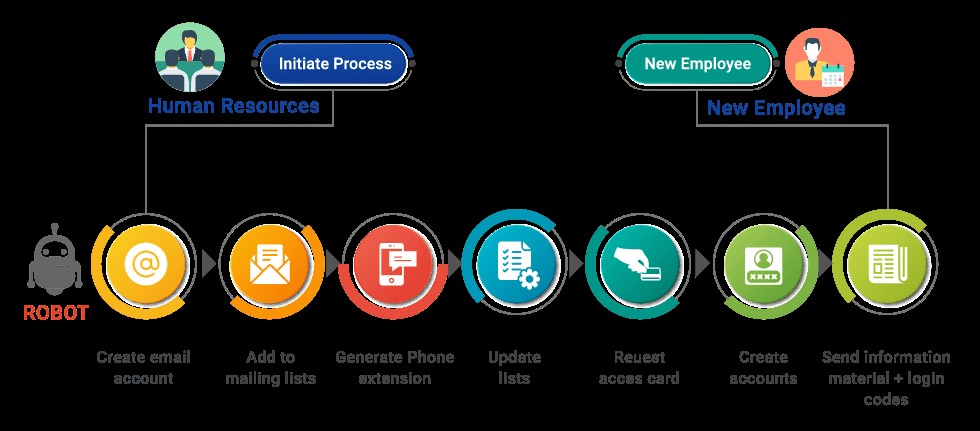
Building a welcome mail campaign is essential before starting a new hire. This way, you can let your employees know how your company found its feet and where it is today. Also, sending this information in bits and pieces over two weeks allows you to let your hires know they can contribute to your organization.
This is where you tell your employees what to expect when they join, their schedule, and perhaps the information they ought to know about the cultural norms your company runs on.
Arranging cross-team meetings, one-on-ones, setting up their workspace, and giving them practical information can go a long way in reducing the first day jitters.
The first few days for a new employee can be stressful. Allowing adequate time to train your employees is paramount to ensure high productivity consistently. The training process ought to include company processes, regulations, procedures, expectations, visions, and goals.
Also, your employees need to have a clear idea about their individual roles in your organization. An effective way to do this is assigning a mentor to each department.
This factor is often overlooked. Be sure to follow-up with your employees periodically, even if they seem to be performing at company standards. They are likely to give you feedback on your company and the onboarding process. You can use this feedback to make the changes you deem necessary.


