Subscribe to our social channels to get the latest news about Hungary!


Other than being important centres for research and education, many universities in Hungary are acclaimed for their breathtaking ambience and architecture. Now a survey has revealed which universities Hungarians find the most beautiful in their country.
Hungarian education website Eduline conducted a survey to find out which universities Hungarians consider the most beautiful in their country. The poll ended with a whopping result: only three universities took 80% of the total votes (34,135).
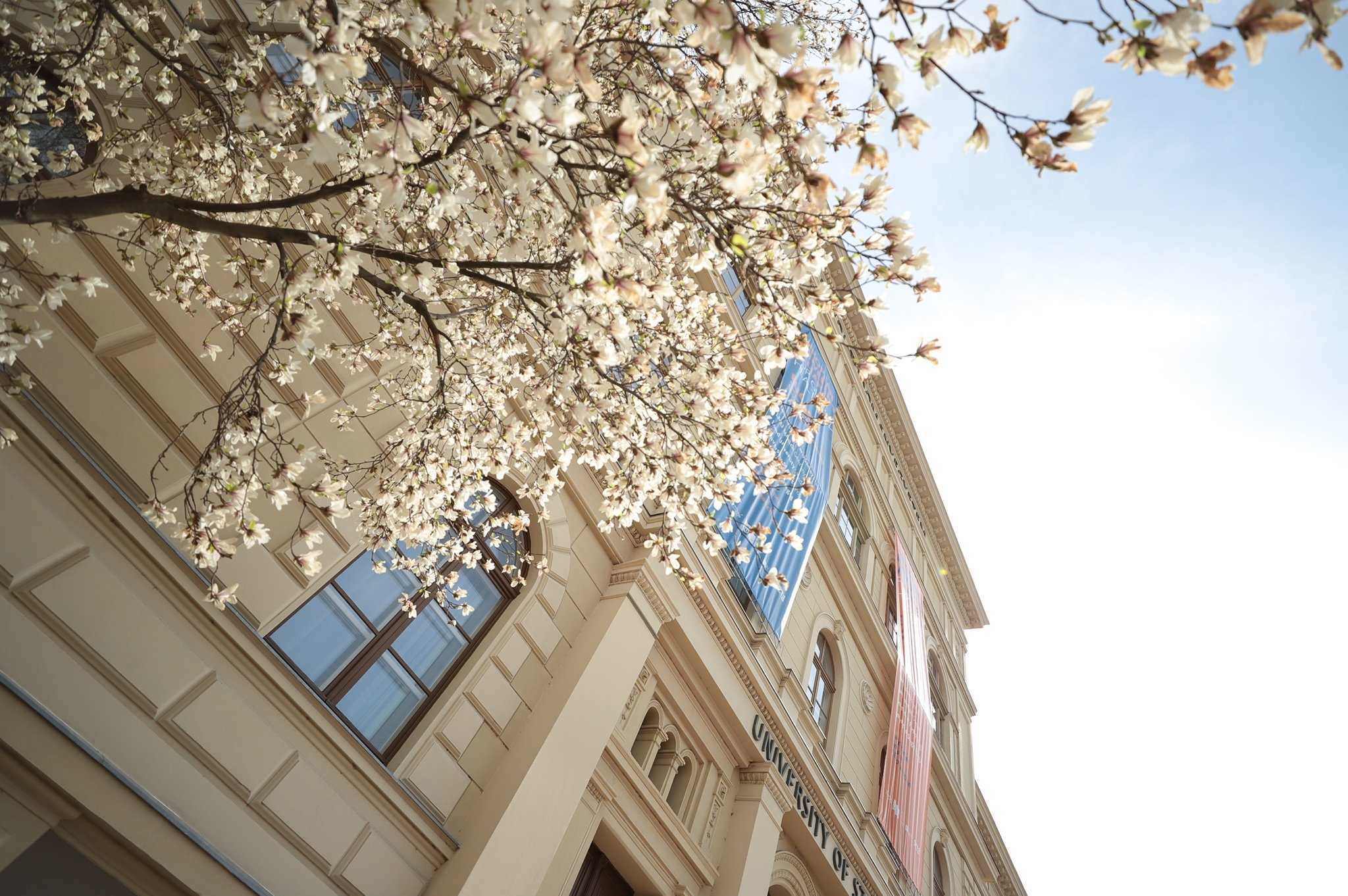
In the first place, we find the University of Szeged, which received 40% of the votes. The history of this university began in 1580, when its predecessor, a Jesuit college in Cluj-Napoca was founded by István Báthory, Voivode of Transylvania. In 1921, following centuries of expansion, the institution (called Franz Joseph University at the time) moved to the city of Szeged, and this was when major constructions began, bringing new university buildings, a botanical garden, and various sports fields to life.
The eclectic building with classicist elements was designed by Antal Skalnitzky and was completed in 1873. Due to its high position, the building served as a shelter to many locals during the great flood in March 1879. Today, the university in the “City of Sunshine” regularly ranks among the top universities in Hungary and is well-recognized on an international level, too.

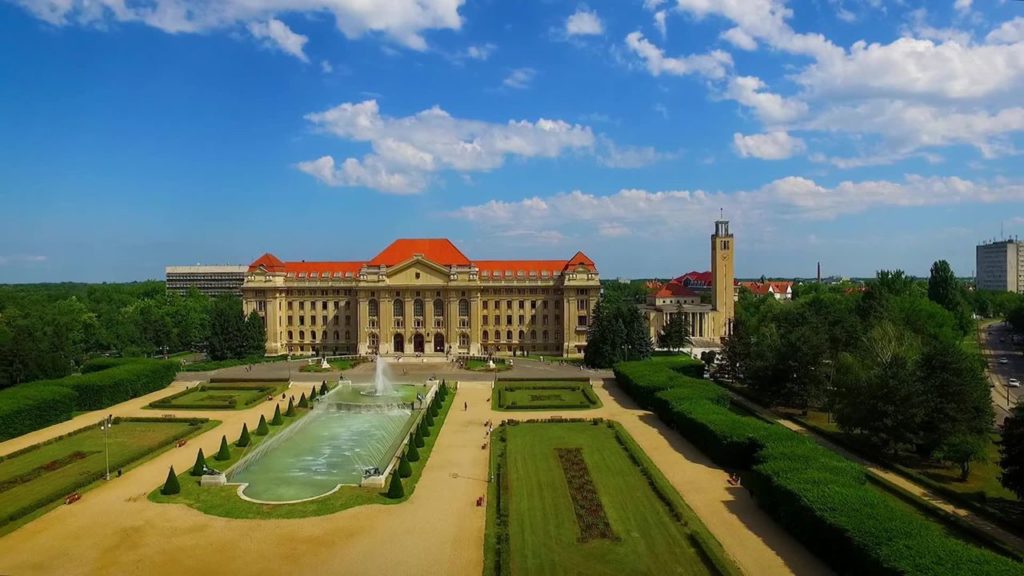
The university of Hungary’s second-largest city came second in the poll by taking 30% of the votes. The original institution, the Calvinist College of Debrecen was founded in 1538, which for centuries played a prominent cultural and educational role in the country. It was partly transformed into a university through a government decree in 1912, which laid the groundwork for a series of investments next to the city’s Nagyerdő (“big forest”), so that the institution could accommodate the increasing number of students.
Construction of the main building began in the 1920s: following the Parliament and the Buda Castle, it was the most significant investment in the country at the time. Today, visitors will also find a beautiful French park with a fountain (there is a tradition that every student has to dip in the water after successful graduation), and a group of sculptures as a tribute to people from Debrecen who played an important role during the Reformation.
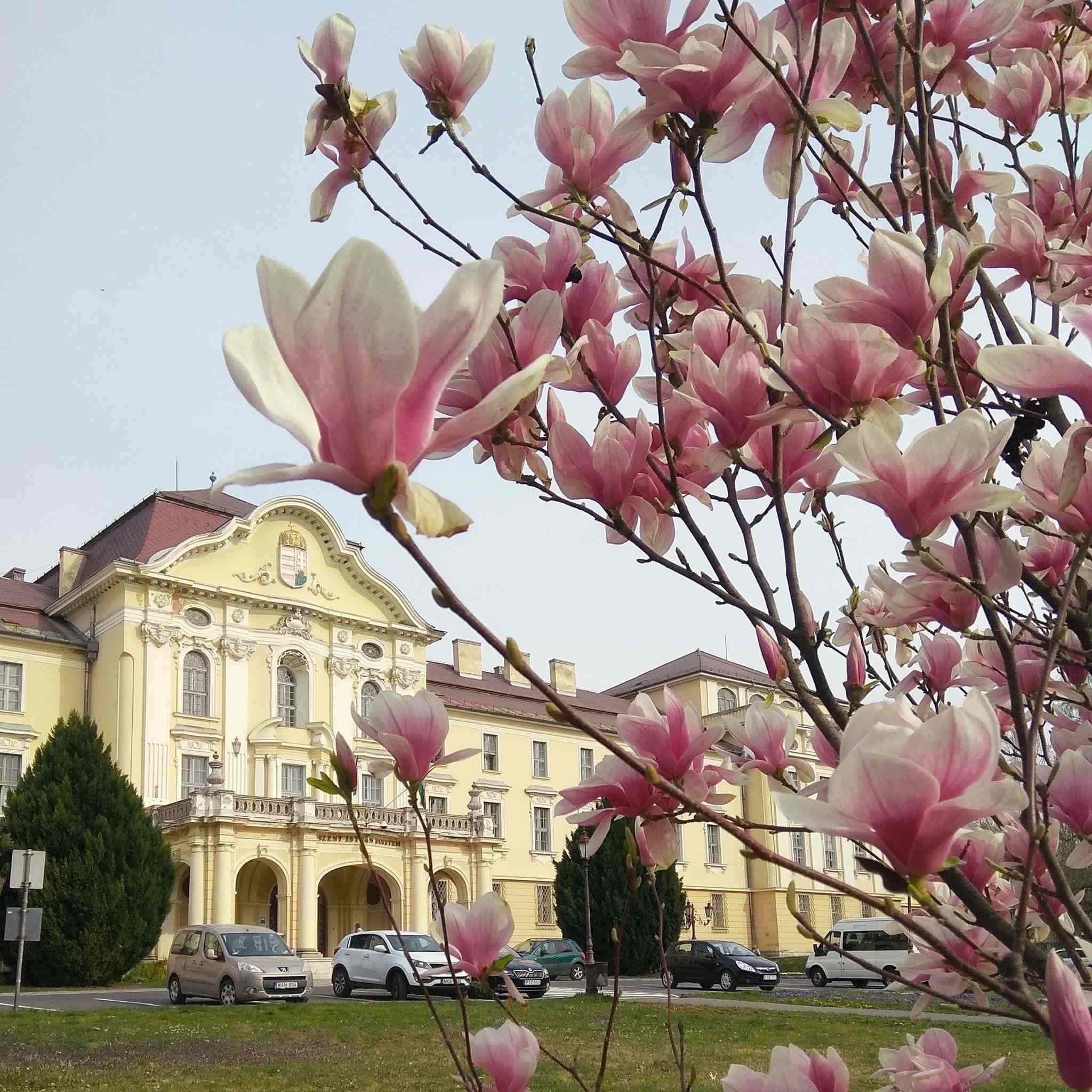
The third institution in the ranking (taking 10% of the votes) is Szent István University, which is located in the scenic town of Gödöllő just 30 km northeast from Budapest. The university has existed under this name since 2000, but the roots of a predecessor (the University of Veterinary Medicine) date back to 1787. The imposing Neo-Baroque building formerly served as a school for the Premonstratensian community. Today, the university is most known for its faculties of agriculture, food science, and architecture.
Despite the relatively small number of students (around 13,000), the university is very rich in landmarks: these include the Museum of Agricultural Machinery, which has the second-largest collection of agricultural machinery in the world, a botanical garden, and the main building is adorned by various sculptures from artists such as the Hungarian Amerigo Tot.
In the ranking, the universities above are followed by the University of Pécs, the Budapest University of Technology and Economics, and Eötvös Loránd University. In a minor survey conducted shortly after the first one, the universities in Miskolc and Eger too received a lot of votes from the readers.
Source: eduline.hu


