


Total lunar eclipse will turn the Moon bright red this Sunday!

Change language:
A total lunar eclipse will take place this Sunday, lasting for 82 minutes. If bright enough, the eerie, dark, reddish-brown Moon will be visible to the naked eye, the Svábhegy Observatory told on Monday.
Amazing view this Sunday
During the eclipse, our only natural satellite will pass into the Earth’s shadow, taking on a “ghostly red or brownish” hue as it rises in the eastern sky. By the time it appears after sunset, the Moon will already be partially eclipsed. In Budapest, the total phase will begin at 7:31 p.m., reach its maximum at 8:12 p.m., and last until 8:53 p.m.
Observers in eastern Hungary will see the phenomenon a few minutes earlier, while in the west it will be slightly later. A lunar eclipse occurs when the Moon moves through the Earth’s shadow cone, blocking sunlight from directly illuminating its surface. This does not happen at every full moon, since the Moon’s orbit is tilted slightly relative to the Earth’s orbital plane.
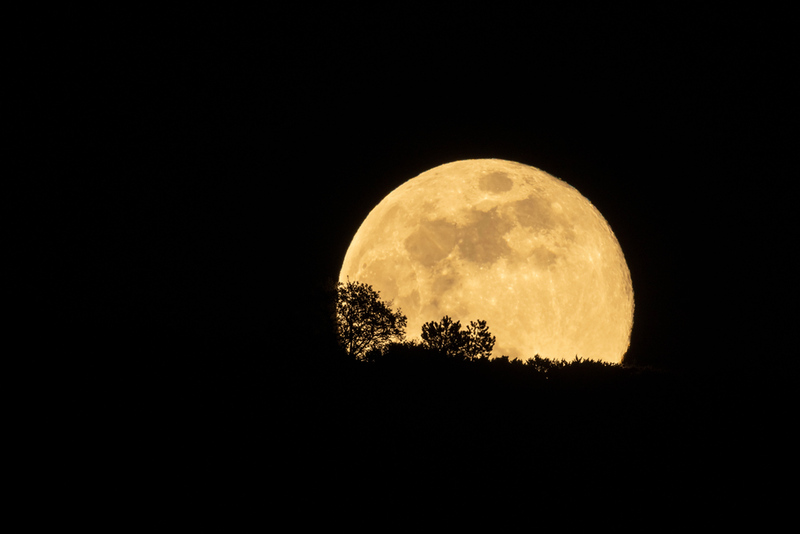
During a total eclipse, the Moon is fully immersed in the Earth’s shadow, becoming darkened but not disappearing completely, instead glowing in mysterious shades of red and brown. The reddish colour is caused by sunlight scattering through the Earth’s atmosphere – the same effect that makes sunsets appear red.