Subscribe to our social channels to get the latest news about Hungary!


Traffic at Keleti station, where a passenger train derailed on Sunday, is expected to return to normal by Tuesday morning. MÁV CEO told reporters that the causes of the train derailment will be investigated later.
As previously reported by DNH, five carriages of the Claudiopolis InterCity 5 train from Cluj-Napoca (Kolozsvár) to Budapest derailed near Keleti station on Sunday evening, blocking traffic to and from the station. Technical rescue operations have continued through Monday morning and afternoon.
According to 24.hu, traffic at Keleti station is expected to be restored by Tuesday morning. However, it remains uncertain whether rail traffic will be fully operational on all tracks. To speed up the process, experts have found a solution that avoids the necessity of dismantling overhead lines, bringing in cranes, and then rebuilding them. Instead, they used hoists to get the five derailed wagons off the ground and onto the tracks again.
The Hungarian Railways (MÁV) held a press conference at the site, where László Mosóczi, CEO of MÁV-Start, said that the Keleti station is substituted by the Rákos and Kőbánya-Felső stations. However, as the capacity of these stations is much lower, train services have been reduced. As an alternative, bus services are operating, and passengers can use metro line M4 to reach Kelenföld.
MÁV has estimated that up to 100,000 passengers may be affected by the delays. The Hungarian Railways is not aware of any personal injuries in connection with the accident.
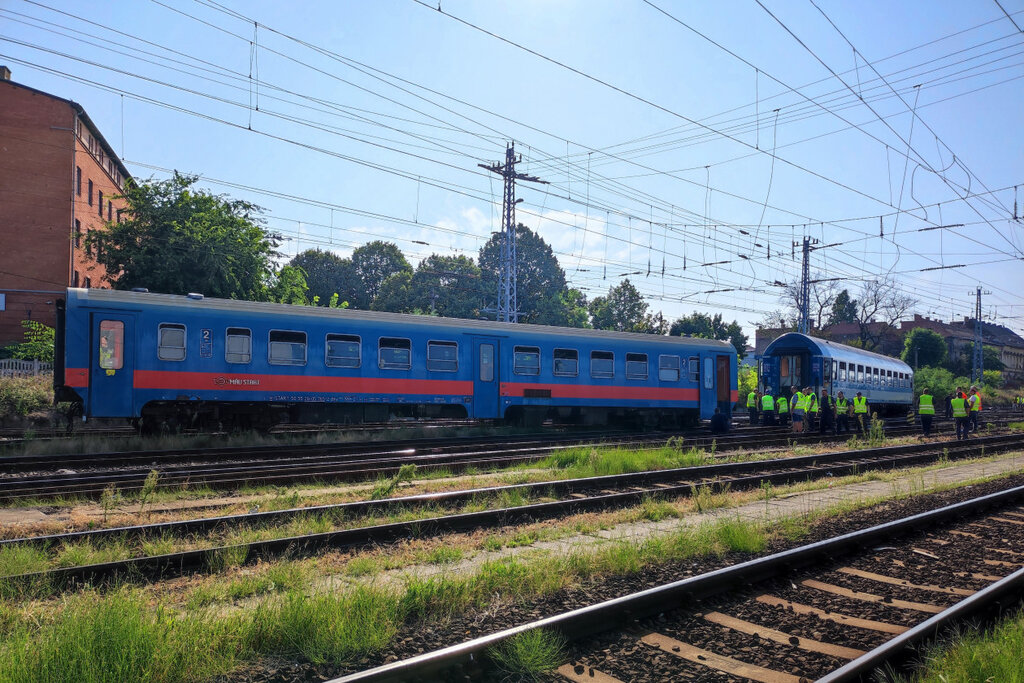
The Hungarian Railways has yet to release comprehensive details regarding the circumstances that precipitated the incident. Zoltán Pafféri, MÁV’s CEO, stated, however, that the first step is to repair the site, and that damage assessment and reconstruction of the accident will only commence once this process is complete.
As for a question about whether there was a possibility that another train could have hit the derailed wagons, the CEO said that “The driver of the train coming from behind stopped the train by applying the emergency brakes.”
According to Réka Németh, MÁV’s deputy general manager for track operations, a part of the switch broke. However, it is not yet possible to determine whether this caused the accident or whether the breakage was caused by the accident itself.
She emphasised that railway switches are inspected every month, and the switch that broke in the accident was inspected on 30 July, at which time no issues with its functionality were identified. Németh stressed that following the train derailment, all switches will be subject to inspection, and that the police will also be involved in investigating the causes of the accident.
Further information on the train derailment and the modified public transport timetables in the area can be found in DNH’s other report HERE.
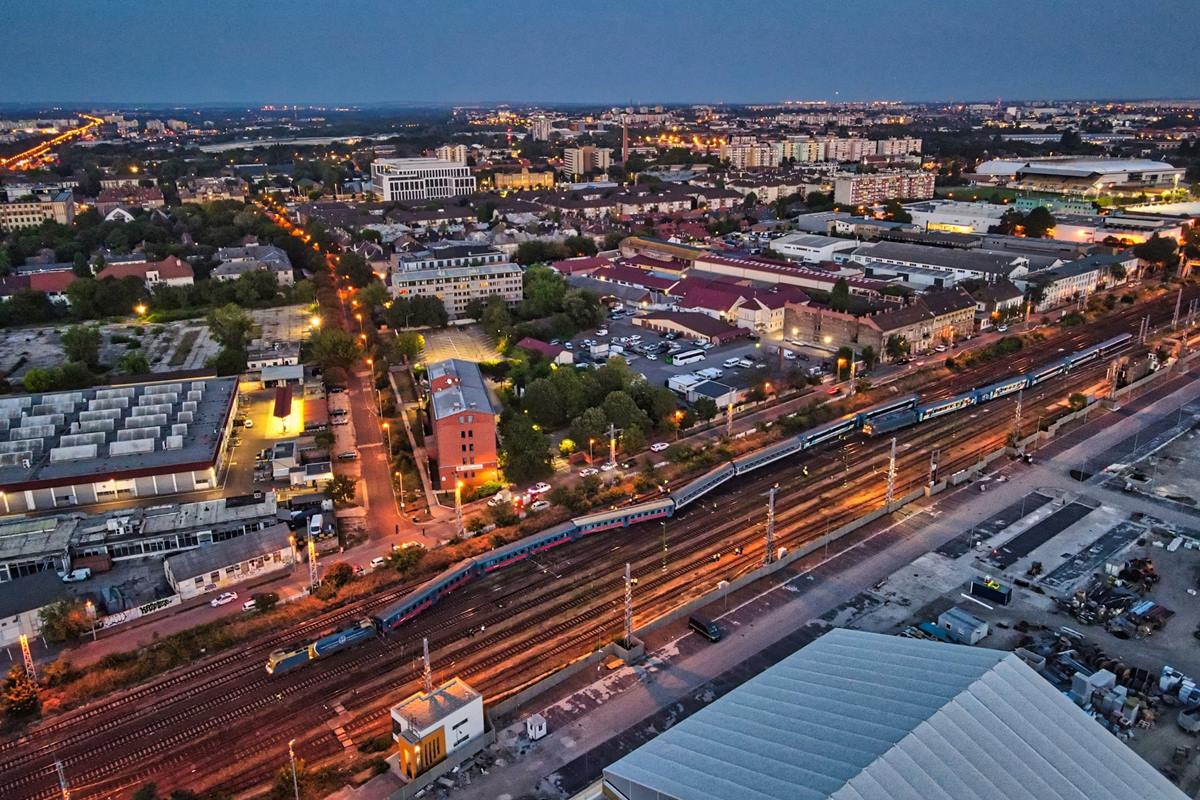
Surveying the past weekend, 444 collected a myriad of issues MÁV passengers have had to face. It all started at noon on Saturday, when a rail broke between Szabadbattyán and Kiscséripuszta, paralysing trains on Lake Balaton, with events complicated by the fact that not all passengers could fit onto the replacement buses sent.
Then there was the derailment at Keleti, while traffic was brought to a standstill at Nyugati station after an InterCity train collided with a car on the main line to Cegléd.
On Monday morning, an InterCity train from Kassa to Hatvan and then a train on the Vác line near Felsőgöd hit someone, resulting in traffic being halted on both lines. Later that same day, a broken rail forced the closure of a track between Kőbánya-Alsó and Nyugati stations. Finally, an InterCity train from Szombathely to Budapest collided with a lorry on the northern shore of Lake Balaton, bringing traffic on the North Balaton line to a complete standstill.
444 also criticised the fact that a high-ranking figure – namely Pafféri – spoke out only 73 hours after the series of incidents began, all the while János Lázár, the minister responsible for transport, has so far said nothing about the train accidents.
Read also:
Source: 24.hu, 444


