Subscribe to our social channels to get the latest news about Hungary!


It is logical to assume that the name refers to the Hun roots of Hungary, and maybe it does explain one letter. In reality, Hungarians got the name of a Bulgarian-Turkish tribal alliance, something that cannot easily be explained.
Hungarian chronicles agree that Huns and Hungarians are brothers on grounds of the historical relationship between Hunor and Magor, and they even share the same notion that Prince Árpád came to the Carpathian Basin to seize King Attila’s legacy. It is safe to assume because of this that the neighbouring nations of the ancestors of Hungarians would call the country by the name of Hungaria, Hungary, Ungarn, Vengrija, Wegri, and so on, reports 24.
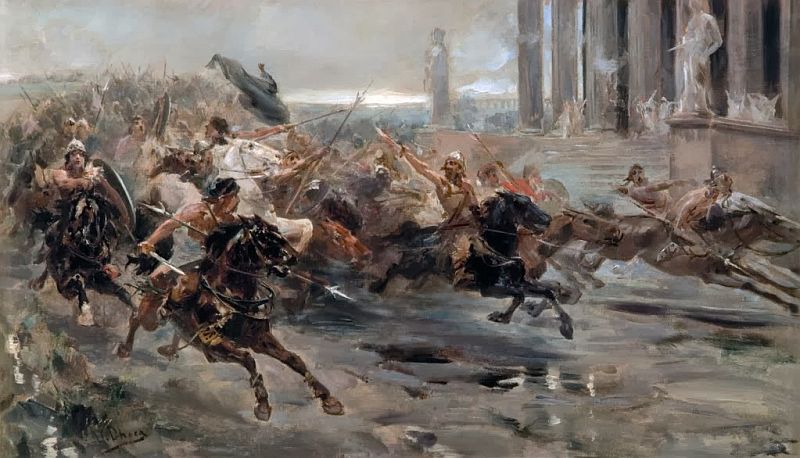
Outsiders are right to assume that Hungarians come from Huns since Attila made a terrible reputation for himself from Asia to the Atlantic Ocean, and it was almost like the wild and warrior Huns came back with the arrival of Hungarians. However, according to historian Dr Gábor Thoroczkay, not everything is what it seems.
“Let’s look at the then-official Latin language and the name Hungaria as the country and Hungarus as the title of the nation. In that case, the stem of the word is not ‘hun’ but the ‘onogur’ part.”
‘Onogur’ means ten ogurs which refers to the alliance of ten tribes. We are talking about the Bulgarian-Turkish people that appeared in the fifth century in Europe in the area that is South-Russia and South-Ukraine today. The name ‘onogur’ most likely was used and became common when Prince Kuvrat established a short-lived empire in the seventh century. After its disintegration, part of the onogurs migrated north but most of them wandered to the area that is Bulgaria today. One of Kuvrat’s sons, Kuber, moved to the Carpathian Basin with a small group.
What is important to note is that nobody knew or cared about ethnic maps back then. Especially concerning nations that emerged from the planes of the East, which for an outsider might have seemed the same based on their culture, way of life, appearance, or battle tactics.
On this basis, the ‘h’ sound coming from Western Latin sources could have emerged later as a phonological rule with the change of the language.
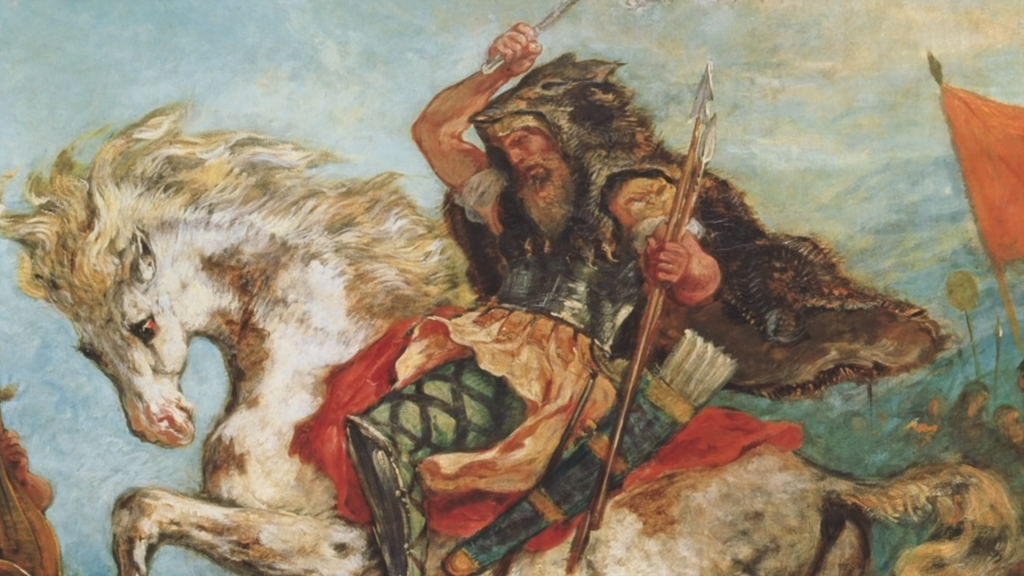
“Another possibility is that scientist priests from Western Europe gave the ‘h’ sound while remembering troublemaker Huns. Another thing to mention is, how did Hungarians call themselves? The answer is that they called themselves Hungarian from the start and called the warrior nation hetümoger (seven Hungarians),” he adds.
The Finno-Hungric word either means ‘talking person’ or Mansi people or least probably the joining of Magy and Er, two nations from the Ural Mountains. Latin sources emphasised that the “hungarus” called themselves “magyar” in their own language which they originated from the name of their “forefather” Magor.
The contrast between magyar and hungarus has never been addressed except for one Anonymus, and even he explained half-heartedly:
“The Hungarus was named after Hungvár, where the seven princes spent a considerable amount of time after conquering the Slovenians. All neighbouring nations called their leader Álmos, the chief of Hungvár, and his warriors the Hungvárus.”


