Subscribe to our social channels to get the latest news about Hungary!


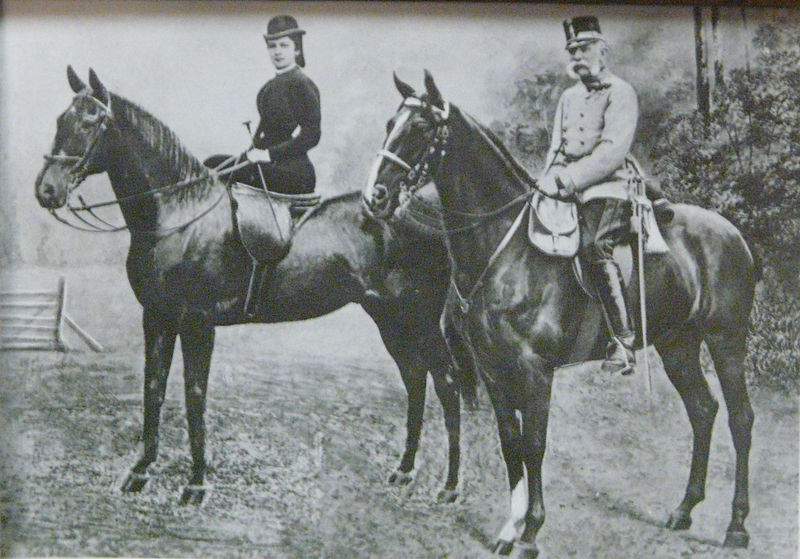
There are several legends about one of the most well-known and outstanding women in history, Sisi, the Queen of Hungary. Most sources mention her deep affinity and love for Hungary and its people, but fewer people know what particular connection she had with our country and what places still bear her name in Budapest. In the following, you can gain a little insight into the life of the celebrated queen and her relation to Hungary.
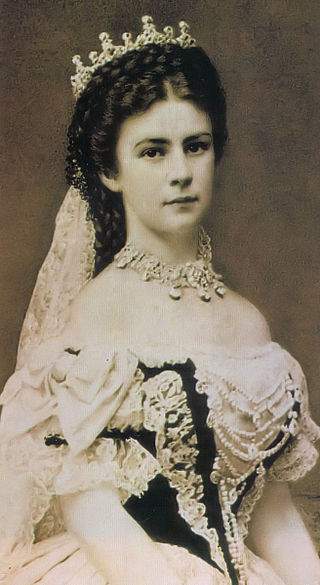
Elisabeth Amalie Eugenie Wittelsbach was born on 24 December 1837. She inherited from her father her passion for art and freedom, and also learnt how to respect and love nature. They very often hiked and walked in the Bavarian mountains. She had a carefree childhood and not much time and energy were devoted to her education compared to that of her elder sister, Helene, who was meant to become the spouse of the Austrian Emperor, Franz Joseph I.
Despite what the family and the mother of Franz Joseph wished, the Emperor fell in love with Sisi, and they finally got married in 1854. Although she was happy in the beginning, her freedom was much restricted by the strict etiquette of the court. She was also restricted by her mother-in-law, who was not fond of her, and their relationship became even worth after she lost her daughter.
As Hirek.sk points out, it was painful that she was not allowed to bring up her kids as Archduchess Sophie, the mother of Franz Joseph took complete charge of her babies. That was when Sisi’s attention became to directed towards foreign cultures. She travelled a lot and loved Hungary.
She developed a deep affection for the country and its culture and also learned the Hungarian language. In 1864, for instance, she looked for a companion with whom she could practice the language. That is how Ida Ferenczy became her loyal maid with whom she had a very close relationship.
Later, she asked Miksa Falk, journalist of the Pesti Napló, to teach her not only the language, but Hungarian history and culture, too.
To satisfy her demand, Falk gave her some works prohibited in the monarchy, like Blick by Széchenyi or the book of József Eötvös written in Geneva about the war of independence of the country. In fact, Sisi wrote a letter to Eötvös to exchange messages rumoured practice the language and asked him to correct her grammatical mistakes.
Also, another brilliant Hungarian man fascinated our beloved Sisi. It was Count Gyula Andrássy, reports Hungarianhistory.com. There was a mutual sympathy between them at 1st glance, and it was him to whom Sisi once said:
“If the Emperor’s cause goes badly in Italy, it pains me, but if it goes badly in Hungary, it is death to me.”
It is one of the most quoted phrases from Sisi. It was rumoured that it was more than friendship that was evolving between the two, and some gossips went as far as to state that the youngest child of the Queen of Hungary is that of Andrássy. Actually, nothing serious could happen due to the strict social norms.
Emperor Franz Joseph I with his family /wikicommons by ChristophT /Although her devotion to Hungary provoked hostility in the court, she was determined to convince her husband about the compromise with the Hungarians. This was the only occasion when she overtly intervened into political life not only in favour of Hungary but to preserve the Monarchy for her son, too.
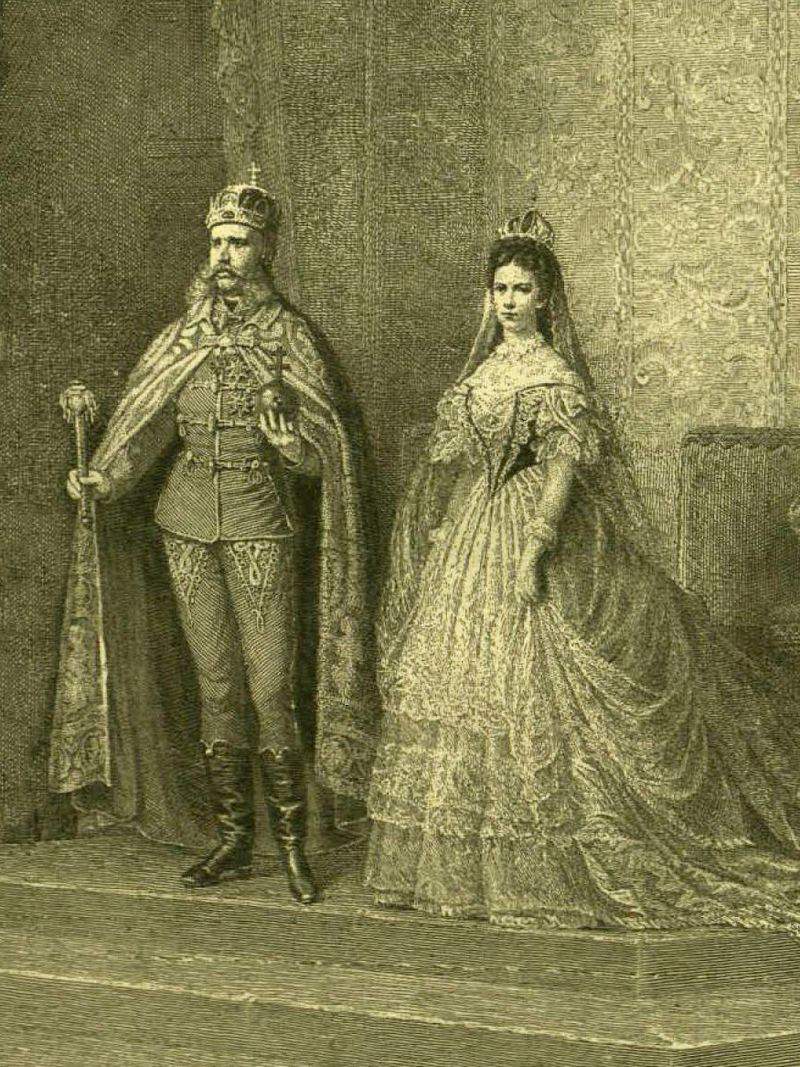
Finally, the Austro-Hungarian Compromise was born in June 1867 when “the dual monarchy” was founded, and the coronation of Franz Joseph and Elisabeth took place at the Matthias Church of Buda.
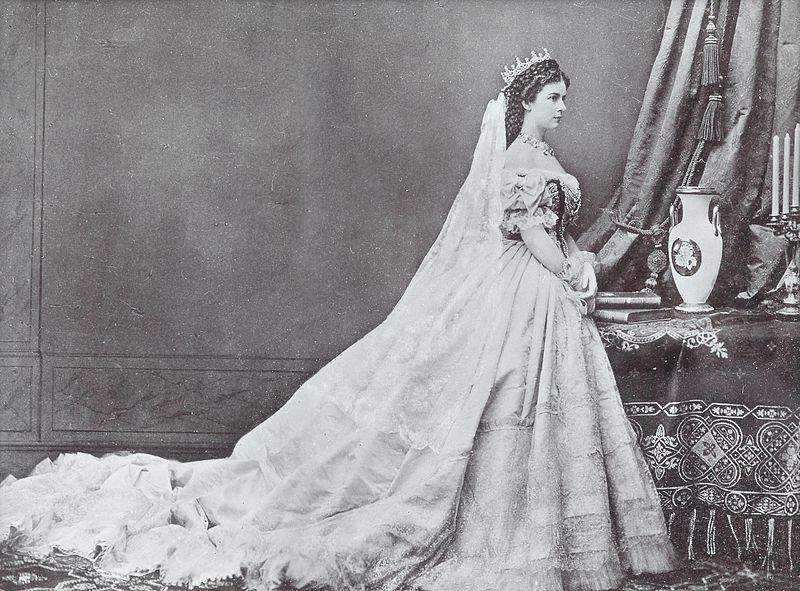
The Queen was beautiful in her Hungarian dress made by the famous French house, the Worth. They got a coronation gift from the nation, the splendid country residence in Gödöllő where they spent much time.
Her devotion to Hungary and Hungarians’ love for her is shown by the fact that several places still bear her name in Budapest, like the Erzsébet Square and the Erzsébet Bridge, the construction of which already started in her life.
It was there in 1898 that she was assassinated by an Italian anarchist who stabbed her in the heart. She did not realise that she had been wounded and boarded the ship, but an hour later, she died.
No country was in greater grief than Hungary when she died.
Featured image: wikicommons by Csanády
Source: www.hungarianhistory.com; www.olvass-erdekessegeket.blog.hu; www.hirek.sk


[…] She was a very pure soul, incarnated into dark Savoy bloodline in Turin. The Colonna family tried to manipulate her destiny, but failed to attract her to the dark side. She became the grand mistress of all adoptive (female) masonic lodges in France, and was the first person on the surface of the planet that was promoting true public feminine circles that were developing real sisterhood and friendship between women (for those who are initiated into higher mysteries of Isis I will use here the code word: amitie). She was the best friend of Queen Marie Antoinette. She was initiated into the Goddess mysteries by Count Caglisostro who opened a temple of Isis in Paris in 1785, the initiation itself taking place at the spring equinox of 1785. She was killed in 1792. The third high priestess was Queen Sisi: https://en.wikipedia.org/wiki/Empress_Elisabeth_of_Austria https://dailynewshungary.com/sisi-queen-of-hungary-and-empress-of-austria/ […]