Subscribe to our social channels to get the latest news about Hungary!


National pantheon, castle of King Matthias, palm garden, and so on in Budapest. Do you know about these? Do not worry if the answer is no, as these were all plans that were never realised. Szeretlekmagyarorszag.hu shared the interesting list of ideas that people had during history to replace the Citadel.
Why would they want to replace it? Well, the Citadel on the Gellért Hill has always been a symbol of terror, shame and defeat for Hungarians. It had been built by General Haynau after the defeat of the 1848-49 revolution and served the goal to terrify Hungarians.
The cannons were always pointed at Pest to stop any attempt at rebellion.
Although after the Austro-Hungarian Compromise of 1867 the Citadel had lost its military function in still harmed the national feelings of Hungarians and housed Austrian soldiers. They were probably guarding the building itself, as it had no purpose at the moment, and it remained in Austrian ownership until 1899.
People already started to plan how to get rid of the hated building after the Compromise. They wanted to erase it from the landscape and from their memories, so the first step in each plan was to demolish the Citadel. From that on there was no agreement on how to continue.
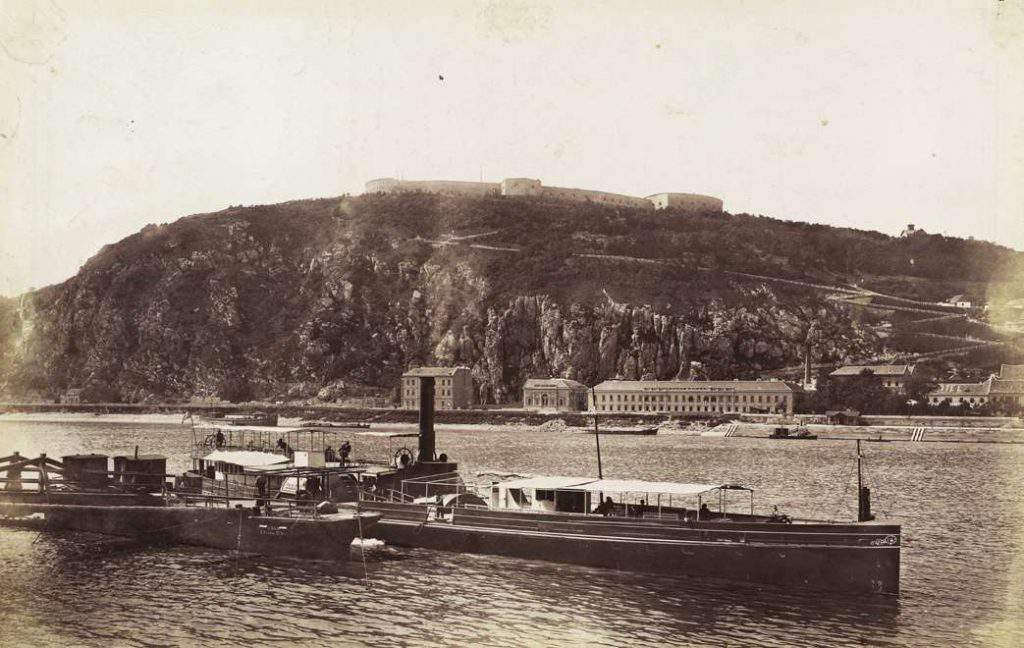
After 1899 when the Austrian army returned the territory and building to Budapest, the ideas really started flying:
One of the first and most self-explanatory ideas was to restore the observatory that used to stand there. The Uraniae (Csillagda) even served as a shelter for Hungarian soldiers during the revolution, but it was severely damaged.
The second big plan is often attributed to István Széchenyi and was revived over and over again.
This idea was to replace the symbol of shame and defeat with a place of glory, that is, to build a national Pantheon.
Lázár Pejakovics got closest to the realisation of this plan as he already created a budget and the outline of the building. He wished to present Árpád and all the princes and kings following him, the leaders of the ancient seven clans and representatives of the oldest noble families as well.