Subscribe to our social channels to get the latest news about Hungary!


The time has come, Christmas is ringing the bell on the front door, and it cannot wait to step in. Tens of thousands of grannies and moms are planning their Christmas meal desserts, and I am sure many of us will happily put away our diets for these few days to taste their delicious cooking. Here are some ideas with recipes if you want to serve tasty desserts for your loved ones. Warning, high calorie-intake ahead!
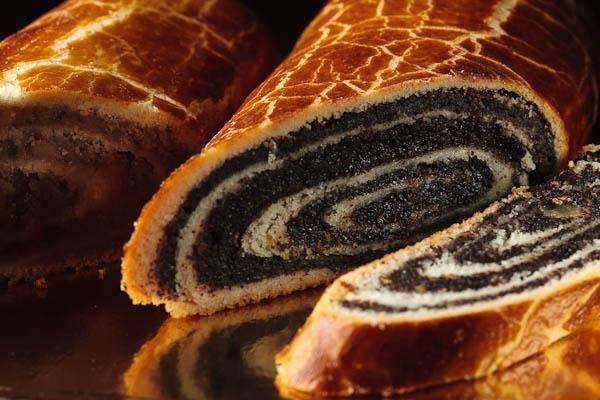
As we earlier wrote about it, Beijgli is one of the most well-known and most popular traditional Hungarian Christmas cakes; it is often referred to as walnut roll or poppy seed roll in English. The recipe arrived in Hungary around the 19th century, and it shows Silesian and Armenian ancestry. The traditional versions are filled with walnut or poppy seed filling, but, nowadays, it is becoming popular to bake bejgli with cherry-poppy seed, plum-chestnut, apple-poppy seed and cabbage fillings. The original fillings carry symbolic meanings: walnut provided protection against hexes, while poppy seeds brought prosperity.
Want to surprise your family with something new at Christmas? Find the recipe for bejgli here.

Zserbó is a popular Hungarian dessert invented by Emil Gerbeaud, a confectioner in Budapest of Swiss ancestry, although its origin is still a matter of discussion. The sheets of shortbread pastry are filled with the mixture of apricot jam and ground walnut and topped with chocolate. Zserbó is popular both at Christmas time and Easter.
Check out the recipe for Zserbó and make your own!

Mákos Guba is a typical Hungarian dessert, but it is known in Germany (Mohnpielen) and Poland (makówki) as well. Originally, it was a Christmas-exclusive meal, but we make Mákos Guba regularly today. It can be made with dry crescent or dough, and it is surely the cheapest and easiest one of today’s collection!

By appearance, it is quite similar to zserbó, although the whole cake is softer; the chocolate, the dough, the fillings, everything. Semolina honey cake is actually a layered torte with two layers of semolina filling and a layer of jam in the middle, which is up to your taste, but Hungarians generally use apricot jam. In order to reach the perfect softness, it should be left overnight either in the fridge or in a place where the temperature is cooler.
I highly recommend trying this one; this is one of the favourite cakes of my family.
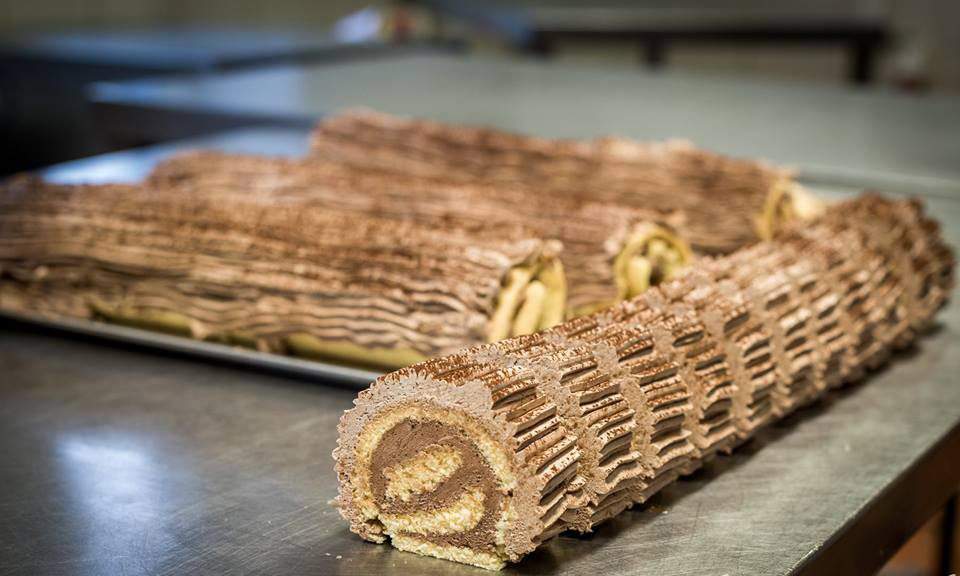
Airy sponge cakes with walnut, poppy, seed or dried fruits can be baked in advance, but it is worth making creamy ones in the last few days before Christmas, but they definitely should not be missed out on. Fatörzs originates in the middle ages, but it only became a Christmas classic during the 20th century. It can be served in various ways, but one thing is in common for all: they are generally well-decorated and filled sponge cakes. You can make chocolate, punch, vanilla or whatever cream you would like to fill it with – the result will be great for sure.
Try this recipe of a chocolate fatörzs.
Interested in how the traditional Hungarian Christmas dinner looks like? Learn more here.


