Subscribe to our social channels to get the latest news about Hungary!


Two Hungarian start-ups – InSimu Patient, a medical case study educational app that provides learners with simulated patients and Sineko with a platform that improves the efficiency and quality of medical documentation – were selected among 13 other teams to receive mentoring and training support to the value of EUR 25,000 at the third edition of the EIT Health InnoStars Awards competition, a programme for start-ups from Regional Innovation Scheme Programme (RIS) countries with more moderate levels of innovation than other European countries.
Fifteen start-ups from Central, Eastern and Southern European countries that are still developing in terms of healthcare innovation will be given €25 000 in funding, as well as training and mentoring support, as winners of the 2019 EIT Health InnoStars Awards.
In the third year of the InnoStars Awards, the winners were chosen from 116 high-quality contestants based in the 13 Regional Innovation Scheme Programme (RIS) countries – which have more moderate levels of innovation than other European countries.
Selected by a panel of experts, the winning start-ups include five from Portugal, two from Poland, two from Hungary, two from Latvia, one from the Czech Republic, one from Lithuania, one from Italy and one from Romania.
They will receive €25 000 of smart money, individual mentoring for four months and the opportunity to participate in two bootcamps in Europe. EIT Health InnoStars will also organise three validation interviews with potential customers, investors and partners for the award winners. After the four month-programme, ten finalists will be selected to participate in the InnoStars Awards final pitch in November, to compete for the three top prizes: an additional €25 000, €15 000 or €10 000 in funding.
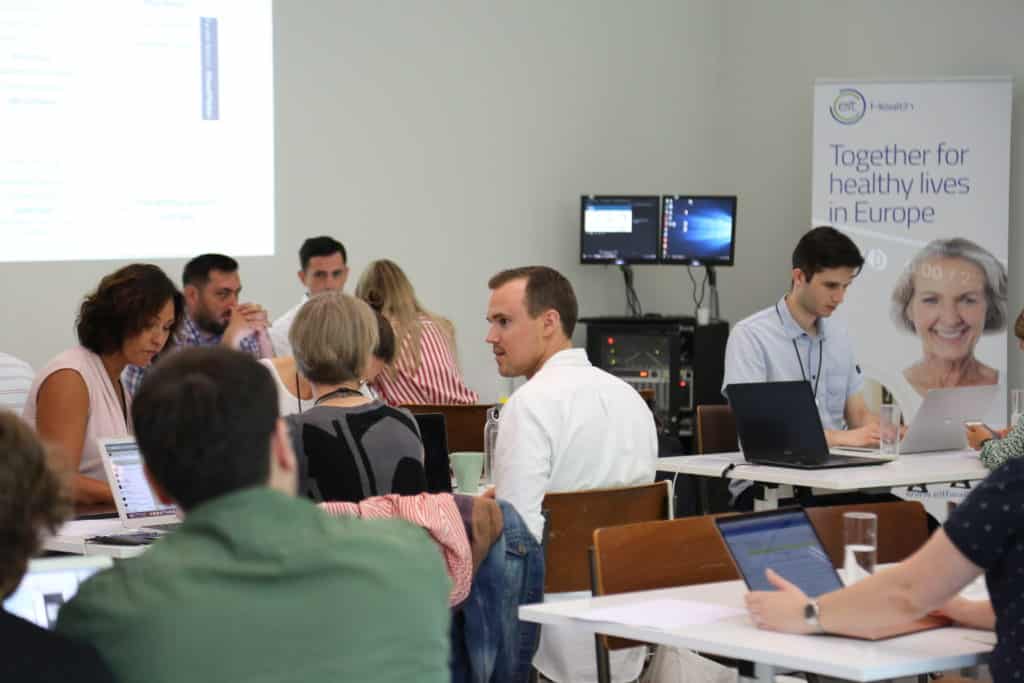
“More and more start-ups from the regions covered by the Regional Innovation Scheme apply successfully for prestigious European innovation programmes like InnoStars Awards,” said Mónika Tóth, EIT Health InnoStars RIS Programme Manager. “There is an impressive talent pool in this part of Europe, that has skills and knowledge to create and develop healthcare innovations.”
The InnoStars Awards programme is open for micro and small enterprises, spin-offs and start-ups that already have prototype or a Minimum Viable Product (MVP). All contestants must come from the RIS countries, and based on the increasing number of qualified applicants, the talent pool there is strong. The RIS Hub in Hungary is the Institute of Transdisciplinary Discoveries in Pécs, a space that encourages, mediates and hosts exchanges not only within the academia, but also develop, in a true transdisciplinary manner, effective communication between academia, the business sector and society.
“There are excellent science and talented teams being produced in Eastern Europe, Mediterranean countries and Portugal,” said Dr Nuno Viegas, Business Creation Manager, EIT Health InnoStars.
“InnoStars Awards provides start-ups from these countries with funds to further validate their health solutions, education on how to create a business plan and a chance to talk with investors and connect with expert mentors in other European regions that can share their network and experience.”

B-CULTURE: A Portuguese start-up develops 4D in-vitro human tissue models for drug testing. They offer an efficient and ethical solution for a monitored screening and validation of compounds and implants for the pharma, dental and biomedical industries.
BrachyDOSE: A Lithuanian team of experienced engineers and scientists offer a cancer treatment quality control tool that provides more effective and personalised treatment. Their product is made for oncologists who are seeking precision and the best possible treatment results in radiotherapy.
BRIGHT – Beyond Research and Information Graphics for Health and Technology: An innovative company from Portugal offers the Serious Games for Health project, which helps patients to self-manage their disease and promotes adherence to therapy.


