Subscribe to our social channels to get the latest news about Hungary!


Hungarian scientists have contributed to the development of numerous things that we take for granted in our everyday lives, like the electric motor, the telephone, the computer, the helicopter, the noiseless match, or the ballpoint pen. In this article, we introduce 4 notable 19th−20th-century inventors to complement our PREVIOUS COLLECTION of lesser-known Hungarian geniuses whose outstanding achievements left their mark on the technologies we utilise today.

Zoltán Bay was a Hungarian physicist, a member of the Hungarian Academy of Sciences, and one of the most notable scientists and inventors of the 20th century. After finishing his studies in Mathematics and Atomic Physics, he was appointed as a lecturer at the Institute of Theoretical Physics at Pázmány Péter University. In 1926, he obtained his doctorate degree, and he spent several years in Berlin on scholarships, doing research at both the prestigious Physikalisch-Technische-Reichanstalt and the Physikalisch-Chemisches-Institut of the University of Berlin.
From 1930, Bay worked at the University of Szeged as a professor of Theoretical Physics. He continued his research at the United Incandescent Lamps and Electric Company (Tungsram), and as laboratory head, Bay contributed to the development of high-intensity gas discharge lamps, fluorescent lamps, radio tubes, radio receiver circuitry, and decimeter radio wave techniques, history.nasa writes. He is also credited with the invention of the first usable photoelectron multiplier. In 1938, Bay organised the Department of Atomic Physics at the Technical University of Budapest with the support of Tungsram. He studied metal-vapour lamps and fluorescent light sources, and
together with György Szigeti, Bay invented the ancestor of the light-emitting diodes (LEDs). They received a U.S. patent on “Electroluminescent light sources” made of silicon carbide.
In 1942, the so-called Bay-team was established, the task of which was to perform micro-wave experiments. Four years later,
the team had a revolutionary achievement in space research by detecting the reflection of radar beams aimed at the moon.
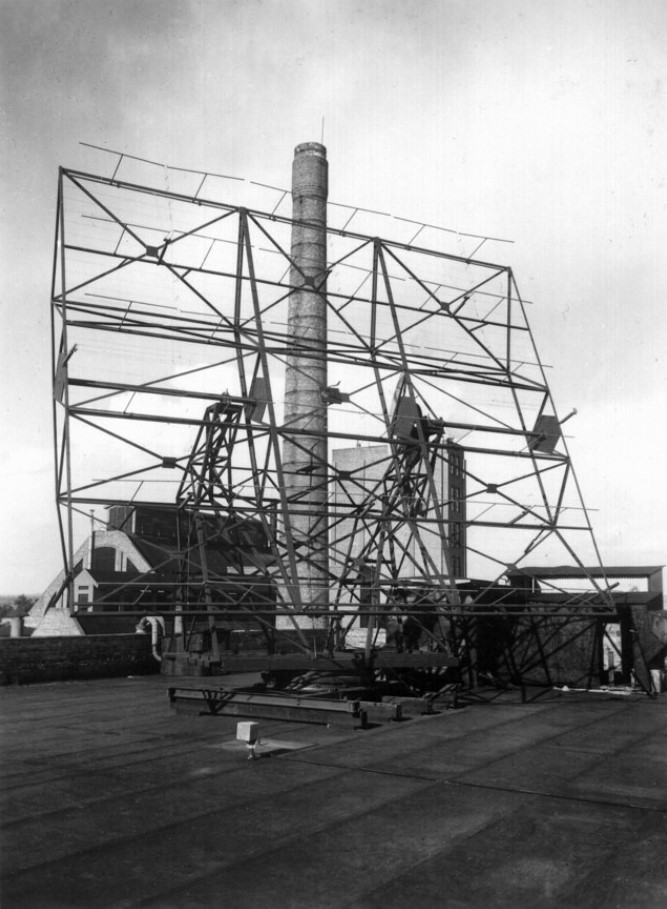
This was the first time that men “reached” an extraterrestrial object. Between 1948 and 1955, he worked as a professor of Experimental Physics at the University of Washington, and from 1955 to 1972, he was a departmental head at the U.S. Bureau of Standards. In 1981, the Hungarian Academy of Sciences and the Eötvös Loránd Society of Physics elected Bay an honorary member.
Albert Fonó was one of the early pioneers of turbojet and ramjet propulsion. He studied mechanical engineering at the Royal Joseph University and gained considerable experience through working for German, Belgian, French, and Swiss manufacturers. He specialised in energetics and received 46 patents in 20 research topics, including a steam boiler and an air compressor for mines.
His first and most significant invention was an aerial torpedo, which operated on the jet propulsion principle and increased the effective range of artillery.
Nonetheless, the proposal for Fonó’s invention was initially rejected by the Austro−Hungarian army. After World War I, he returned to the subject of jet propulsion and developed an “air-jet engine” (ramjet) suitable for high-altitude aircraft travelling faster than the speed of sound. After a 4-year-long period of examination, Fonó received a patent in 1932.
In 1947, he became a private teacher at the Budapest University of Technology, and in 1954, he was elected as a corresponding member of the Hungarian Academy of Sciences. From 1968, he was a corresponding member of the International Academy of Astronautics.

According to Arcanum, Jendrassik completed his education at the Royal Joseph University in Budapest and at the University of Berlin. After obtaining his degree in mechanical engineering in 1922, he worked at Ganz Works where he created
his first invention, the four-stroke, small diesel engine, known as the Ganz-Jendrassik engine.
The Ganz-Jendrassik engine started the process of dieselisation of domestic railways and shipping. In 1927, he became the head of the engine design department at Ganz works, and a decade later,
Jendrassik developed the world’s first small gas turbine.
He registered approximately 80 patents for engine and gas turbines. In 1936, he established the Invention Development and Marketing Co. Ltd. In recognition of his scientific work, he was elected as a corresponding member of the Hungarian Academy of Sciences. In 1947, he left Ganz Works and moved to London where he continued to work on the development of the gas turbines. His last invention was a turbine-related pressure exchanger.

Mária Telkes, or the “Sun Queen”, was a Hungarian-American biophysicist, scientist, and prolific inventor, mostly known for her achievements in the field of solar energy technology, writes Oakes in the Encyclopedia of World Scientists. Born in Budapest, she studied at the University of Budapest and graduated in Physical Chemistry. In 1924, she immigrated to the United States after visiting her uncle, who was the Hungarian consul in Cleveland. In 1925, she was appointed as a biophysicist for the Cleveland Clinic Foundation where she contributed to the development of a photoelectric device that recorded brain waves.
In 1939, Telkes moved to Boston and became a teacher and researcher at the Massachusetts Institute of Technology (MIT) and joined the Solar Energy Conversion Project. Her research focused on the possibilities of solar energy application. As part of a long-term research project,
Telkes developed a solar-heating unit for the so-called Dover Sun House, which was built in 1948 by architect Eleanor Raymond.
The system designed by Telkes was different from that used in previous MIT houses since she used crystallised sodium sulfate solution as a storage device instead of water. The sun collector was located on the south-facing wall. Warmed air was circulated by fans into heat bins with a metal drum filled with crystallised sodium sulfate solution. As the warm air circulated around the drums, the salt was melted, enabling it to store heat at a constant temperature.
Telkes also saved the lives of airmen and sailors who were abandoned at sea without fresh water.
She designed a portable water evaporator, which removed salt from seawater.
From 1953, she studied solar energy at the New York University College of Engineering. Later, she turned towards the practical application of her research and designed solar-powered dryers and water heaters.
She also developed space- and sea-proof materials for temperature-sensitive devices for the Apollo and Polaris projects.
In 1952, Telkes won the first Society of Women Engineers Achievement Award.
Source: Daily News Hungary


