Subscribe to our social channels to get the latest news about Hungary!


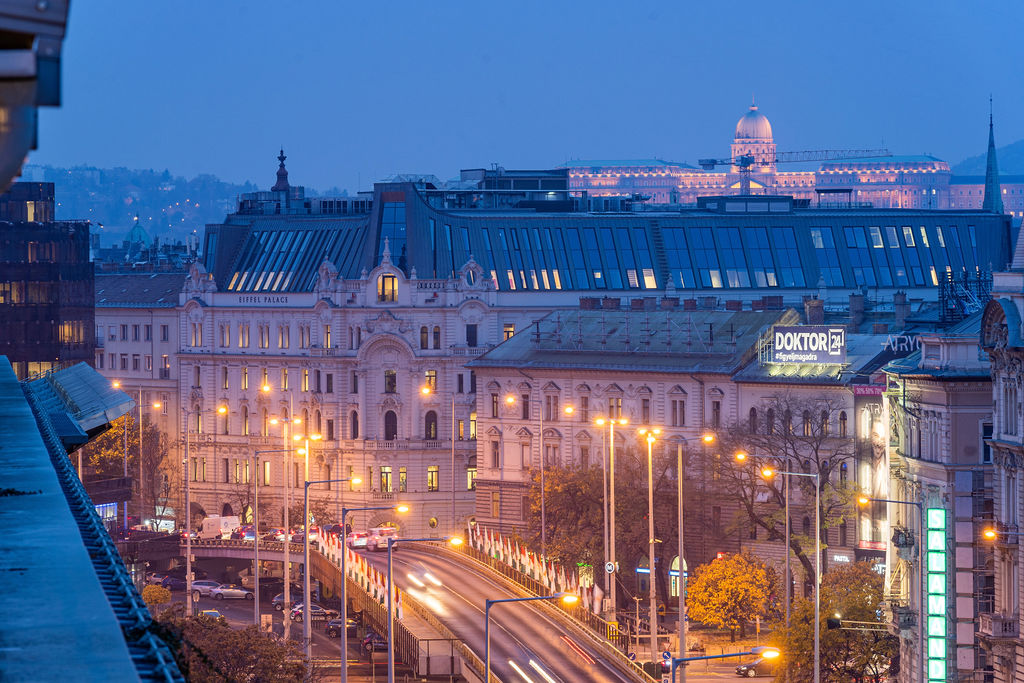
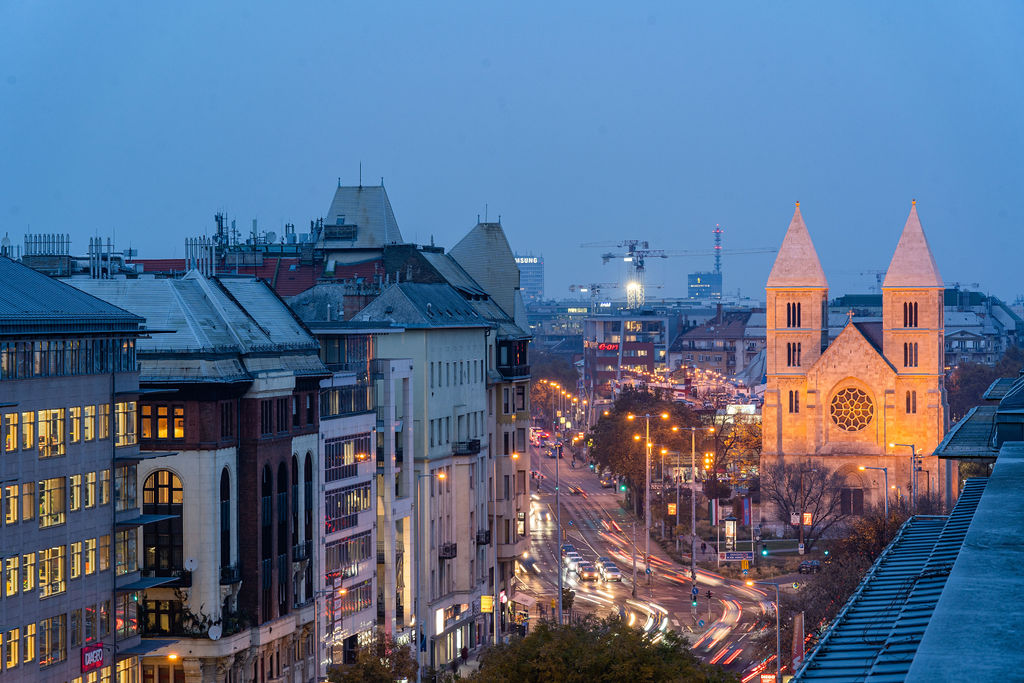
The Crowne Plaza Budapest hotel will soon open two rooftop terraces to the public, offering a unique panoramic view of the city and its beautiful architecture including the Nyugati railway station’s hall originally designed by the Paris Eiffel office.
A new perspective of Budapest is emerging with the appearance of ever more proliferating, often hidden rooftop terraces and community spaces. It all started in 1911, when the public was impressed by the special feeling of discovering an almost unknown face of the city while taking a walk on the first such rooftop, the observation deck on the top of the Paris Department Store. Today, it is increasingly common to be able to soar gently above the houses and view the city’s often unnoticed beauties from above street level.
Built in 1999 to the design of legendary Hungarian architect, József Finta, the Westend site, considered one of the largest shopping centres in the region, also houses a 230-room hotel.
However, the last two decades have brought new challenges for the hotel industry, and in response, the owner of the property, Granit Polus is renovating the building, which recently opened as the Crowne Plaza Budapest, inspired by the architecture of the 19th century Nyugati railway station and designed by the Polish architectural firm Tremend, to meet 21st century standards.
In the renewed hotel, not only the interiors will be given a fresh look, but also the roof terraces in two directions.
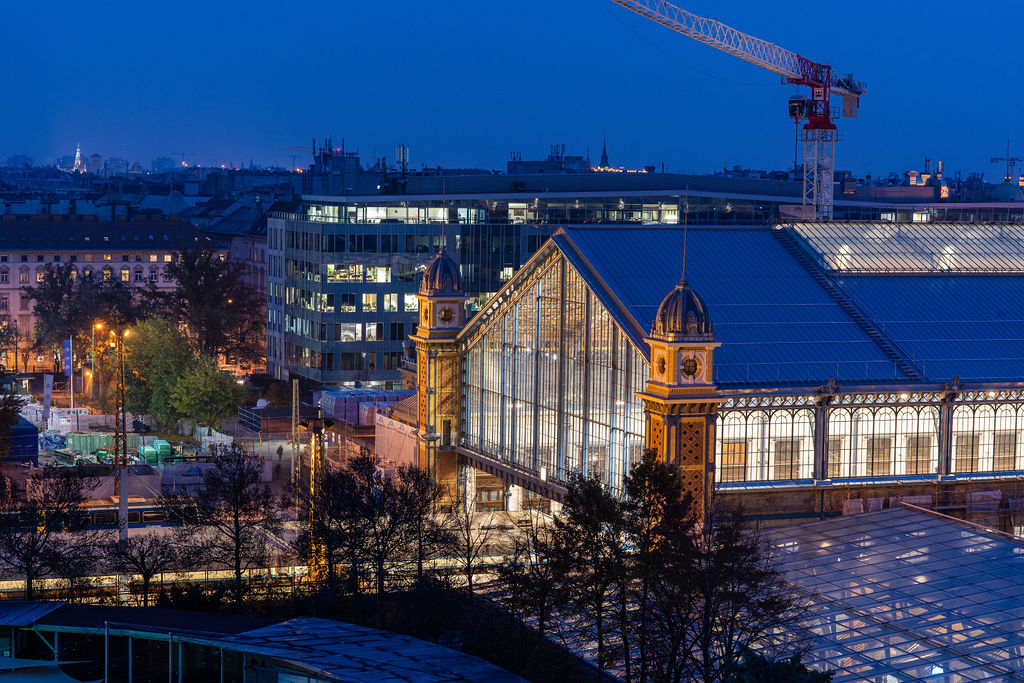
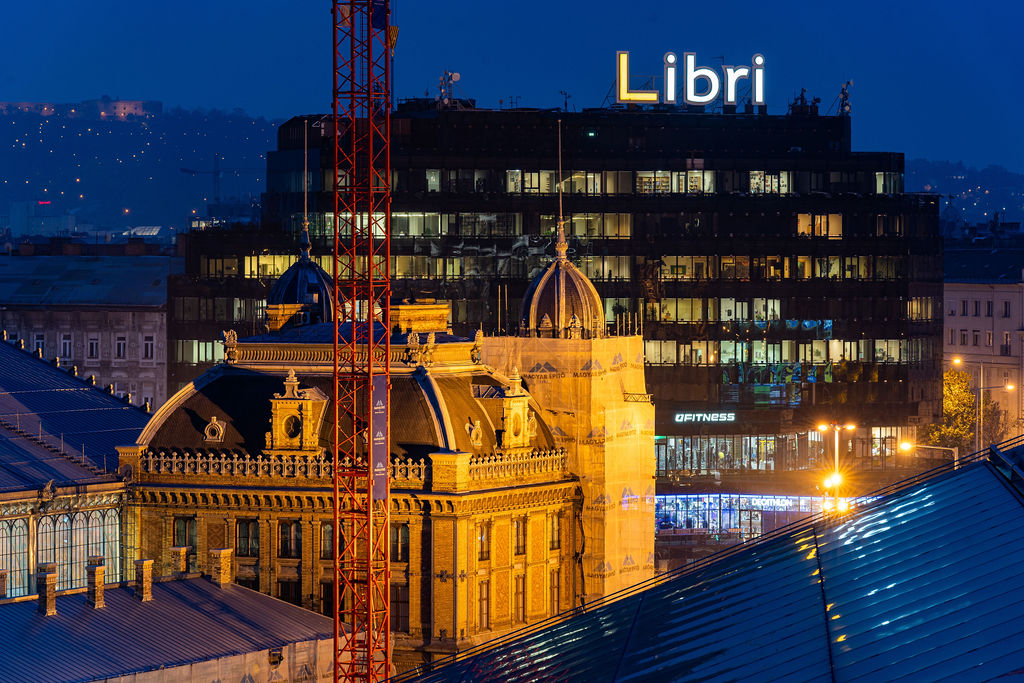
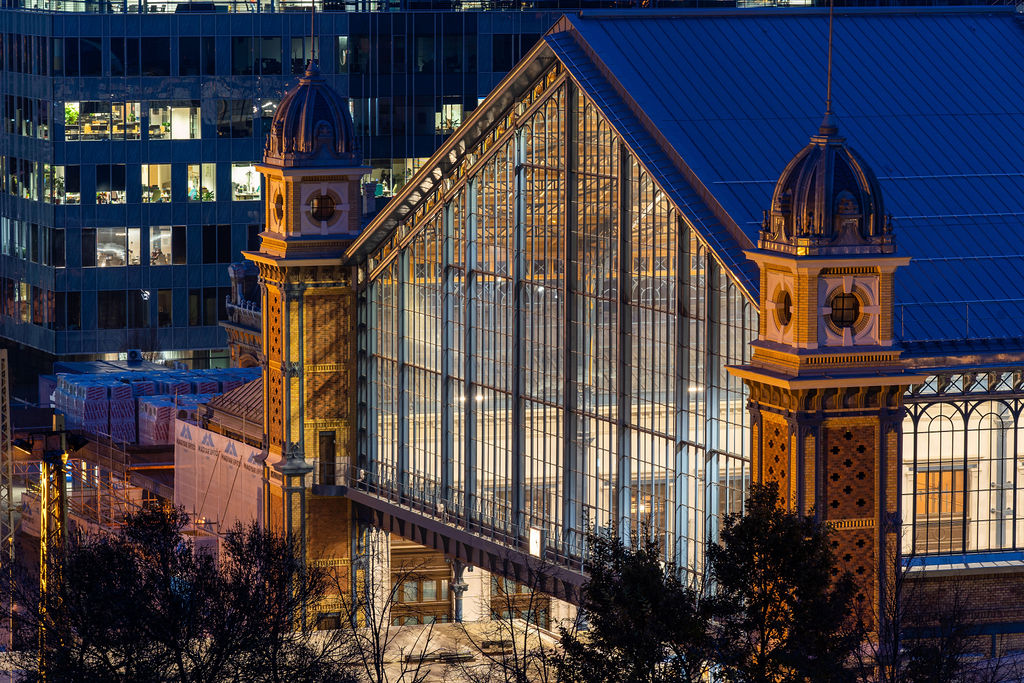
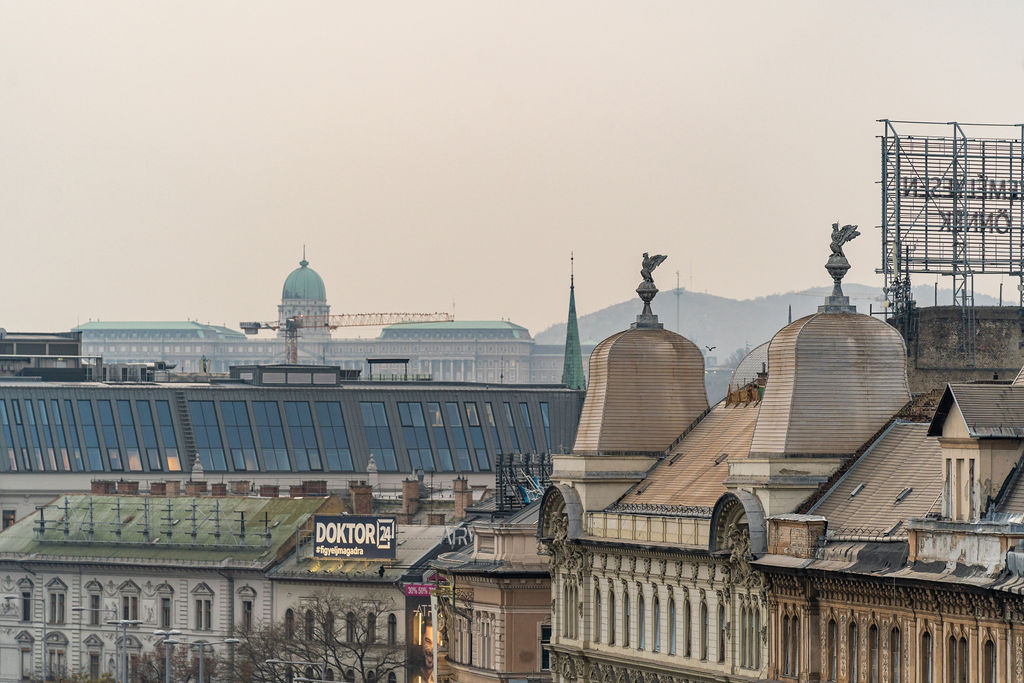
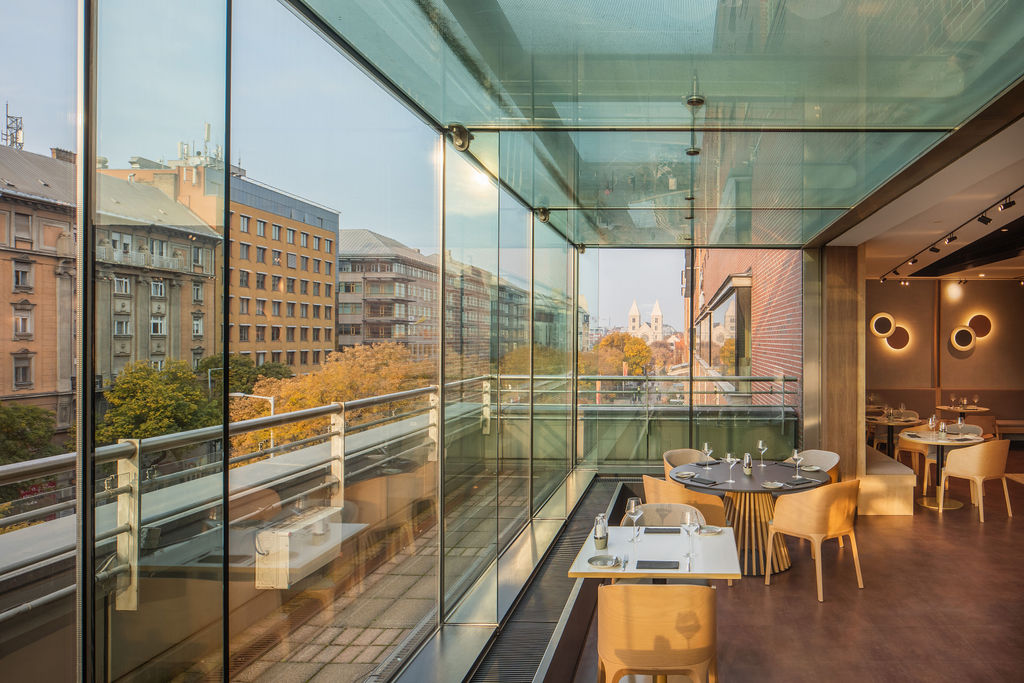
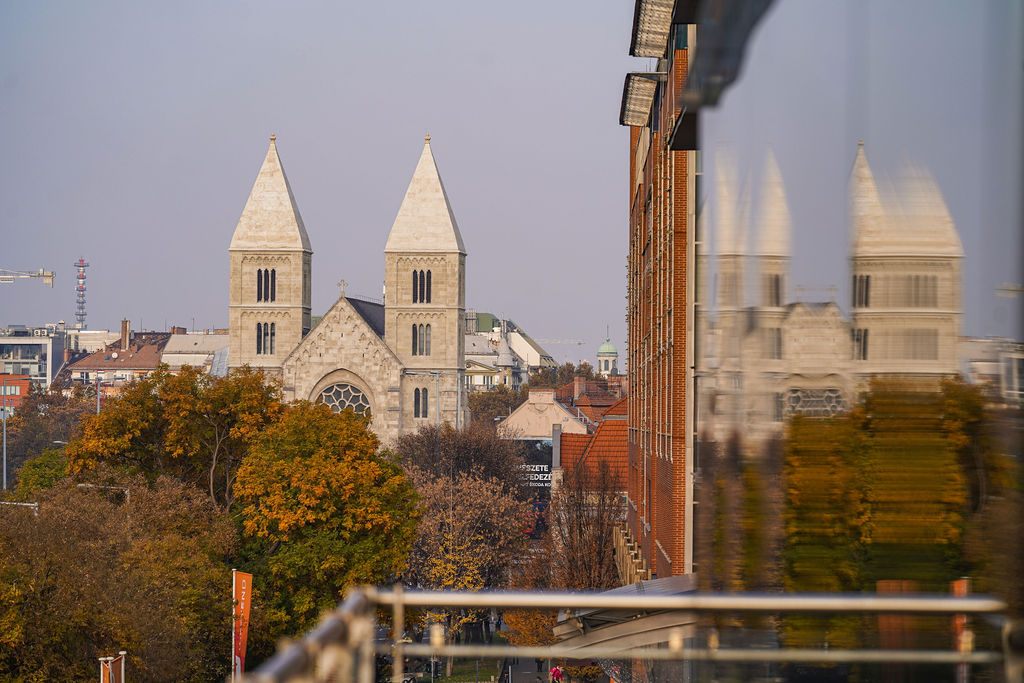
The rooftop garden of the mezzanine floor Cult restaurant, which will open early next year, will offer a magnificent view of the recently renovated Nyugati railway station and its towers, while the Club Lounge on the top floor of the building will open up to the old residential buildings and their imposing roofs on Váci ut, and beyond them to the Buda Hills.
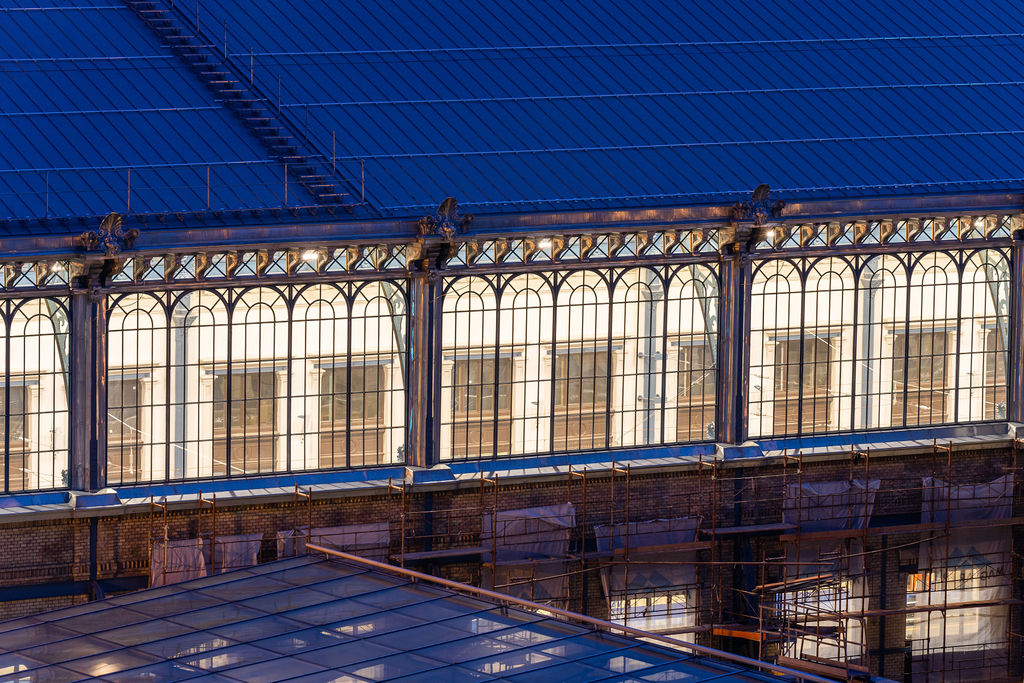
The restaurant’s roof garden will soon undergo a landscape- and interior design makeover, but its most spectacular feature is the renovated Nyugati station hall and its roof.
The history of the building dates back to the mid-19th century. When the day dawned on 15 July 1846, the people of Pest flocked to the then desolate suburbs to see the great miracle, the inauguration of the first railway in Hungary, the Pest-Vac line and the station building that housed it, a project that had been the subject of controversy for years.
In the engravings of the time, there is no sign of today’s bustling urban life around the celebrating crowd and the “great building standing majestically”, but the structure, along with some of its more prestigious companions, was already a foretaste of Pest, which was to develop from a small town into the capital, and then Budapest.
The cityscape that a modern-day observer stepping out onto the roof garden of the Crowne Plaza sees is essentially defined by the station’s reception building, the present-day Nyugati railway station hall, opened in 1877 by the Austrian State Railways Company, and the massive wave of construction it has generated. The design of this imposing station building, which included a number of technical feats, was carried out by August W. De Serres and the Paris Eiffel office, who eventually drew up the final plans in Vienna. The building became one of the architectural jewels of the capital of the time – and of today. The press of the time considered it one of the most beautiful buildings in Europe, but it was also the first large span building in Hungary, and in this respect it surpassed even its Viennese contemporaries. Architectural history compares the French-style station to the Gare d’Austerlitz (formerly Gare d’Orléans) in Paris. By the turn of the century, Nagykörút (the great circular boulevard) had been developed with its magnificent apartment blocks, hotels and cafés had opened in the area in front of the station, and the development of the previously industrial area of Vaczi ut had begun.