Subscribe to our social channels to get the latest news about Hungary!


In most English-speaking countries and many other parts of the world where Christmas is celebrated, it is believed that Santa Claus delivers presents to people – especially children – on Christmas Eve. However, Hungarians celebrate Christmas a little differently.
In Hungary, as in many European countries, Jézuska (Christkind) is the traditional gift-giver during Christmas, and in Hungary, it is usually celebrated on Christmas Eve, rather than in the morning on Christmas Day.
Most of you are probably somewhat familiar with some of the newer traditions of celebrating Christmas in Hungary, but there are some traditions that have transformed or entirely faded away over the centuries.
It is important to note that when Christianity became popular, it integrated several pagan customs and traditions of the time.


For example, bringing evergreen branches or boughs into someone’s home has long pagan roots, but the tradition of erecting a Christmas tree was only popularised in Hungary around the 19th century.
According to some sources, the first person to have a Christmas tree in Hungary was Teréz Brunszvik, the founder of the first Hungarian nursery school, who erected it in 1824.
The custom then started to catch on among wealthier people, and it really only became a general tradition for all around the 1930s.


That is when the nowadays typical tradition of decorating the tree with szaloncukor kickstarted, and now, Hungarians spend billions of forints on the tasty sweets every year.
Read also: Why does Santa arrive so early in Hungary? – History and traditions
The Nativity play is another important tradition that has some pagan roots. It was believed that animal fur and making a lot of noise – much like with the origins of the Busójárás – scared away evil spirits. However, it was mostly Christianised, with the play performed in or in front of churches.
A mix of pagan and Christian traditions is still present in some places in Hungary, mainly in Transdanubia. It is called regölés, when a group of people roam the streets singing and bringing fertility and luck to households in exchange for presents between 27 December and Epiphany (6 January). This might be a remnant of the shamanistic rituals of ancient Hungarian traditions.


Although the exact Christmas traditions are unique to each family, and families can create their own traditions, most religious Hungarians would attend Midnight Mass on Christmas Eve, after a filling dinner.
Usually, Hungarians celebrate Christmas with close family and exchange presents on Christmas Eve. They would then visit their other family members on 25 and 26 December.
The 27 December is the day of Saint John and the consecration of wine. Many families used to bring wine to church to be consecrated by the priest. It was believed that this wine would help cure illnesses.
Read also: What is szaloncukor and why do Hungarians spend so much on it?
Today, food has a very central role in celebrating Christmas in Hungary. Many families have their own typical Christmas menu that often includes well-known staples of Hungarian gastronomy, such as gulyás or halászlé (fishermen’s soup) and main dishes like the legendary töltött káposzta (stuffed cabbage) and csirkepaprikás (chicken paprikash) or deep-fried fish.
However, this was not always the case. When the religious aspects of the celebration were more in focus, people would fast on this day and would not eat meat, with the exception of fish.
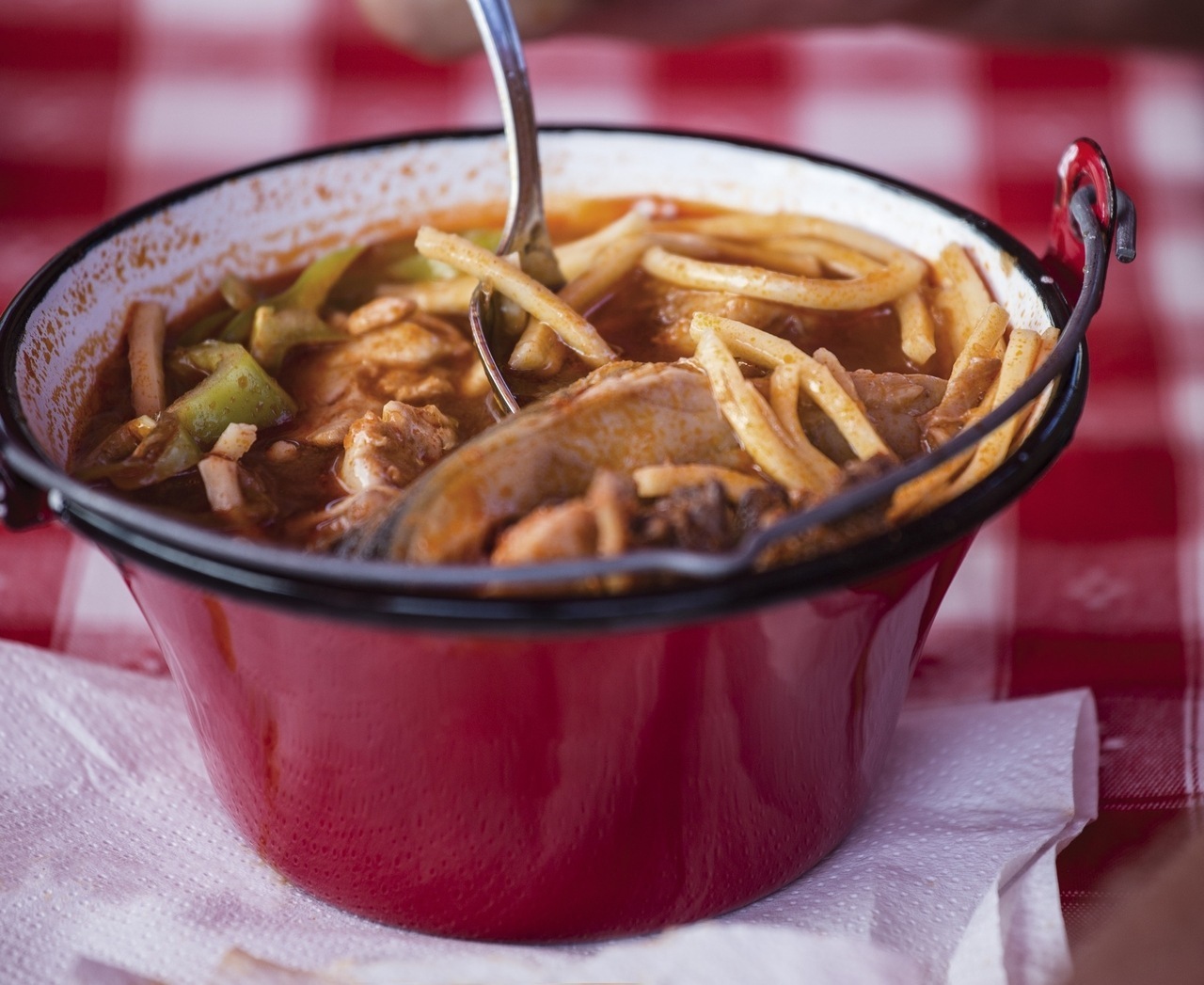
This is probably why today’s Christmas feast also often includes halászlé (fishermen’s soup) or some type of main dish using fish.
Vegetables and fruits were the most important ingredients of fasting Christmas meals, with lentils, beans, cabbage, mushrooms, dried fruits, apples, chestnuts, and pumpkins having dedicated roles.
Mákosguba (bread and butter pudding with poppy seed), briós (brioche), and zserbó (gerbaud) are all popular desserts during Christmastime, but by far the most well-known is the bejgli.
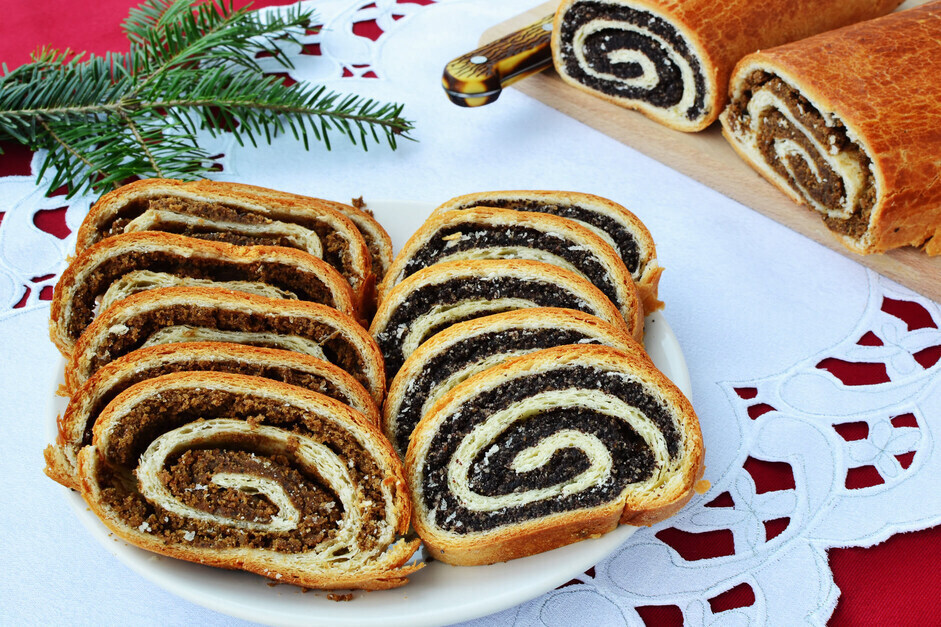
Many Hungarians spend a lot of time decorating their home, especially the Christmas tree and the dining table. A lot of families have a dedicated, ornamental or specially coloured tablecloth for Christmas. It is often red as, according to older traditions, this colour represents happiness.
Source: Daily News Hungary


For us, Christmas is for giving and being grateful for what we have. We believe: “segíts magadon, Isten is megsegít” is important and we also believe that it is important to help those less fortunate.
My wife bought a meter high, plastic Christmas tree when we got married 47 years ago. It reminds us how fortunate we are and how much we can thank God for keeping us safe all these years.