Possible 400 EUR/HUF exchange rate amid Hungarian central bank decisions

Change language:
Will we see a 400 EUR/HUF exchange rate again this year? The Hungarian National Bank (Magyar Nemzeti Bank, MNB) is anticipated to continue its trend of monetary easing with a 50 basis point interest rate cut at its meeting tomorrow. This would lower the benchmark rate to 7.25%. However, according to economists consulted by Portfolio, this aggressive easing phase is approaching its conclusion. Despite the central bank’s cautious stance, analysts predict that the euro could exceed the HUF 400 mark by the end of the year.
Barnabás Virág, the MNB Vice President, told Portfolio last week that the base rate could settle around 6.75-7% by mid-year. This view is shared by market participants, who expect an imminent 50 basis point cut followed by a similar reduction in June. This would align the base rate with the mid-year target of 6.75%.
The consensus is clear: an immediate 50 basis point cut is anticipated, with most expecting a similar decision in June, although a minority predicts a smaller, 25 basis point reduction. This pattern indicates a shift towards a more conservative approach as the year progresses.
Monetary Council might opt for a larger cut
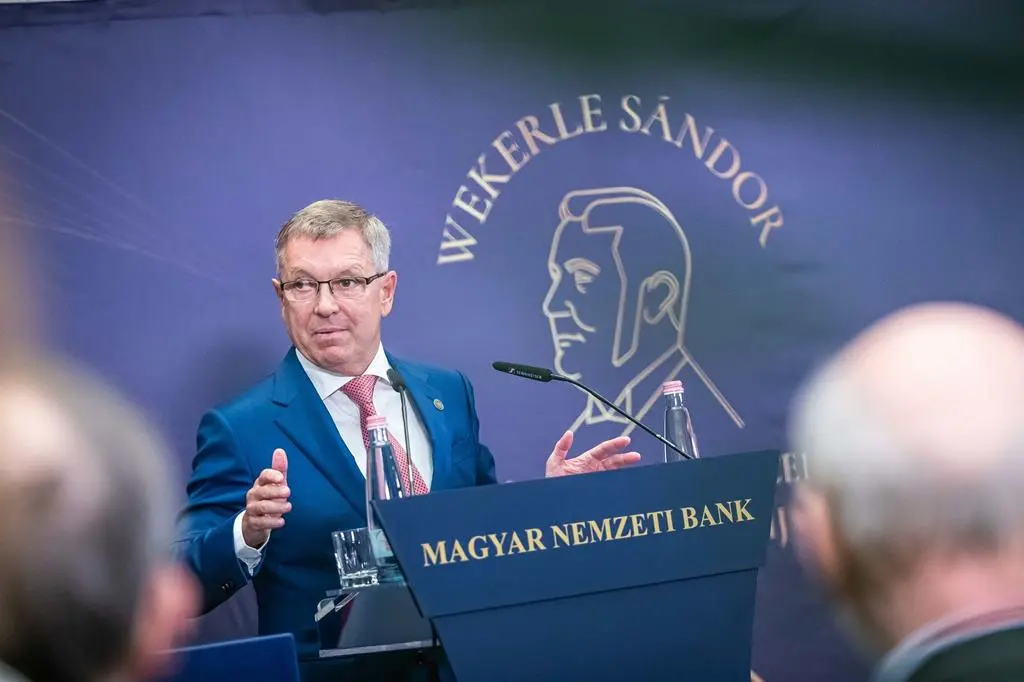
András Pintér from Apelso Capital notes that the central bank has been signaling a cautious approach, preparing the market for smaller steps. The market’s expectations, particularly towards the year-end, have outpaced the central bank’s plans. Therefore, in May, the Monetary Council might opt for the larger 50 basis point cut, but June could see a continuation of this trend if necessary.
The inflation trends in the services sector might concern the central bank, yet recent international developments provide some leeway for this decision. Global risk appetite has stabilised following a brief “risk-off” period in April, which is also reflected in the HUF’s exchange rate. According to Pintér, the upcoming communications will likely emphasise the nearing end of the rate-cutting cycle.
Unicredit’s lead analyst, Zsolt Becsey, highlights that the easing of public friction between monetary and fiscal policies broadens the central bank’s manoeuvring space. This flexibility is further supported by recent weak US macroeconomic data, which have bolstered expectations for three Federal Reserve rate cuts this year, benefiting emerging markets like Hungary.