Subscribe to our social channels to get the latest news about Hungary!


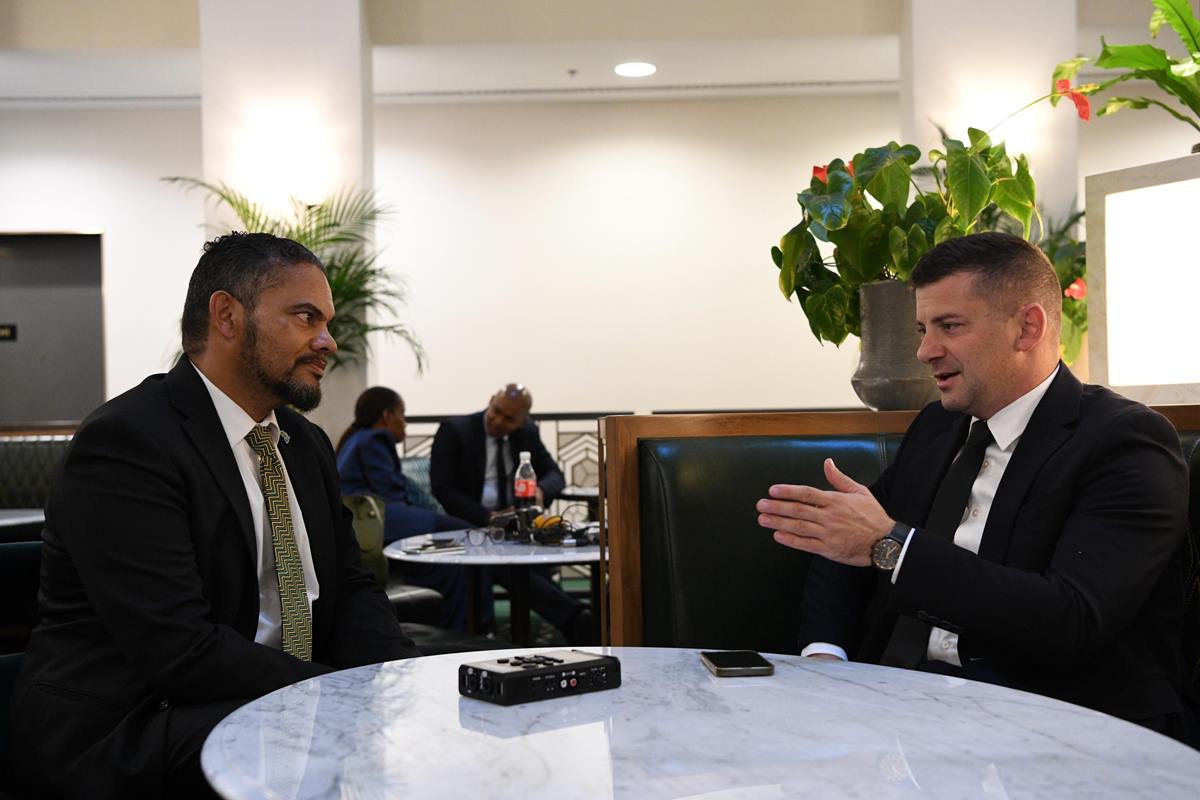
Alvin Botes, South Africa’s Deputy Minister of International Relations and Cooperation, spoke about his diplomatic travel to Hungary. During the visit (23 September 2024), which aims to deepen bilateral relations, he explored opportunities for cooperation in key sectors such as education, trade, water management and peace diplomacy. The interview provided a comprehensive overview of the outcome of the discussions and the shared aspirations of the two countries.
During the interview, Deputy Minister Botes underlined the more than 30 years of diplomatic relations between South Africa and Hungary, which date back to 1991. During his visit to Hungary, he held bilateral consultations with his Hungarian counterpart, Deputy Minister Levente Magyar. Discussions focused on strengthening diplomatic relations through the Joint Cooperation Committee and the establishment of the Joint Economic Committee, which aim to strengthen bilateral relations, focusing on economic diplomacy, trade and institutional cooperation.
View this post on Instagram
Botes underlined the importance of Hungary as a strategic partner in Europe, particularly in promoting South Africa’s foreign policy objectives in the region.
One of the main topics of the diplomatic discussions was the development of educational cooperation. Hungary offers 100 scholarships annually to South African students in the Stipendium Hungaricum program, which plays a crucial role in skills development in areas such as water management and engineering. Botes praised Hungary’s commitment to education, noting that the cooperation dates back to South Africa’s struggle against apartheid when freedom fighters were given educational opportunities in Hungary.
The deputy minister stressed the importance of the institutional links between universities in the two countries, which have facilitated exchange programmes and research cooperation. These educational partnerships are crucial for South Africa’s growth, as they provide young South Africans with the skills needed to drive development in critical sectors.
During the interview, Botes addressed pressing global issues, in particular the conflict between Ukraine and Russia. He praised Hungary’s noncommittal stance, which is in line with South Africa’s foreign policy, as both sides support dialogue, mediation and peaceful resolution of conflicts. He stressed the need to address the root causes of the conflict, referring to the failed Minsk agreements and the role of multilateral institutions such as the UN in peace diplomacy.
Botes also addressed the Israeli-Palestinian conflict, acknowledging the differences between South Africa’s and Hungary’s positions while Hungary has a historic relationship with Israel because of its Jewish population, South Africa is steadfast in its support for the Palestinian people. However, Botes stressed that both sides respect each other’s positions and will continue diplomatic cooperation through international organisations, such as the International Court of Justice (ICJ).
Another key theme of Botes’ visit was economic cooperation. The Deputy Minister highlighted the potential of renewable energy, as Hungary has advanced capabilities in solar, wind, and green hydrogen technologies. South Africa, with its growing demand for sustainable energy solutions, stands to benefit significantly from Hungary’s expertise in these areas.
In addition to renewable energy, the discussions also covered trade and investment opportunities, particularly in the automotive and manufacturing sectors. Botes called on Hungarian businesses to explore investment in South Africa, pointing out that the African Continental Free Trade Agreement provides a gateway for investors to expand their reach across the African continent.
“We have the rule of law, an independent judiciary, a very strong judiciary. We have very good foundations in terms of our financial structure, financial institutions, financial intelligence centre, actual banking institutions. So we probably meet the highest standards of corporate governance that businesses are looking for,”
Botes said.
The discussion also touched on tourism, with Botes describing South Africa as a “tourist paradise”. Despite the distance, he stressed that the country offers a unique blend of wildlife, culture and natural beauty that could attract Hungarian tourists. South Africa’s varied climate and wildlife, including the iconic Big Five, make it an ideal destination for adventure seekers and nature lovers alike.
Botes acknowledged that travel logistics can be challenging, but reassured Hungarian tourists that the value of the South African experience is worth the trip.
“There is indeed no direct flight from Hungary, but you can easily transfer in Dubai or Istanbul, and you get that value back when you arrive in South Africa. So the experience is worth the trip in my opinion, and South Africa is a good value-for-money destination for tourists, and the wildlife is unique,”
he said.


Finally, Alvin Botes expressed optimism for the future of South Africa-Hungary relations. He stressed the mutual benefits of educational exchanges, trade opportunities and multilateral cooperation in peace diplomacy.
As Botes concluded,
“These partnerships are just the beginning of a long and fruitful relationship between our two countries, and we look forward to a future that we can build together.”
Read also:


South Africa became another informal Russia ally. It has had regular visits by Russian naval ships and stands accused of supplying arms to Russia despite its’ denials. It is quite natural that the South African deputy foreign minister would find common ground with the Fidesz-Putinist regime. The common denominator of these rogue countries that ally themselves with Russia is that they are desperate for money and are governed by highly corrupt governments that Russia bribes in exchange for favours which are cashed-in in the form of international support for Russia.
https://www.bbc.com/news/world-africa-65563027