


Currency concerns: Is the EUR/HUF 500 exchange rate approaching in Hungary? – Here’s what the experts say

The Hungarian forint continues to grapple with a weak exchange rate, following a turbulent 2024 that saw its value plummet by over 10% against the euro. With global economic shifts and domestic uncertainties in play, analysts warn of further challenges ahead, while holding out hope for potential surprises that could reshape the forint’s trajectory this year.
Forint faces continued pressure
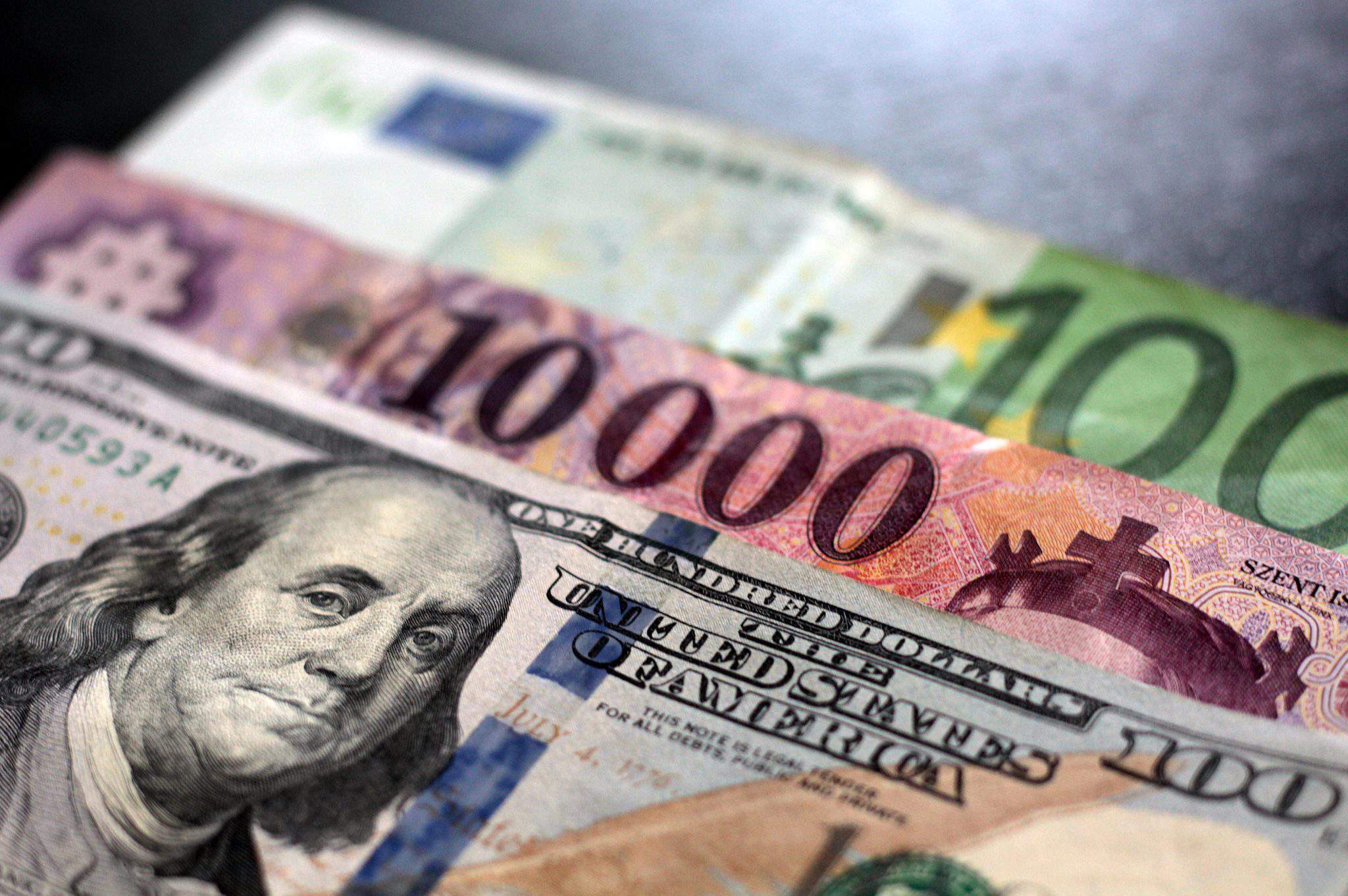
As Pénzcentrum writes, the Hungarian forint faced a challenging 2024, marked by a significant weakening of its exchange rate against major currencies. Starting the year at 382 EUR/HUF, it depreciated to over 412 EUR/HUF by December—a drop exceeding 10% within 12 months. This trend continued into early 2025, with the euro exchange rate rising by an additional two forints on the year’s first trading day, while the forint hit a two-year low against the dollar. Despite these setbacks, economic analysts consulted by Pénzcentrum have provided cautious reassurance. While the 500 EUR/HUF exchange rate seems unlikely this year, they stress the importance of monitoring global political shifts and currency trends closely, as further fluctuations in the exchange rate remain possible.
Global influences and domestic issues
The Hungarian forint faced a turbulent 2024, depreciating significantly against major currencies, with external factors playing a key role. Senior Analyst István Madár from Portfolio highlighted that the exchange rate pressures stemmed from global influences, such as the resilience of the US economy in a high-interest rate environment and Donald Trump’s aggressive trade policies, which are set to bolster the dollar and weaken emerging market currencies like the forint.
Domestic issues, including economic uncertainties, EU funding disputes, and high debt burdens, further compounded the forint’s underperformance, particularly against regional currencies like the Polish zloty. While forecasts suggest the forint may face continued weakening, analysts note that much of the negative outlook is already priced in, raising the potential for positive surprises in the exchange rate, particularly if economic or political conditions improve unexpectedly.
Expert’s prediction
The Hungarian forint’s exchange rate remains a focal point as 2025 unfolds, with Zoltán Árokszállási, Director of MBH’s Centre for Analysis, highlighting key influences. Despite a current account surplus, a meaningful real interest rate of 6.5%, and declining public debt, the forint continues to struggle, with the euro exchange rate exceeding 410 forints early in the year. Factors such as US tariffs impacting Hungarian exports and the Federal Reserve’s interest rate policies, which support a strong dollar, are adding pressure to the forint.
Árokszállási predicts that the forint is unlikely to strengthen significantly, with annual averages expected around 405–415 forints per euro, and a return below 400 deemed improbable. With inflation risks tied to further weakening, Hungary’s central bank is expected to remain cautious, limiting the scope for additional interest rate cuts to stabilise the exchange rate.

Read also:
- Are Romania and Bulgaria ahead of Hungary in adopting the euro?
- Hungarian forint at breaking point: Near-historic low against pound sparks concern
Featured image: depositphotos.com
The forint had a period of relative stability from 2014 to 2018 holding its’ value against the euro. Since 2018 there has been a steady depreciation. Over a seven year period the euro appreciated by one third against the forint from Jan 2018 to Jan 2025. On average the forint depreciated about 4-4.5% per year over that period. If we take 4% you might be looking at 428 forints per euro by year end and 445 in two years. Hungary has handled a steady depreciation of the forint really throughout its’ existence since 1990. I remember when one US dollar was worth 20 forints back in socialist days but of course that was an artificial exchange rate. Hungary will get more exchange rate stability and lower interest rates when Hungary is no longer an emerging economy but rather a developed economy. The one currency that stuns me is the Swiss franc. It has to be the strongest currency in the world and you can go back as far as you want 10, 20, 30 years and more. So I ask who was the Hungarian idiot (Fidesz?) who came up with the idea to issue mortgages to Hungarians denominated in Swiss francs. That has to be the polar opposite of a carry trade.
I better correct that. Someone had the idea that Switzerland had lower interest rates so why not borrow there for your mortgage. No one gave consideration to how much you can lose when the Swiss franc appreciates against the forint. With carry trade you do try to borrow in another country with a lower interest rate for an appreciating investment elsewhere but you need exchange rate stability. If you get a large appreciation in the currency that you borrowed to purchase assets in another country the assets now have pressure to be sold. Real estate is not a liquid asset that can be sold on a dime so using what was a carry trade for this purpose was incredibly risky.
We actually bill in either Swiss francs or Euros, these days. And take out loans in CHF. Incredibly efficient and circumvents the HUF wildcard.