


Hungary’s minimum wage among the lowest in the EU – See how it measures up against its neighbours

Change language:
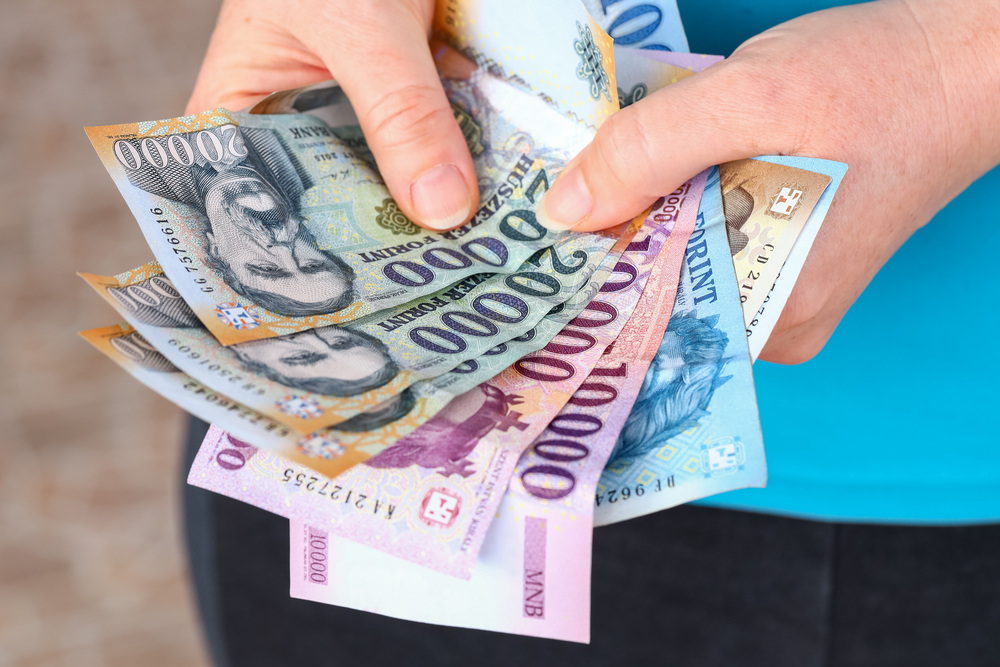
The issue of minimum wages is a recurring topic in the European Union, as significant disparities exist between member states. At the beginning of 2025, Hungary’s minimum wage stood at HUF 288,087 (EUR 699), making it one of the lowest among EU countries.
The Hungarian minimum wage is only higher than Bulgaria’s, where the legal minimum wage is HUF 227,763 (EUR 551). However, several neighbouring countries are ahead: for example, Romania’s minimum wage is higher at HUF 334,530 (EUR 810), Slovakia’s at HUF 337,608 (EUR 816), and the Czech Republic’s at HUF 341,538 (EUR 826).
The EU’s three groups based on minimum wages
According to HR Portál, EU countries can be divided into three main groups based on their minimum wage levels:
- Western European countries: These have minimum wages ranging from HUF 743,400 (EUR 1,800) to HUF 1,113,100 (EUR 2,700). This group includes Luxembourg, Germany, the Netherlands, Belgium, Ireland and France. These nations are not only among the wealthiest in the EU, but their practice of adjusting minimum wages is closely tied to inflation and economic growth.
- Countries with medium minimum wages: Here, wages range from HUF 392,350 (EUR 950) to HUF 578,200 (EUR 1,400). Examples include Spain, Slovenia, Cyprus, and Poland, which have achieved notable economic progress in recent decades.
- Countries with low minimum wages: In this category, wages fall below HUF 371,700 (EUR 900). Alongside Hungary, this group includes Bulgaria, Romania, Slovakia, Latvia, and the Czech Republic. Although these nations are among the EU’s less developed regions, the dynamic growth in Romania and Slovakia indicates potential for improvement.
Hungary and the region
Hungary’s situation is particularly striking when compared to its Central and Eastern European neighbours. By early 2025, Slovakia’s minimum wage had reached HUF 337,608 (EUR 816) and Romania’s was HUF 334,530 (EUR 810), while Hungary’s remained significantly lower. The Czech and Polish minimum wages were even higher, at HUF 341,538 (EUR 826) and HUF 453,054 (EUR 1,098), respectively.
Just tell poor workers not to worry because Orban promises to raise it by 2027.
Multiply 1000 euros for the 800 foris that euro will cost in 2027. Amazing salaries!
Can you imagine what our economy would be like, without the more than 3.5 percent of GDP contribution from the European Union, year on year, from when Hungary joined in 2004?
https://en.wikipedia.org/wiki/Timeline_of_Hungary%E2%80%93European_Union_relations
All the various Member States, particularly the contributing ones, should, be eternally grateful Hungary is a Member!