Subscribe to our social channels to get the latest news about Hungary!


The symphonic concert of the Hungarian State Opera Orchestra on 2 February 2025 offers a selection from the finest English musical traditions and delights for film (music) enthusiasts. In addition to Holst’s grandiose The Planets, the programme includes Elgar’s Cello Concerto, and Britten’s Variations and Fugue on a Theme of Purcell.
The concert, part of the OPERA’s Anglophone Season, is conducted by David Coleman, who has also composed a festive overture titled Celebremus for the occasion. The soloist of the concerts is the internationally renowned cellist Santiago Cañón-Valencia.
Gustav Holst (1874–1934) composed his seven-movement, grand orchestral suite The Planets during World War I, inspired by his fascination with astrology. The nearly hour-long piece associates a variety of atmospheric portraits with the planets of the solar system, based on their astrological characteristics and the traits of their Roman deity namesakes. It journeys from Mars, the bringer of war, and Venus, the bringer of peace, to Mercury, the winged messenger, while Jupiter embodies joy, Saturn represents old age, Uranus the magician, and Neptune the mystic. This monumental work, written for a large orchestra and incorporating a women’s chorus in the final movement, has enjoyed immense popularity since its 1918 premiere.
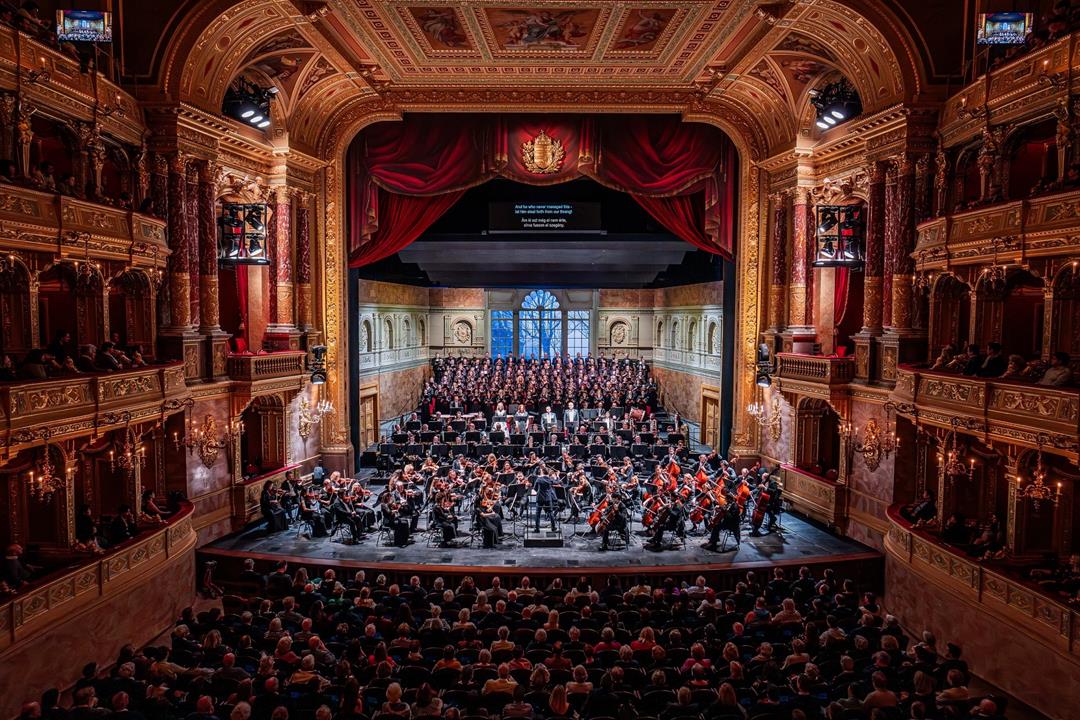
The solemn melody in the middle of the Jupiter movement gave rise to the British patriotic hymn I Vow to Thee, My Country, which remains a favoured piece in World War I commemorations and ceremonies associated with the British royal family. The foreboding, menacing Mars movement is also notably popular, inspiring numerous adaptations across various genres of popular music and leaving its mark on many film scores, from John Williams’ Star Wars to Hans Zimmer’s Gladiator. Similarly, Jerry Goldsmith’s score for Alien shows parallels with the main theme of the Saturn movement.
Cello Concerto that is to be performed before the intermission is nearly contemporaneous with The Planets. However, the 1919 premiere of Edward Elgar‘s (1857–1934) late masterpiece was overshadowed by misfortune. It took more than four decades and the brilliance of the young cellist Jacqueline du Pré for the work to claim its rightful place as one of the pinnacles of Elgar’s oeuvre and as one of the most frequently performed cello concertos in the international classical music repertoire. Renowned artists such as Yo-Yo Ma, Steven Isserlis, István Várdai, and Sol Gabetta have recorded the nearly half-hour, four-movement piece.
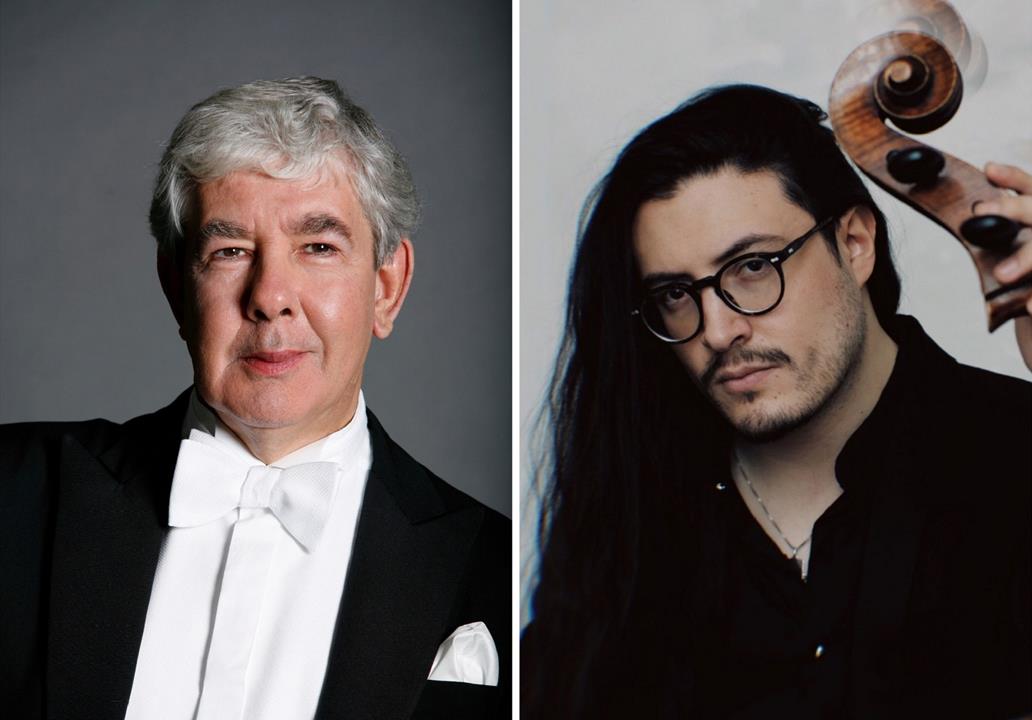
At the Hungarian State Opera, it can be enjoyed in the interpretation of an equally talented young Colombian soloist, Santiago Cañón-Valencia, who has achieved outstanding results in numerous prestigious music competitions and was featured on the exclusive seven-artist BBC New Generation list between 2022 and 2024. This concerto may also be familiar to film enthusiasts: in the drama Tár starring Cate Blanchett, the titular conductor rehearses the concerto with British cellist Sophie Kauer. Additionally, a fragment of the piece is brought to life by a painting of Jenna Ortega’s character in the first season of the Wednesday, an Addams Family adaptation.
The concert will be introduced by two shorter yet equally captivating pieces. Benjamin Britten (1913–1976) composed Variations and Fugue on a Theme of Purcell in 1945 for a documentary film designed to showcase the instruments of the orchestra. Britten chose the second, rondo movement of Henry Purcell’s 1695 Abdelazer Suite as the basis for the variations in this 15-minute work. Following the majestic orchestral presentation of the main theme, the different sections of the orchestra perform 13 playful variations, culminating in an original fugue by Britten. This popular piece, sometimes performed with narration, may be familiar to audiences from the opening scene of Wes Anderson’s 2012 film Moonrise Kingdom. Additionally, the original Purcell theme can be heard in the ball scene of the 2005 film adaptation of Pride and Prejudice.
The piece to begin the concert is also a world premiere. The conductor of the concert, David Coleman, has been conducting orchestras of Europe’s top ballet companies for over four decades and has been working regularly with the Hungarian State Opera Orchestra since 2020. Also active as a composer, Coleman dedicated his Caleidoscopeto the OPERA Orchestra’s brass section in 2023, and a year later, his Dancing Percussion was premiered by the percussionists. Now, in honour of the OPERA’s Anglophone Season, he has written a five-minute overture for full orchestra and a women’s chorus. Titled Celebremus, the piece highlights the festive nature of the occasion by incorporating motifs from both the Hungarian and British national anthems, as well as elements from Britten’s composition, which follows the overture.
Read also:


2 February 2025????