Subscribe to our social channels to get the latest news about Hungary!


As one of the most significant Hungarian politicians of the 20th century, Count István Bethlen provided reliability and stability during a tumultuous period. During his decade-long tenure as Prime Minister, he successfully steered Hungary out of the economic and social collapse caused by the Treaty of Trianon. Both his background and personality positioned him to shape history, but he ultimately paid a heavy price for it.
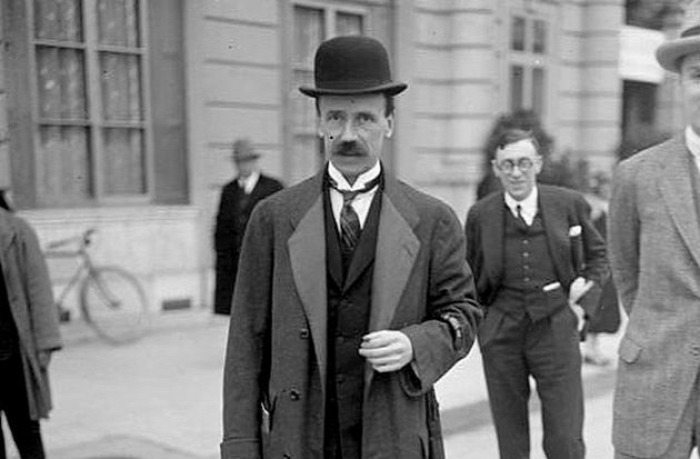
István Bethlen hailed from an old Transylvanian aristocratic family, though despite sharing the surname, he was not a direct descendant of Prince Gábor Bethlen. Through family ties to the Bethlen and Teleki families, he was born in Gernyeszeg, along the Maros River. As a child, he tended a small garden on the family estate, played with local village children, and at the age of nine, was sent to the prestigious Theresianum in Vienna. For ten years, he lived under strict discipline, with his daily schedule planned from morning to night—learning languages, engaging in sports, and even mastering the cimbalom. The institution’s social environment helped him develop strong interpersonal skills, which proved invaluable in his later political career.
At nineteen, he enrolled in the Law Faculty of Budapest, though this was more of a formality—he preferred social gatherings, attending theater performances and balls, and participating in hunts. He did not complete all of his exams. In contrast, he took his studies at the Agricultural Academy in Mosonmagyaróvár seriously, ensuring he could manage the family’s Mezősámsond estate. He was in Budapest procuring agricultural equipment when he met his future wife, Countess Margit Bethlen. While both belonged to the Bethlen lineage, their familial connection was distant.
The young couple traveled frequently, had sons born every two years, but over time, their relationship lost its spark. István Bethlen was a reserved, pragmatic man who was deliberate in his politics. His contemporaries often remarked that Budapest had two great mysteries: the recipe for Pick salami and the mind of István Bethlen. In contrast, his wife, Countess Margit, was drawn to a vibrant and artistic lifestyle, becoming a prominent figure in literary and theatrical circles. Eventually, their marriage continued only in name.
In 1901, at just 27 years old, István Bethlen entered Parliament as a representative. Initially, he focused on agricultural issues, an area in which he excelled. He established dairy and sales cooperatives, promoted grain storage solutions, and supported railway construction. He was an early observer of the impact that Romanian national movements would have on Transylvania. In Parliament, he repeatedly emphasised the importance of strengthening Hungarian minorities in annexed territories, fearing the isolation of Székely Land.
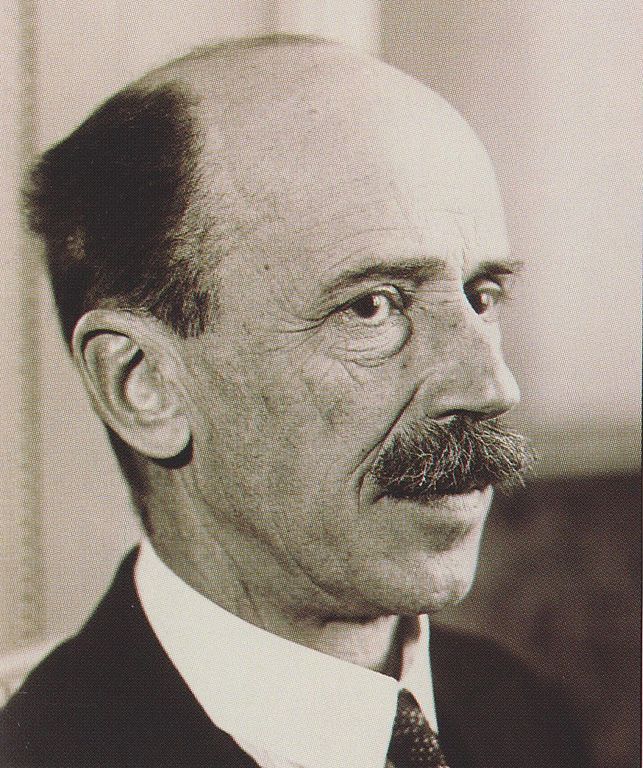
His approach to politics was devoid of hostility or ideological fervor—he prioritised rational objectives and found the necessary means and allies to achieve them. He rejected both far-left and far-right authoritarian aspirations. His name was already considered for the prime ministership in 1917–1918, but it was not until 1921 that he was appointed to form a government.
One of István Bethlen’s first major achievements was thwarting King Charles IV’s attempt to reclaim the throne and finalising the Habsburg dethronement. He consolidated political forces, established a unified governing party, and embarked on national reconstruction. Through the Sopron referendum and the recovery of the Baranya Triangle, he slightly mitigated the territorial losses inflicted by Trianon.
He understood that only a stable, educated, and economically robust society could produce tangible results. Thus, he closely collaborated with Minister of Culture Kunó Klebelsberg, who expanded Hungary’s educational and cultural institutions. By the mid-1920s, the Hungarian National Bank was established, and with the League of Nations’ 250-million-korona loan, Hungary stabilised its economy and introduced the pengő currency. Despite the 1925 franc-counterfeiting scandal shaking his position, Regent Horthy ultimately rejected his resignation.
István Bethlen’s economic policies improved social welfare, introduced a functioning pension system, and reduced Hungary’s international isolation. His role model was István Széchenyi, and like him, Bethlen believed in gradual, deliberate progress, avoiding all extremes. He sought the revision of the Trianon borders through diplomacy and international consensus rather than through unilateral military or political adventures.
Bethlen was known for his tireless work ethic, but he always made time to have breakfast with his family while reviewing the day’s most important Hungarian and foreign newspapers. Whenever possible, he played tennis on Margaret Island, and on weekends, he indulged in his passion for hunting. Though he remained in good health for most of his life, his doctors eventually advised extended summer vacations. Having lost his Transylvanian estates due to Trianon, he rented a modest estate in Somogy County. There, he met Countess Andor Pálné Széchenyi (“Minci”), who became his lifelong companion. Her gentle, understanding nature starkly contrasted with that of his wife, Margit Bethlen, who herself had openly fallen for another man. As a result, both marriages functionally ceased to exist.
Meanwhile, the global economic crisis of 1929 hit Hungary hard. István Bethlen initially tried to delay its effects through loans, but eventually, he was forced to implement austerity measures, sparking growing dissatisfaction. In 1931, he resigned as Prime Minister. Many believed his departure was only temporary, and even he expected that Hungary would soon need his calm, measured leadership again.
István Bethlen had no sympathy for the Nazis, and following the German occupation of Hungary in March 1944, he went into hiding. He even secretly entered the Buda Castle to implore Horthy not to appoint a new pro-German prime minister. However, he was dismayed to learn of Ferenc Szálasi’s appointment. During his time in hiding, his health deteriorated—he suffered two minor strokes and required medical attention. In 1945, he personally reached out to the advancing Soviet forces, expressing his desire to negotiate. Initially, the Soviets placed him under conditions resembling house arrest, but they soon realised he would never align with the communists.
In 1945, István Bethlen was taken to Moscow and imprisoned under harsh conditions in the Butyrka prison hospital. He died there in 1946 and was hastily buried in a mass grave. When Hungary finally had the opportunity to honor him properly in 1994, nearly five decades later, his urn contained only soil from the prison grounds. His tragic fate was shared by many other significant Hungarian statesmen.
Not even the Soviet Foreign Ministry was informed of his death, and Hungary only learned of it in 1947. The details of his final months remained obscured until the political changes of the late 20th century.
His constrained circumstances reflected reality: after Trianon, all responsible Hungarian politicians sought to recover lost territories, populations, and resources. Yet, as contemporary observers recognised, this was an almost insurmountable challenge. The looming presence of World War II placed Hungary on a dictated trajectory.
In 2013, a statue was unveiled in his honor outside his former office, now the Presidential Residence in the Sándor Palace. It stands near Tóth Árpád Promenade, where he often took contemplative walks—even as Prime Minister—undoubtedly pondering Hungary’s future.
To read or share this article in Hungarian, click here: Helló Magyar
Read also:


