Subscribe to our social channels to get the latest news about Hungary!


By Shokhruz Samadov
In the evolving landscape of global security, the risks posed by natural disasters, particularly earthquakes have become a central concern not only for affected regions but for international governance at large. Amid this backdrop, Uzbekistan’s initiative to establish April 29 as the International Day of Remembrance for Earthquake Victims, recently endorsed by the United Nations General Assembly, represents a timely and strategic contribution to the architecture of global resilience and humanitarian solidarity.
Modern risk assessments have transformed the conceptual framing of earthquakes. No longer viewed solely as sporadic natural events, they are increasingly seen as systemic threats with geopolitical, economic, and societal dimensions. Earthquakes can destabilize entire regions, trigger mass migration, strain public health systems, and significantly delay economic development. Yet, despite their frequency and severity, the human dimension of these tragedies such as the trauma, the memory, the societal rupture is often inadequately addressed in international policy frameworks. This is precisely the gap Uzbekistan’s initiative aims to fill.
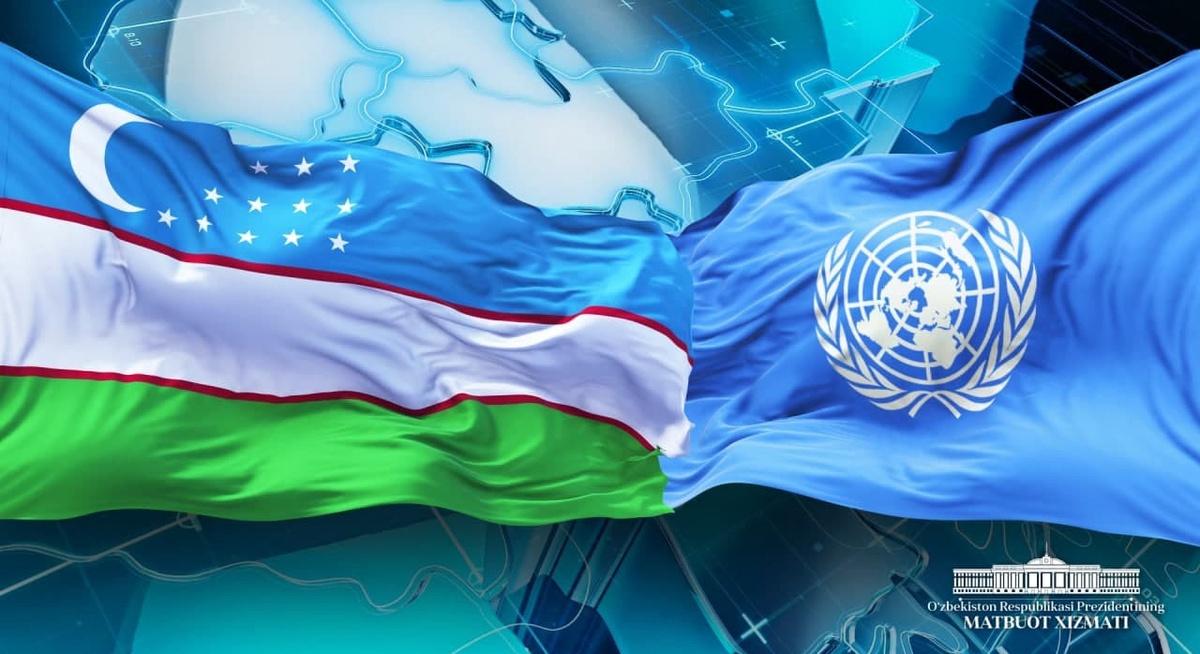
President of Uzbekistan Shavkat Mirziyoyev’s proposal to create an international remembrance day was first articulated in March 2023 at an extraordinary summit of the Organization of Turkic States. The proposal did not emerge in isolation; rather, it reflects Uzbekistan’s long-term foreign policy orientation toward human-centered diplomacy, emphasizing multilateralism, regional cooperation, and global public goods.
The initiative signals a paradigm shift, moving from a reactive to a proactive, memory-informed approach to disaster governance. It acknowledges that remembrance is not merely symbolic; it is a functional instrument for fostering preparedness, accountability, and collective learning. By institutionalizing remembrance, the global community is better equipped to prevent the repetition of past failures and to develop a shared ethical framework for managing future crises.
Choosing April 29 as the official date carries both historical and strategic significance. The date marks the anniversary of the 1966 Tashkent earthquake, a devastating event that reshaped the capital and remains deeply embedded in the national consciousness of Uzbekistan.
Commemorating this day globally repositions memory as a policy tool not just for Uzbekistan, but for the entire international system. It transforms national trauma into a vehicle for transnational solidarity, leveraging collective memory to support knowledge-sharing, innovation in disaster risk reduction (DRR), and investment in early warning systems.
Furthermore, the initiative’s alignment with the UN Sendai Framework for Disaster Risk Reduction (2015–2030) adds coherence to global efforts. It offers a normative anchor for integrating commemoration with capacity-building and resilience planning.
At the national level, the initiative reinforces Uzbekistan’s commitment to disaster preparedness and state modernization. It reflects growing state capacity and the increasing importance of disaster governance in the country’s domestic policy.
Regionally, it positions Uzbekistan as a norm entrepreneur in Central Asia and among Turkic states using soft power and shared historical experience to build consensus on humanitarian priorities.
Globally, it contributes to the humanization of international relations. In an era marked by geopolitical fragmentation and competing security concerns, Uzbekistan’s proposal introduces a unifying, apolitical agenda focused on empathy, resilience, and international cooperation.
The unanimous adoption of the resolution by the UN General Assembly is itself noteworthy. It demonstrates Uzbekistan’s growing diplomatic capital and ability to mobilize support for normative innovation within multilateral institutions. Such an endorsement is not only a formal recognition of the initiative but a precedent-setting act in international memory politics.
The resolution encourages member states to engage in educational efforts, share experiences, and build institutional cooperation on all levels. Importantly, it embeds the right to memory and dignity for disaster victims within the structure of international law and diplomacy.
While Uzbekistan’s initiative has garnered broad international support and found a strong institutional foothold through the UN General Assembly, its true impact will ultimately be measured by what follows. As with many globally endorsed observances, the success of the International Day of Remembrance for Earthquake Victims hinges not merely on symbolic recognition, but on how it is implemented, adapted, and sustained across diverse national contexts.
One of the immediate challenges lies in ensuring that the day does not drift into ritualization. There is a real risk that, over time, the observance could become a purely ceremonial gesture marked by routine speeches and public statements, but detached from meaningful action. To prevent this, the initiative must be kept dynamic and forward-looking, constantly tied to real-world programs in disaster risk reduction, public education, and humanitarian engagement.
Another layer of complexity arises at the national level, where the integration of the day into education systems, emergency preparedness protocols, and civil society activities will be critical. Embedding remembrance into school curricula, for instance, not only helps preserve the historical memory of past disasters but also cultivates a culture of readiness in future generations. Similarly, involving local communities and NGOs in annual commemorations can foster grassroots resilience and public ownership of the initiative.
Moreover, the day holds potential as a catalyst for mobilizing resources and political will, especially in countries that are most vulnerable to seismic activity. By elevating earthquake preparedness on the global agenda, it could become a focal point for launching targeted funding mechanisms, multilateral aid programs, and advocacy campaigns turning remembrance into a strategic driver of risk mitigation.
Yet the story doesn’t end with challenges. In fact, some of the most compelling aspects of this initiative lie in the opportunities it creates.
Looking ahead, the remembrance day could evolve into the cornerstone of a global coordination mechanism for earthquake response, possibly operating under the umbrella of the United Nations. Such a platform could enhance early warning systems, facilitate rapid international assistance, and improve knowledge transfer between countries with differing levels of disaster preparedness.
In the same spirit, the initiative opens space for innovative partnerships, especially between the public and private sectors. The commemoration could serve as a launchpad for collaborations in areas such as seismic monitoring technology, resilient urban design, and emergency communication systems. With the right incentives, it could attract investment in scalable solutions that not only reduce earthquake risks but also bolster broader climate and infrastructure resilience.
Finally, the initiative holds promise as a vehicle for South-South cooperation, offering a shared platform for developing countries that often face similar vulnerabilities but lack equal access to resources or global attention. By bringing these nations together around a common day of reflection and action, Uzbekistan’s proposal could strengthen a horizontal axis of solidarity and knowledge exchange, amplifying the voices and experiences of communities that are too often overlooked.
In this way, what began as a gesture of remembrance may well become an engine of transformation, uniting past, present, and future in the pursuit of a safer, more compassionate world.
Uzbekistan’s initiative is more than a commemorative act. It is a political innovation that expands the boundaries of humanitarian governance. It frames memory not as passive retrospection, but as active responsibility – a resource for shaping the future.
In advocating for the International Day of Remembrance for Earthquake Victims, Uzbekistan is not merely remembering the past. It is strategically engaging with the present and helping to design a more humane, resilient, and cooperative international order.
Read more about Uzbek-Hungarian relations HERE.
Read our latest: Shavkat Mirziyoyev’s “New Uzbekistan” vision leads the country toward a modern and democratic State


