


The greatest danger for swimmers in Lake Balaton discovered
Change language:
Many believe that Lake Balaton’s southern shore is shallow and safe to wade through—but the reality is more complex. A so-called scour line near the shoreline can suddenly plunge into deep water, posing serious risks.
Rapid depth changes
It is a commonly held belief among bathers at Lake Balaton that the water deepens quickly on the northern shore and gradually on the southern side. However, the formation of the lakebed is far more complicated, influenced by several factors, including wind patterns, water currents, and sediment movement..
“Just a few hundred meters from shore, a trench—referred to as the scour line—runs through the lakebed,” warned vizimentok.hu.
As winds and currents shift, they cause sediment to deposit in some areas and erode in others, forming silt mounds near the shoreline. Just before these mounds, a long channel with a sudden change in depth occurs—this is the scour line, where the water deepens rapidly.
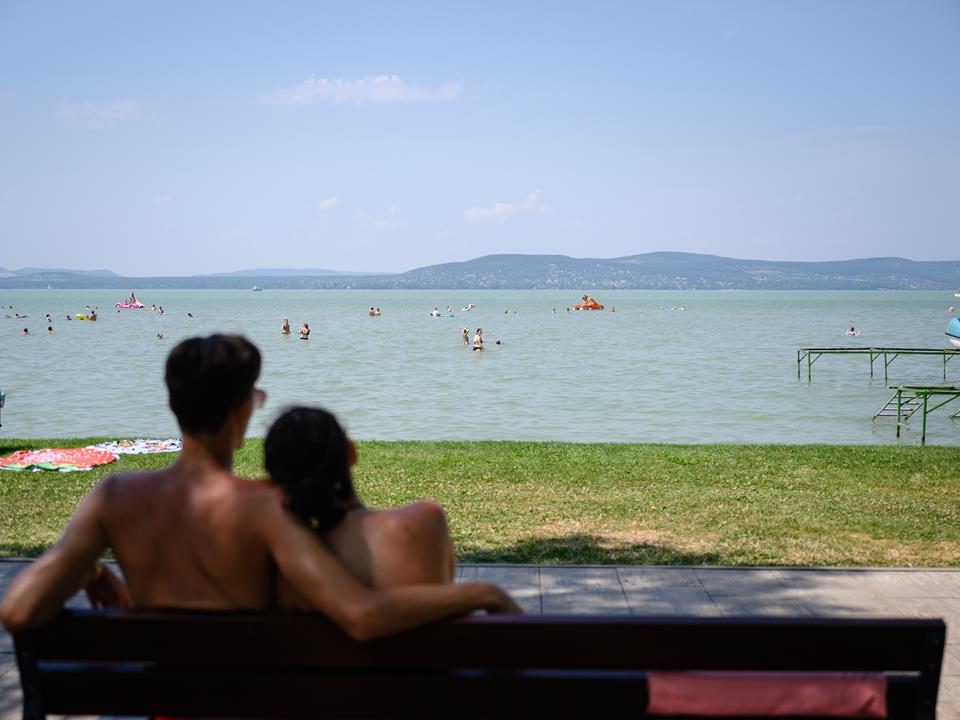
This phenomenon is particularly dangerous along the southern shoreline. Bathers may walk for some distance in shallow water, only to suddenly find themselves in depths of 1.5 to 2 metres within just 30 to 50 metres. While the northern shore also deepens quickly, the gradient is more gradual, resulting in fewer abrupt depth changes.
In an interview with vizimentok.hu, Szakter Roland emphasised that staying within the buoyed zone of the beach eliminates the risk of encountering a scour line. Still, it is important to note that there are actually two scour lines along the southern shore:
- One begins at a water depth of 150–180 centimetres.
- The other, caused by wave action, forms closer to the shore. It may feature depressions as deep as 50–60 centimetres—seemingly minor, but potentially very dangerous for children or non-swimmers.