Subscribe to our social channels to get the latest news about Hungary!


Reuters spoke with Deputy Foreign Minister Levente Magyar on the sidelines of an event at the Hungarian Embassy in London. Magyar stated that ongoing negotiations with the United States aim to reach a new business deal favourable to Hungary—one that could help steer the economy back onto a growth path. This would be a much-needed development ahead of the 2026 general elections.
As reported yesterday, the latest poll by Medián, a Hungarian polling institute, shows a significant lead for the Tisza Party over Viktor Orbán’s Fidesz. Although Tisza’s leader, Péter Magyar, was relatively unknown until February, if the polls are accurate, he now commands enough support to potentially secure a supermajority in the next election—enabling him to begin dismantling the system Orbán has built over the past 15 years with successive two-thirds majorities.

Meanwhile, Hungary’s economy continues to struggle. For instance, between April 2024 and April 2025, the 15 largest factories in Hungary laid off more than 4,600 employees. At the same time, the government is planning significant financial measures ahead of the elections, including tax cuts and support for the SME sector. As a result, securing foreign capital has become urgent.
Under the Biden administration, US-Hungary relations have deteriorated. One example is Washington’s unilateral termination of the double taxation agreement, which has made business more difficult for both Hungarian and American investors. Furthermore, despite previously warm relations between Donald Trump and Viktor Orbán, the current US administration appears determined to introduce steep tariffs on EU exports—including the automotive sector, a key pillar of Hungary’s economy. A proposed 50% tariff on car exports could lead to a sharp contraction and further job losses, a serious threat in the run-up to parliamentary elections.
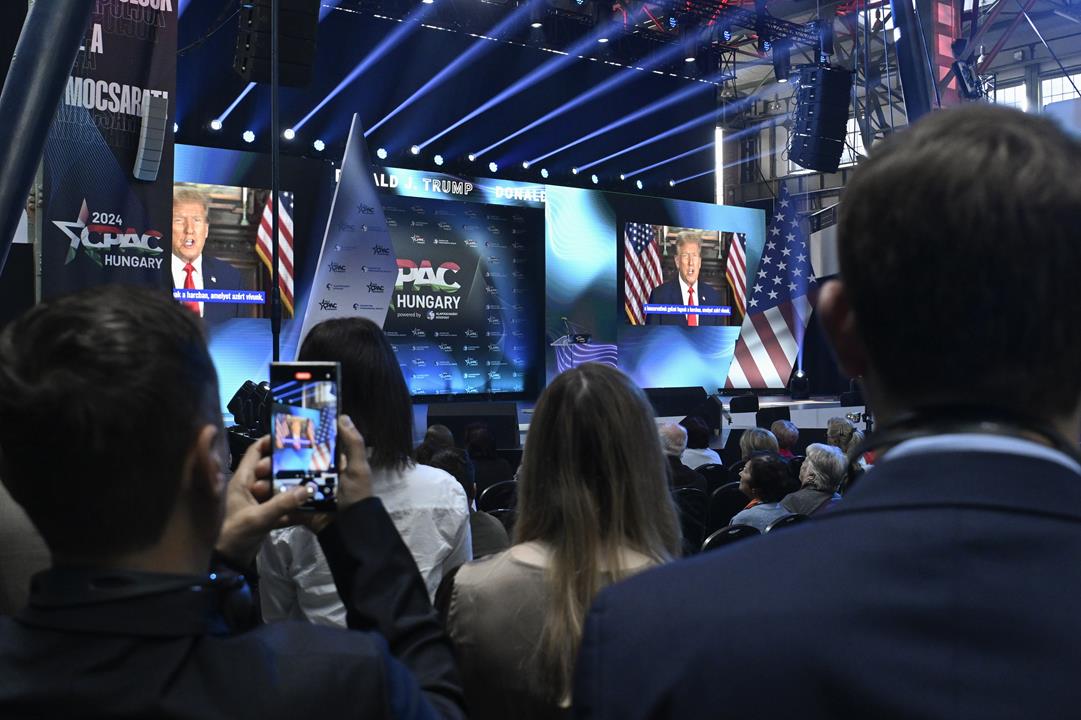
Recently, Deputy Foreign Minister Levente Magyar gave Reuters an update on the state of US-Hungarian trade and business discussions. He confirmed that Hungary would not be able to sign a separate trade agreement with the US, as it is a member of the European Union. However, the Orbán government hopes to negotiate a business deal focused on cooperation in the space, military, and energy industries. The goal, he said, would be to “offset the impacts of potential U.S. tariffs.” Magyar added that he did not expect a quick agreement.
“We are talking about a few specific projects that could be enveloped in such an agreement,” Magyar said in London. “There’s a lot of room for working together. We very much hope that big things can be done for the benefit of the Hungarian people,” he added. However, he declined to offer a timeline, noting that the Trump team is currently preoccupied.
In April, Prime Minister Orbán said he would sign a business agreement with Trump within six months. He also mentioned the goal of mitigating the harmful effects of possible US tariffs. Trump had initially planned to impose 50% tariffs on EU imports in June but postponed implementation until 9 July, allowing time for negotiations.
Check out more articles about the United States HERE.


