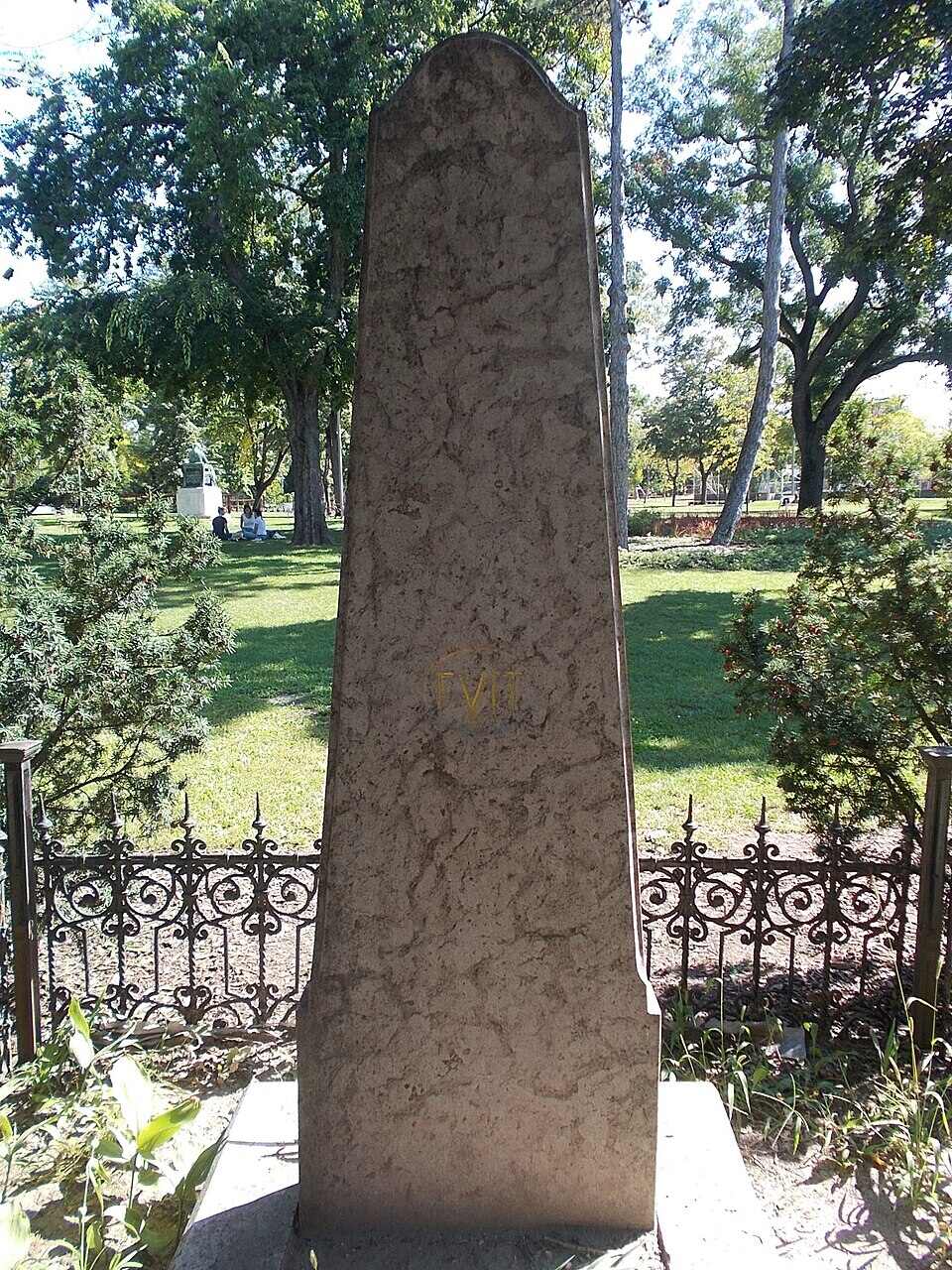
The mysterious tombstone in Budapest’s City Park: Who was buried beneath the word ‘FUIT’?

Change language:
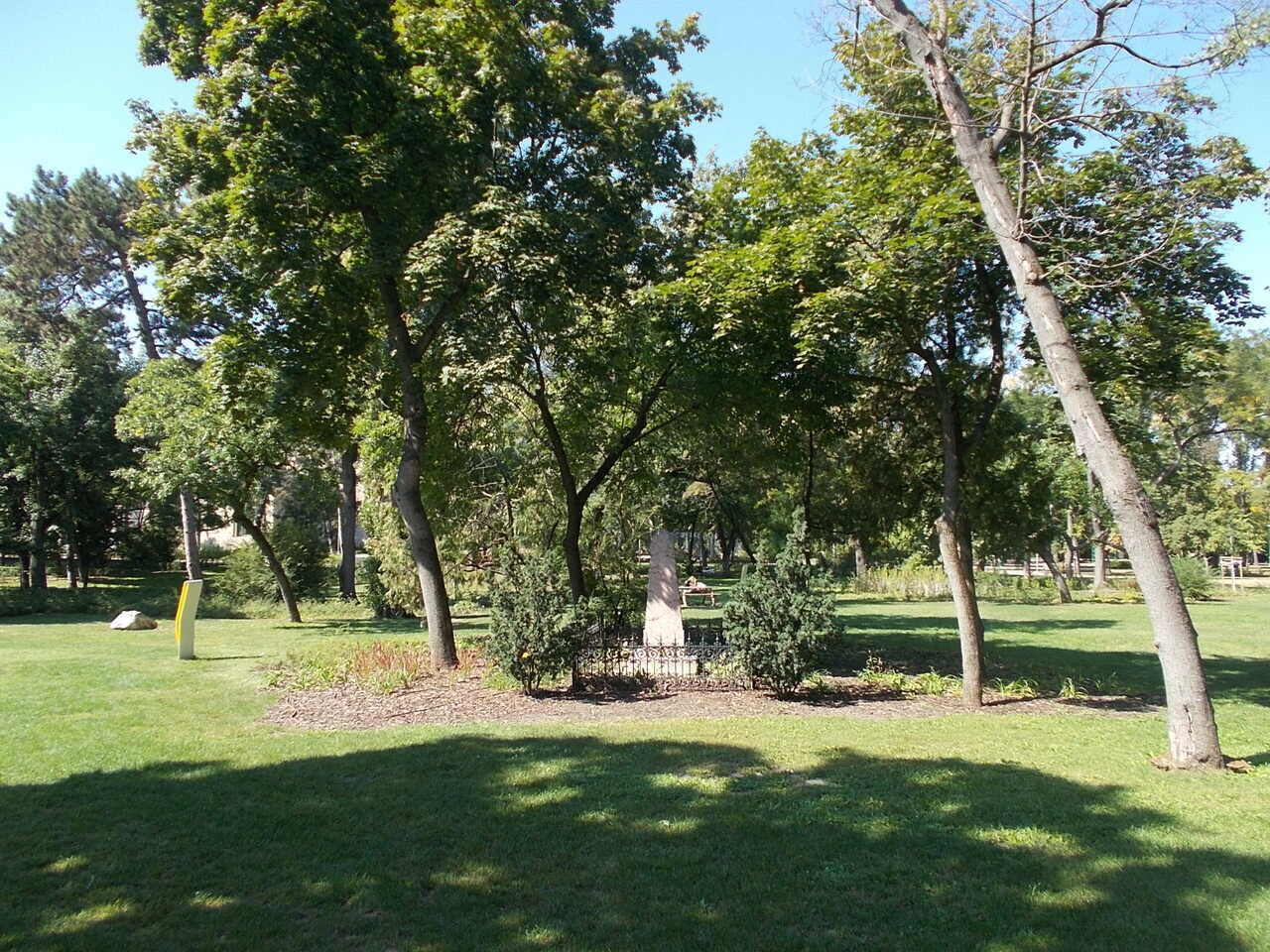
Between the ‘Reading Women’ statue and the Transport Museum in Budapest’s City Park lies a tombstone with a single word: FUIT. But who was laid to rest there, and what does the inscription mean?
For decades, rumours swirled about the grave’s origin. Some believed it was the final resting place of a suicide victim. Others speculated it belonged to a donor who gifted part of the park to the city, a disillusioned poet, or a Hungarian noble whose romance with a young countess ended in heartbreak.
A tomb with only “FUIT” written on it: Whose is it?
In the 1950s, several stories circulated about the grave’s mysterious occupant, according to BudAPPest. One theory claimed the tomb held the remains of a tormented poet; another suggested it marked a tragic love story between a nobleman and a countess. But like many myths, these tales were far from the truth.
Archival research revealed that the man buried beneath the stone was Jakab Horváth, a lawyer who died in 1806. In his will, he donated 700 forints to the city of Pest with the requirement that he be buried in what was then known as “Ökördűlő” or “Battyány Forest”—now City Park—and that his tombstone bear only the word “Fuit.” The burial site was bricked in by Zitterbach Mátyás, and the tombstone was crafted by János Okenfusz.
The eccentric life of Jakab Horváth
Born in 1738 in the village of Toporcz, Horváth became a successful attorney. Yet despite his achievements, he shunned earthly pleasures—he never married, spent most of his time in his library, showed little religious interest, and led an austere life. He was, however, a Jacobin who defended the accused in the famed Martinovics conspiracy trial. Horváth worked as the estate manager for Prince Grassalkovich and was described by contemporaries as a “philosophical, somewhat eccentric but respected citizen of Pest,” according to Dívány.
Upon his death, he left all his wealth to charity, with a single request to the city council of Pest: to be buried in a quiet garden under a humble or philosophical tombstone inscribed with “Fuit.” A plot was chosen near today’s Hermina Chapel in Zugló: at the time, a secluded, marshy area fitting his final wish.