Subscribe to our social channels to get the latest news about Hungary!


The Perseid meteor shower will reach its peak in the early hours of 12 August, delivering 50 to 70 shooting stars per hour, according to an announcement from the Svábhegy Observatory on Thursday. The observatory is inviting visitors to a series of special astronomy events starting on 9 August.
In its announcement, the observatory noted that although the full moon’s brightness will interfere with visibility, watching the meteor shower is still expected to be a memorable experience.
At its peak, the Perseids can produce up to 100 meteors per hour. According to experts, the shower will be most intense early on 12 August. Around 4 AM, the radiant—or the point in the sky from which the meteors appear to originate—will be located about 65 degrees above the horizon in the constellation Perseus, making for ideal viewing conditions. Even at 10 PM on 11 August, the radiant will already be positioned 25 degrees above the horizon, allowing shooting stars to be visible throughout the night.
According to the press release, the Perseids are active from 17 July to 24 August, so stargazers will be able to observe them even before and after the peak.
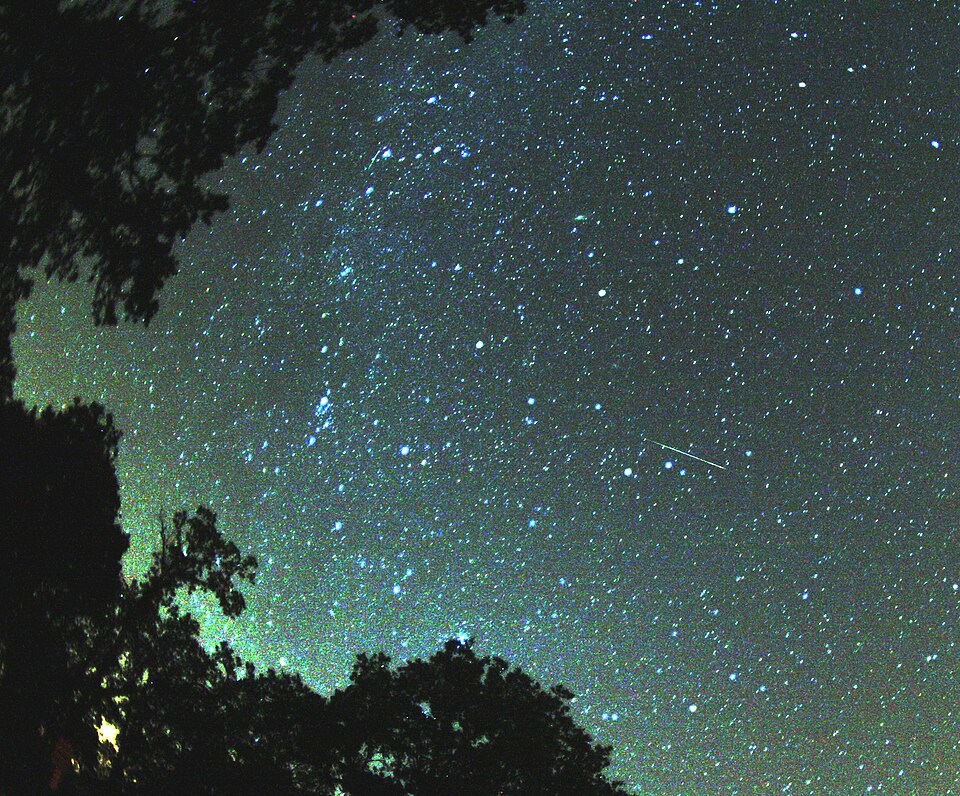
Because the meteors are visible to the naked eye, no telescope is required. They are especially stunning when viewed from dark locations free of light pollution. The shooting stars can appear anywhere in the sky. The observatory also pointed out that starting 9 August, it will host special astronomical programs over several days. In addition to witnessing shooting stars, visitors will be able to view some of summer’s most beautiful star clusters and the Moon’s radiant craters through a telescope.
Experts also highlighted that in the early hours of 12 August, Venus and Jupiter will appear extremely close together—separated by less than one degree—creating one of the year’s most spectacular planetary conjunctions. They described the pairing as “a dazzling double star” that will shine brightly about 15 degrees above the horizon. The phenomenon will also be visible in close proximity on 11 and 13 August.
Read more space-related news on Daily News Hungary.
Read also:
To read or share this article in Hungarian, click here: Helló Magyar


