Subscribe to our social channels to get the latest news about Hungary!


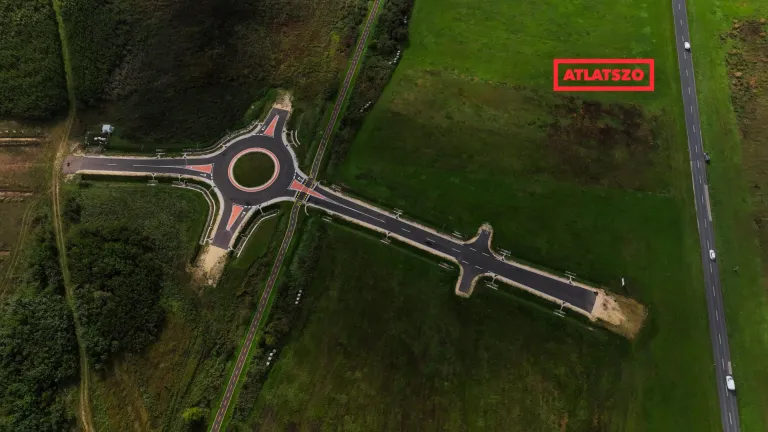
Despite receiving European Union funding and completing, for example, the roundabout on schedule, the project has hit a major snag. The government remains unable to carry out the associated railway development, and without that, the investor Metrans refuses to build its container terminal. In 2021, Péter Szijjártó, the Minister for Foreign Economic Relations, made every imaginable promise. Soon after, reality set in, and today all that remains is stalling.
Between Zalaegerszeg and Zalaszentiván, a state-of-the-art container terminal was supposed to be built, connected by rail and road, so that the German-owned Metrans company would no longer have to transport every container to its northern terminal on Csepel Island before forwarding it to Western Europe. Instead, freight trains could have headed directly from here towards Slovakia, the Czech Republic or Poland, arriving from the Adriatic ports of Trieste, Koper or Rijeka, Átlátszó explained.
This investment is crucial for the logistics firm also because Csepel Island has a transport bottleneck: the Gubacsi Bridge, specifically its railway section. The structure has deteriorated so badly that building a new bridge would be preferable, but no funding was available for years. Currently, trains can only cross at 5 km/h (a speed that is officially monitored). Beyond that, the single-level Corvin junction causes frequent delays because it channels traffic from the southern part of Csepel Island and the M0 motorway onto Weiss Manfréd Road, which leads into Budapest, as well as onto a ring road that bypasses the district centre.
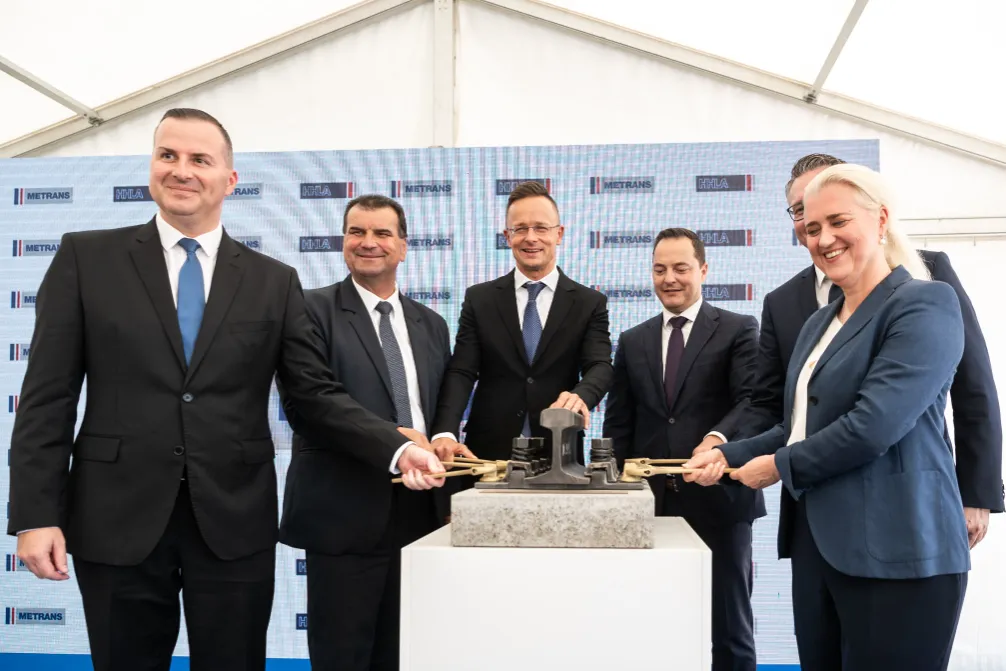
Metrans urgently needs the container terminal, but the German company refuses to build anything until the government begins the promised railway construction. Although the foundation stone was laid with Péter Szijjártó in 2021, trains can currently only operate with a change of direction, which is unacceptable for the company. That is why the government planned to build a so-called delta junction west of Zalaszentiván, allowing trains to run north–south without reversing.
However, the project halted there. EU funding was requested in 2022, the agreement was signed in June 2023, but the public tender was only issued in autumn 2024. Although the tender closed in March this year, no winner has been announced. The construction cost would be 12 billion forints, half of which should be funded by the government. Yet, while there is almost 400 billion forints available for a Danube bridge that can serve just 600 cars per day near Mohács, apparently no one could find 6 billion forints for this project.
This is difficult to explain otherwise, especially since there has been no progress and the government refuses even to disclose which company won. The state claims that GYSEV, now state-owned, is responsible, but the company says the tender is still ongoing.
Zoltán Balaicz, the pro-government mayor of Zalaegerszeg, insists that they have done everything they promised. They built an access road and a roundabout for the future container terminal (the infamous roundabout leading from nowhere to nowhere), and even installed utilities on the site bought by the company — two years ago. After that, it was no longer up to them. They also received 500 million forints in EU funding for these works.
Almost 1 billion forints more in EU funding remains available to build another roundabout, a stormwater drainage system, and to replace overhead power lines.
Metrans has indicated that, should the government complete the delta junction, they are ready to start the investment.
At the foundation stone ceremony, Péter Szijjártó spoke of the new terminal operating as early as 2023. Now it seems it might be ready by the end of 2027 — but only if construction begins immediately, which looks unlikely.
Here’s the video of Átlátszó about the project:
Click for more transport-related news.

 IT
IT HR
HR NL
NL FR
FR JA
JA RO
RO RU
RU ES
ES TR
TR

