Subscribe to our social channels to get the latest news about Hungary!


Barnabás “Barni” Hack, head chef of Costes Downtown and author of “Today Dad Cooks”, believes home cooking shouldn’t be a mothers-only territory – his book is all about giving dads the confidence to take over the stove, especially on special occasions. In this spirit he shares one of his most elegant festive dishes: Hungarian Duck Liver Terrine with Thyme Pear Chutney, a refined yet achievable recipe that turns any father into the hero of the holiday table.
As the holidays approach, the same question pops up in many households: who’s cooking this year? For Barnabás “Barni” Hack, head chef of Costes Downtown in Budapest, the answer is simple: it’s time for dads to step up to the stove.
“A man’s presence in the kitchen isn’t some rare gesture or stand-in,” he says. “It’s one of the best ways to actually be there for your family – literally and emotionally.”
Barni is the author of „Ma apa főz” (“Today Dad Cooks”), a cookbook designed especially for fathers who might be more confident at the grill than at the stove. The feedback surprised even him: countless dads wrote to say that this was the first book that finally made cooking feel achievable.

“You don’t need a Michelin star or kitchen confidence to start,” he explains. “You need a bit of courage, some curiosity – and the desire to surprise your family with something you made yourself.”
For him, cooking is not a competition, and certainly not “mom’s territory”.
When children see their father cooking, helping, plating, and serving, it shapes their memories of family life just as much as any big Christmas gift.
“The point of a shared meal isn’t that everything is perfect,” Barni says. “It’s that you prepare it together, eat it together – and you are together.”
Now, before the festive season kicks off, he shares one of the most elegant recipes from his book – a classic of Hungarian gastronomy with a modern twist.
Hungary is famous for its hízott kacsamáj – fattened duck liver, a close cousin of French foie gras. It has long been a festive centrepiece on Hungarian tables, especially at Christmas and New Year’s Eve. Served as a terrine, with sweet wine and fruit, it’s rich, luxurious and surprisingly simple once you know the technique.
Barni’s version pairs a silky duck liver terrine with a fragrant thyme pear chutney and fresh brioche (or sweet Hungarian kalács). It’s the kind of dish that looks like fine dining, but any brave home cook – yes, dads too – can pull it off with a bit of focus.
For the duck liver terrine
For the thyme pear chutney
To serve
Now comes Barni’s “restaurant trick” – no special terrine mould needed:
If everything went right, you’ll see the fat having seeped out slightly through the towel during cooking, leaving a beautiful, compact cylinder of duck liver inside.
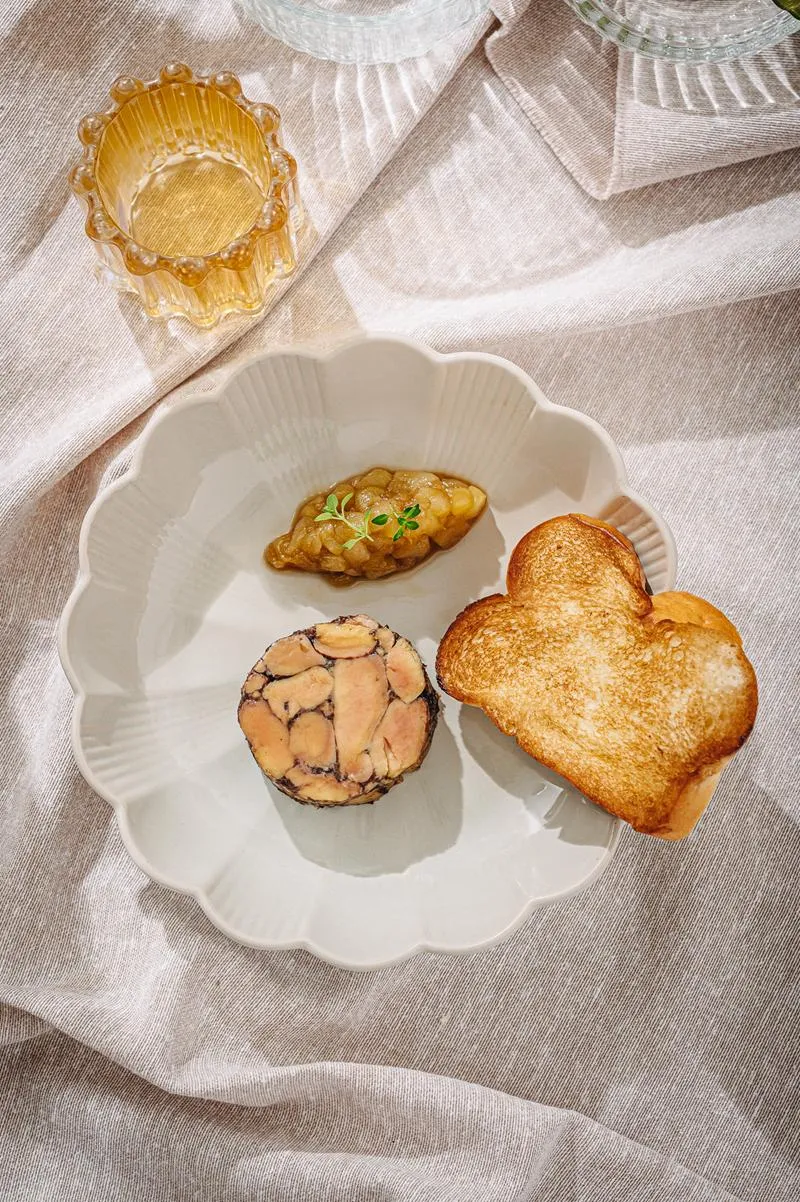
The result is a festive starter that tastes like a fine dining menu – but can absolutely be made at home, even by someone who has so far only watched the kitchen action from a safe distance.
As Barni likes to say:
you don’t need permission to cook for your family. Just a good recipe, a bit of attention – and the holiday magic will take care of the rest.
You can discover even more Hungarian recipes
3 incredible Hungarian desserts with fruits to celebrate spring — RECIPES

 ZH
ZH IT
IT DE
DE HR
HR NL
NL FR
FR JA
JA RO
RO RU
RU ES
ES TR
TR

