Subscribe to our social channels to get the latest news about Hungary!


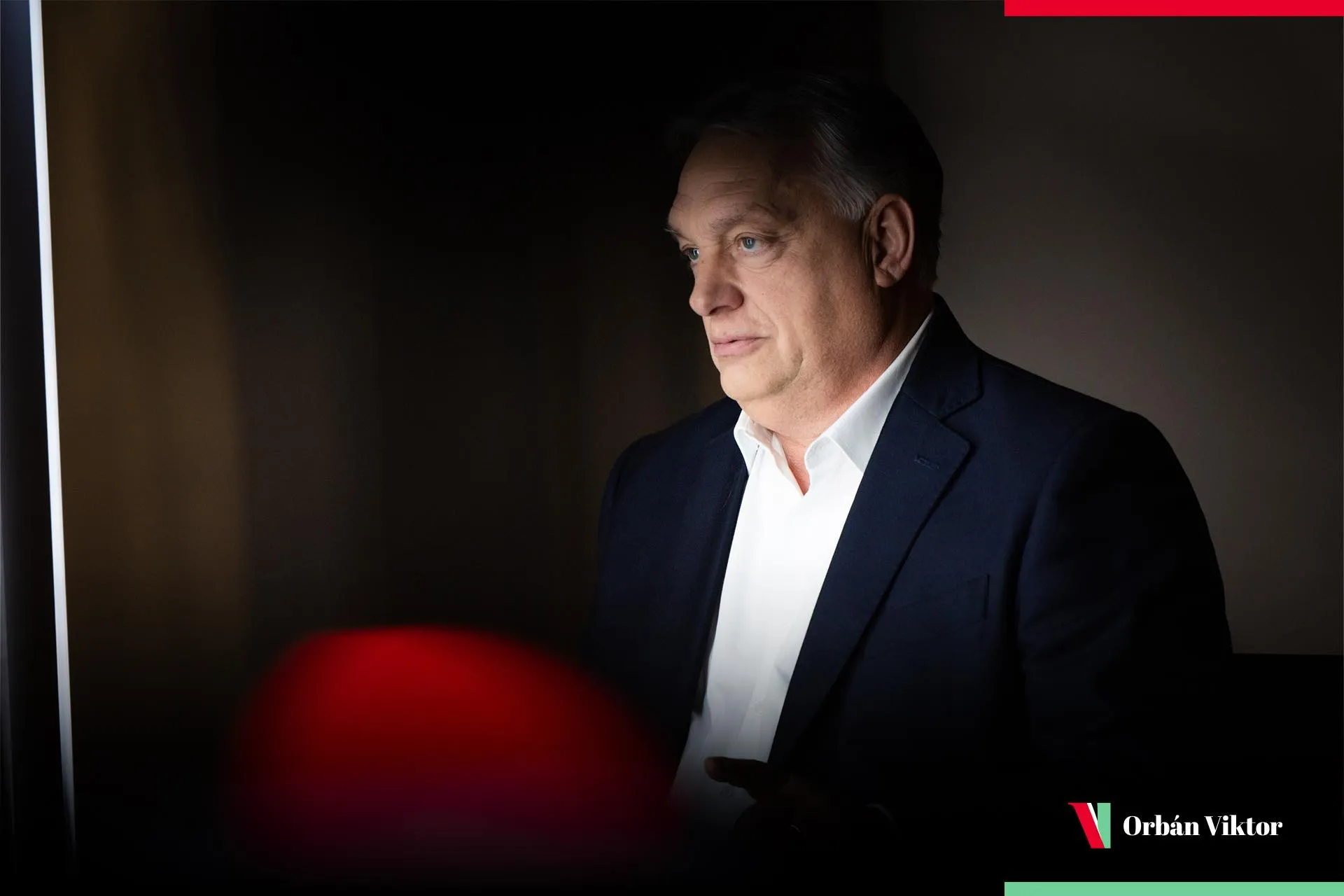
The general elections in 2026 will be “the last election before the war in Hungary, the last chance to decide on war and peace,” Prime Minister Viktor Orbán said in an interview broadcast on the Patriota YouTube channel on Monday evening, adding: “electing a pro-peace government will bring peace, electing a pro-Brussels one will bring war.”
In the interview, Viktor Orbán said that Brussels believed that war with Russia was inevitable and even desirable. “They think in terms of a war economy, a war logic, while we are pro-peace,” he said. He emphasized that next year’s election would be “both special and not special”, because nothing will change in terms of Brussels’ desire to “overthrow the national government” in 2018 and 2022.
“They tried in 2018, in 2022 they came up with Peter Márki-Zay, the opposition coalition, which didn’t work, now they’ve pushed the opposition parties aside, created a new one, pulled another person out of the hat who is essentially the same …” he said, referring to the Tisza Party and Peter Magyar.
Speaking about the expected farmers’ protest in Brussels, he said rural people and those making a living in agriculture in Europe had had their complaints and grievances for long. He said that the protest was mainly triggered by the fact that the EU summit will discuss the European Union’s next seven-year budget, and farmers see that their money is being “cut.” The European Union wants to spend much less money on agriculture and rural areas in the next seven years than it has done so far, he said.
The prime minister said that ten percent of the total amount of the next seven-year budget would be taken up by repayments to the financial fund set up after the coronavirus, and that decision-makers also wanted to give money to Ukraine, with a total of 20 percent of the budget being allocated to this, including direct and indirect instruments.
This would leave 70 percent compared to previous years, of which they want to spend proportionally much more on defense, but this means that less will be left for rural development, he said. Farmers say that this is out of the question, he said, adding that there may be new goals, and Ukraine may need money, but it should not come from the pockets of farmers.
Orbán said the protest would be the opening event of a very serious wave of agricultural protests lasting several years.
In response to the suggestion that some would like to use the frozen Russian assets to take out loans, he said that the EU regularly uses monies as collateral and distributes the loans rather than directly distributing the funds themselves, with the result that “in the end, someone will have to pay off the loans, and that someone will be our children and grandchildren.” In fact, what the EU is doing now is nothing more than indebting European children and grandchildren for decades to come, he said.
“They support this because they believe that the greater the common debt, the closer cooperation within the EU can be, and if the debt is shared, the member states will have less and less power, and a United States of Europe will be created,” he said. Orbán insisted that there was a secondary motive behind the war, “because war is the best excuse to indebt the entire continent, thereby eliminating the independence of nations and creating a United States of Europe, which is the long-held dream of federalists.”
Asked about the “Tisza package,” Orbán said that the EU was currently waiting for the member states’ parliaments to decide whether to give the money to Brussels so that it can go to Ukraine.
“That is why they always have a candidate … who, if he wins, will do what Brussels demands,” he said. He added that the aim is to eliminate national players. While national parliaments were still making the decisions, “there will come a time when so much debt has been incurred that it will no longer matter what the Hungarian parliament does.”
“European bureaucracy will reach into national budgets and say that you have to pay this, no matter what you think about it,” he said. At that point, national parliaments would slowly lose their significance, he said. “That’s what it’s all about, that’s what the story of the construction of this empire is about,” he said.
In the interview, Orbán also spoke about the need to prevent the confiscation of the Russian assets frozen abroad and their transfer to Ukraine, and if this fails, then “we have to somehow stay out of it,” “most of all we should stay out of Russian retaliation”.
There is a lot of money on the table, Orbán said, adding that the confiscation of the 230 billion euros “is tantamount to a declaration of war and will drag the European Union into very serious trouble,” as it causes economic trouble and “pushes us forward on the path of war, closer and closer to an actual armed conflict”.
Orbán said he could see little chance of preventing the move as “there are few of us, three or four, who do not agree with this;” the Slovak position is the same as Hungary’s, and the newly elected Czech prime minister “agrees with us,” and the Belgian prime minister “could also join us” since if the Russians successfully sue for the return of the assets taken mainly from Belgium, that “will destroy the Belgian economy”.
He said that under EU regulations, Russian state assets can be frozen by unanimous decision; “this was made into a two-thirds decision through a legal trick.” He added that a decision on the fate of the assets could also only be taken unanimously, but here too they could switch to a two-thirds system so Hungary cannot prevent the decision.
It must be made clear that everything that is happening is unlawful, Orbán said, adding that taking away the right to resist violates all EU legal principles, therefore the government will turn to the European Court of Justice as soon as the decision is published in writing.
He said that there was no Western unity on the issue because the Americans were openly against confiscating the frozen assets, which they would put into two US-Russian wealth funds, and use the income generated for specific purposes.
He added that Hungary’s position is that “this amount should be left where it is, and the Americans and the Russians should be allowed to use it for peace-making purposes”.
There is a transatlantic rift, Orbán said, adding that the Americans and the Europeans are openly seeking a completely different direction.
While the Europeans have already spent over 100 billion euros on the war, and they told their citizens that it would not cost them a penny, if this idea fails, that could result in “an explosive realisation in Western Europe” and the fall of many governments could be the consequence, he said.
Since US President Donald Trump took office, Western Europe and America have been following different paths, Orbán said. The latter have announced the end of globalism and the era of nations, he said, adding that “the American one is more favourable to us”.
For us, it would be best if European leaders were enlightened and said at the end of the debate that the US peace efforts should be supported and even the issue of the Russian assets should be subordinated to the US peace attempt, the prime minister said.
Orbán was asked about a statement by NATO Secretary General Mark Rutte, who said that Europe must prepare for a war of the scale that our great-grandparents and grandparents saw.
Orbán said there was a new situation as the NATO Secretary General was representing not the American, but the European position. In his opinion, this is also a serious threat to the Americans because it indicates that NATO could get involved in a war against the will of the Americans.
Such a situation has not arisen since World War Two, he said, adding that the US national security strategy published last week showed that the Americans did not want to find themselves in such a situation.
Orbán said the NATO Secretary General’s historical reference was incorrect, arguing that the Netherlands, where the US entered after the Germans in World War Two, probably had a different kind of war experience to Hungary, a country that “the front moved across” and where the Germans were followed by the Russians.
In addition, he said, it is possible that a war today would no longer be like World War Two fought with conventional weapons, as there is a constant danger that a war fought with conventional weapons could suddenly turn into a limited or unlimited nuclear war.
Assessing the new US national security strategy, Orbán said it is “as if we had written it”.
He said he agreed that Europe was in a moment of civilisational destruction, or rather a civilisational transformation. Traditional Western Christian values are being banished from politics, and replaced by a liberal, global approach, which has brought migration with it, he added.
He said the US document was also important because it showed that the Hungarian government was not talking “bullshit” when it had warned about the dangers of migration since 2015.
Read also:

 ZH
ZH IT
IT DE
DE HR
HR NL
NL FR
FR JA
JA RO
RO RU
RU ES
ES TR
TR


China wants a war in Europe so the U.S. is bogged down here, and then maybe in Venezuela, so it can invade Taiwan without the might of the entire U.S. military being able to concentrate on that theater.
And their plan is working, thanks to the Eurotrash “leaders'” imbecility and treachery (probably in equal parts).
Come on, @michaelsteiner – you can do better. Seriously. I may often disagree with you – however recent posts are more rage than reasoning. I preferred the reasoning @michaelsteiner.
To those who talk him down – he is voicing an opinion, is usually concise and I appreciate it. Facts and data rather than ad hominem attacks, please?
Speaking of treason: https://www.gbnews.com/politics/nathan-gill-reform-uk-wales-jailed-russia-bribes