Subscribe to our social channels to get the latest news about Hungary!


The Astana International Forum (AIF) 2025, held on May 29–30 in Kazakhstan’s capital, brought together nearly 600 global leaders, policymakers, business executives, and representatives of international organisations. Under the theme “Connecting Minds, Shaping the Future,” the forum served as a hub for high-level dialogue on some of the world’s most pressing challenges—from geopolitical fragmentation and climate change to infrastructure, trade, and energy cooperation.
As we were writing the article containing the opening speech, President Kassym-Jomart Tokayev opened the event: Astana International Forum 2025 opens with focus on global challenges.
The two-day event featured numerous discussions and live performances. We selected a few interesting speakers who will provide our readers with additional information.
@dailynewshungary #Astana International Forum 2025 #aif2025 #kazakhstan @Alpár Kató ♬ original sound – Daily News Hungary
At the 2025 Astana International Forum, Deputy Foreign Minister of Kazakhstan Roman Vassilenko highlighted the country’s key role as a regional power and a global advocate for dialogue, cooperation, and democratic reforms. Vassilenko emphasized the forum’s broad agenda, tackling global challenges such as energy security, climate crisis, technological innovation, and geopolitical collaboration. He outlined Kazakhstan’s recent political and socio-economic reforms, including limiting the presidential term to a single seven-year mandate, reviving the Constitutional Court, and easing political party registration, which led to greater political pluralism.
On the international stage, Kazakhstan remains a leader in nuclear disarmament and non-proliferation, hosting the IAEA’s Low Enriched Uranium Bank and promoting the UN’s International Day Against Nuclear Tests.
He also noted Kazakhstan’s growing role as a transit hub between Europe and Asia through the Trans-Caspian International Transport Route (Middle Corridor), and its potential as a “middle power” promoting multilateralism and peace.
Kazakhstan’s strategic partnerships with the EU and other global actors are deepening, particularly in trade, infrastructure, and critical raw materials vital for green and digital technologies. The country already supplies over 40% of the world’s uranium and produces over half of the 34 critical raw materials identified as essential by global markets.
In response to our newspaper’s question, the Deputy Foreign Minister said that they are striving to increase the supply of Kazakh energy resources to Europe, but due to the sanctions against Russia, they cannot use the pipelines that run through Russia for this purpose. He emphasized that Hungary is an important partner for Kazakhstan and that they are trying to find alternative solutions to secure as many energy sources as possible for Budapest. Vassilenko cited the Green Corridor as an example, which is a transformative infrastructure project connecting renewable energy producers in Central Asia and the South Caucasus (Kazakhstan, Azerbaijan, Uzbekistan) with European consumers in Hungary and neighboring countries. The project combines huge investments, advanced submarine cable technology and regional cooperation to create a sustainable and secure energy supply route for Europe, which is expected to be completed in the coming years.
Finally, Vassilenko underlined Kazakhstan’s investment potential, stating that the country accounts for 60% of all foreign investment in Central Asia, with $450 billion in FDI attracted since 1993 and strong economic growth continuing into 2025.
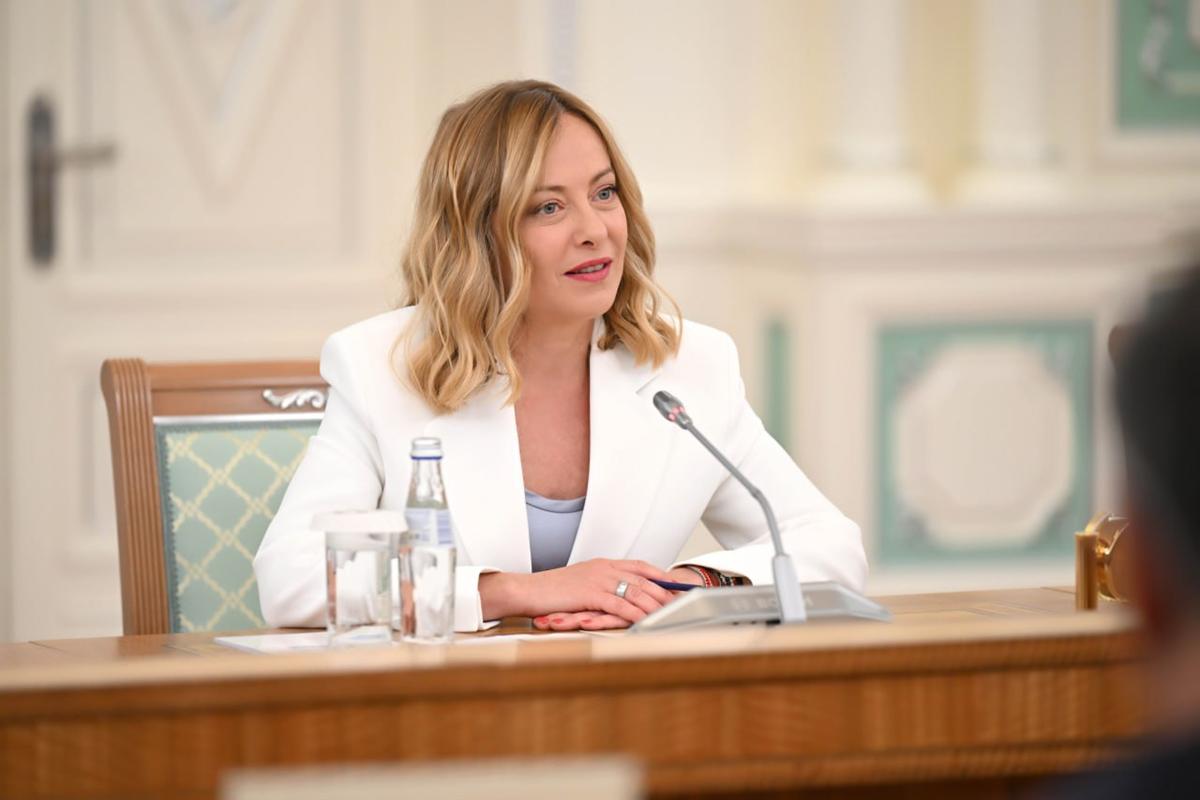
Italian Prime Minister Giorgia Meloni delivered a standout keynote speech, calling for bold and values-driven leadership in a rapidly changing world. She underlined Italy’s leadership role in fostering EU-Central Asia cooperation, referencing the first EU-Central Asia Summit held in April 2025.
Highlighting strategic cooperation in energy, infrastructure, and critical raw materials, Meloni also endorsed the Middle Corridor as a vital trade route linking Southeast Asia and Europe. She described it as “probably the most promising and fascinating challenge.” The Italian Climate Fund, she said, could be an effective tool in driving joint environmental and sustainability initiatives across the region.
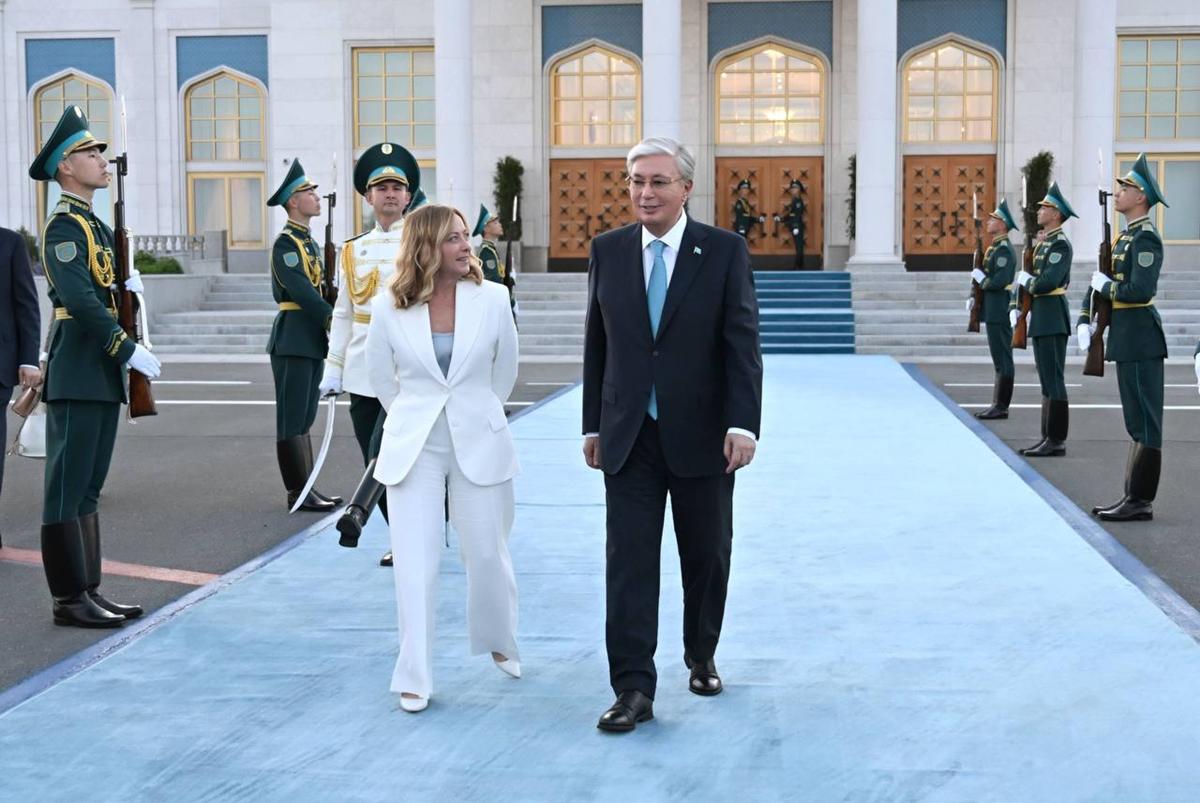
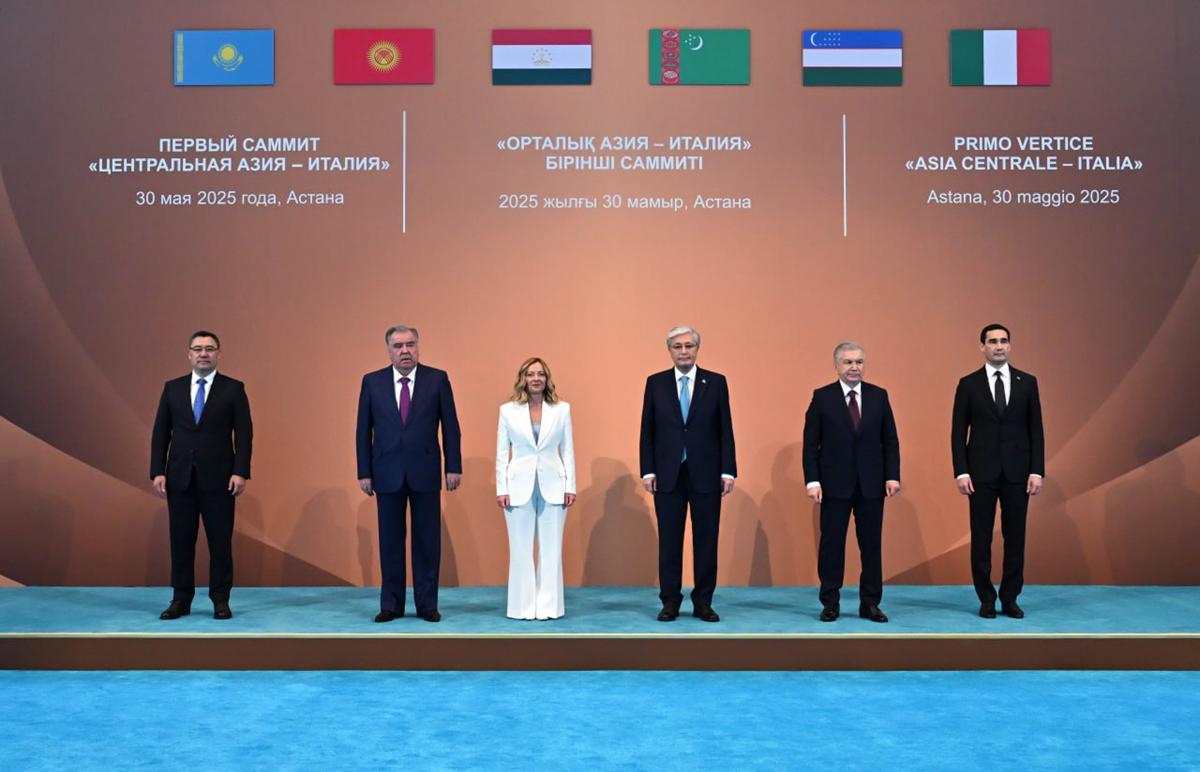
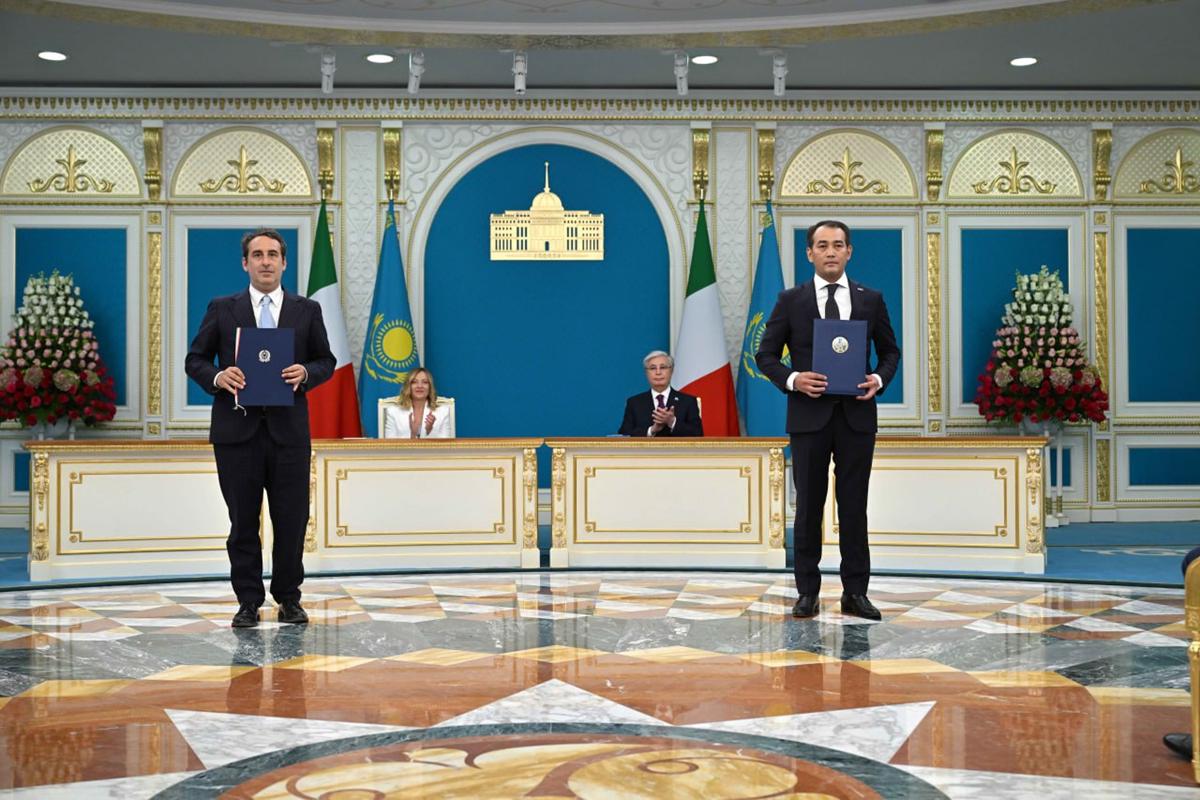
Italy and Kazakhstan have signed a set of deals worth €4bn during a visit by Italian Prime Minister Giorgia Meloni to Astana. The agreements were across a variety of sectors, including oil and gas, renewable energy and water management.
Former Austrian Chancellor Sebastian Kurz praised Kazakhstan’s pragmatic diplomacy in managing its relationships with China, Russia, and the West. He emphasised that Europe could benefit from such a balanced approach, especially given today’s fragile geopolitical context.
Kurz stressed the need for strategic cooperation with “middle powers” like Kazakhstan as the EU transitions away from dependence on Russian energy. He also noted the region’s evolution from a raw material hub to a centre for innovation, AI, and IT development.
Former UN Secretary-General Ban Ki-moon urged international unity to tackle global crises that transcend borders, such as climate change and economic inequality. He highlighted the importance of regional dialogue and praised Kazakhstan’s and its neighbours’ commitment to green growth and sustainable development.
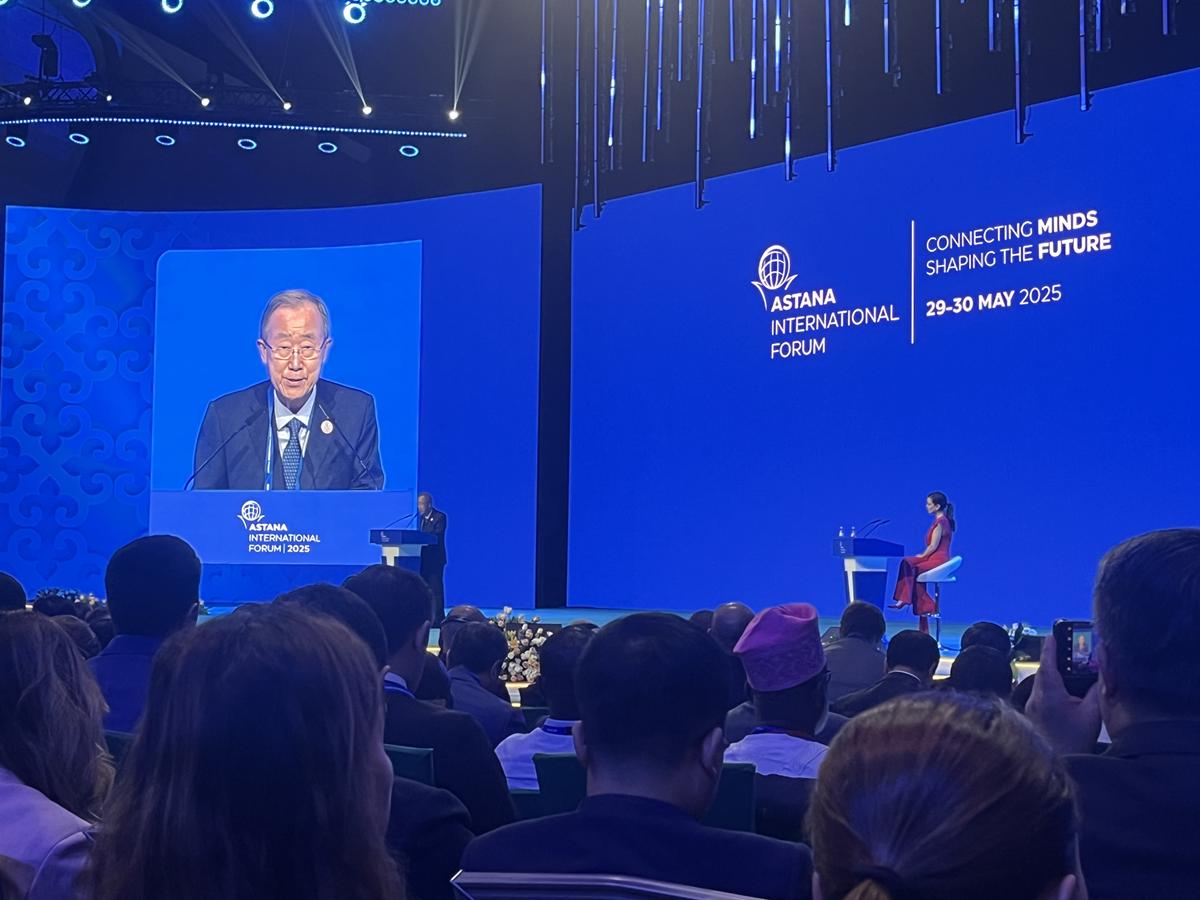
“No country, no matter how powerful, can face these challenges alone,” Ban warned. He also emphasised the need for stronger multilateral partnerships, regional connectivity, and resilient infrastructure.
Haji Nooruddin Azizi, the Taliban’s acting Minister of Commerce and Trade, made headlines with an investment pitch for Afghanistan. While urging the international community to engage with the Taliban, his remarks sparked criticism over the regime’s human rights record, particularly concerning women and education.
Despite the backlash, Azizi maintained that women were “a big part” of the country’s economic development, and he thanked Kazakhstan for its support, citing discussions over a potential $500 million railway project.
The forum also highlighted dynamic cooperation between Uzbekistan and Kazakhstan. Officials from both countries spoke about joint initiatives, including cross-border digital services, startup incubation in Silicon Valley and Dubai, and plans for expanding IT exports.
Discussions also covered strategic financial cooperation, with Central Bank representatives exploring shared solutions for digital payments and banking digitalisation.
The Hungarian government was not represented at the event, but several Hungarian participants were present, whom our news site contacted and who shared their experiences:
Gábor Szőcs, Central Bank of Hungary, executive director: “The Astana International Forum is a timely and well-organised platform for addressing global challenges, with a strong focus on financial innovation, digital transformation, and the advancement of AI – areas where Kazakhstan and the broader Central Asian region are making remarkable progress. The forum’s professional atmosphere and excellent networking opportunities foster valuable dialogue between stakeholders from across the globe. In today’s uncertain and rapidly changing world, international cooperation has never been more essential. The Magyar Nemzeti Bank, the central bank of Hungary, highly values its relationship with Kazakhstan and with its Kazakh partner institutions, including the National Bank of Kazakhstan (NBK), the Astana International Financial Centre (AIFC) and the Agency of the Republic of Kazakhstan for Regulation and Development of Financial Market (ARDFM), and sees significant potential in deepening our collaboration. Both countries are committed to acting as bridges between East and West, contributing to greater regional and global connectivity. Events like the AIF 2025 deepen our mutual understanding and open new avenues for collaboration in technology, finance, and beyond.”
Dr Péter Zoltán, UBM Group, Kazakh investment director: “The AIF is a professionally organised event (we are familiar with that after the opening ceremony of Nomad World Games) and has a great atmosphere. Both Peter and I are happy we decided to attend it. The plenary session started with the speech of President Tokayev, who pointed out the importance of the triangle balance between the presidential power, who is the manager of the country and elected for a limited 7-year term, the Parliament representing the people, and the civil spheres. He also pointed out the healthy balance between the powers of the leaders and the importance of cooperation between medium-sized and small countries. It was a well-balanced and calm speech in English. All other speakers stressed that peace and cooperation are vital in this vibrant and unbalanced world where many conflicts arise, whether economic or military. All the sessions were well organised, some with really interesting topics that are very important or relevant. The Congress Centre is really impressive.”
We also spoke to a Central Asia expert, Prof. László Vasa, senior advisor to the International Directorate of the National University of Public Service and senior researcher at the Hungarian Institute of International Affairs, who said: “The AIF is the Davos of Central Asia, where the political and economic elite of the region come together, as well as representatives of countries that have interests or concerns here. It was good to see that Hungary was represented not only by researchers and analysts of the region, but also by businesspeople. It is in Hungary’s important interest to participate in all such events, as they always open up new perspectives, which may not be country-specific but may even be regional. In this way, the number of existing success stories can be increased. The EU was also represented, but as usual, the individual member states played a more decisive role, a good example of which was the speech given on the second day by Italian Prime Minister Meloni, which suggests that the already excellent Kazakh-Italian relations will be further strengthened. The EU is seeking to strengthen its influence in Central Asia, but this is limited by the lack of a clear strategy and the interests of competing member states in the region. Hungary has good reason to build high-level strategic relations here, which open the door to economic, cultural, scientific and technological cooperation.”
With participation from over 70 countries, AIF 2025 underscored the urgency and potential of collaborative leadership. Through keynote addresses, bilateral meetings, and expert panels, the forum not only addressed today’s global issues but also laid the groundwork for stronger, future-focused international cooperation.
Read more news about relations between Hungary and Kazakhstan
As we wrote a few days ago, newest flight between Budapest and Central Asian city launched


