Subscribe to our social channels to get the latest news about Hungary!


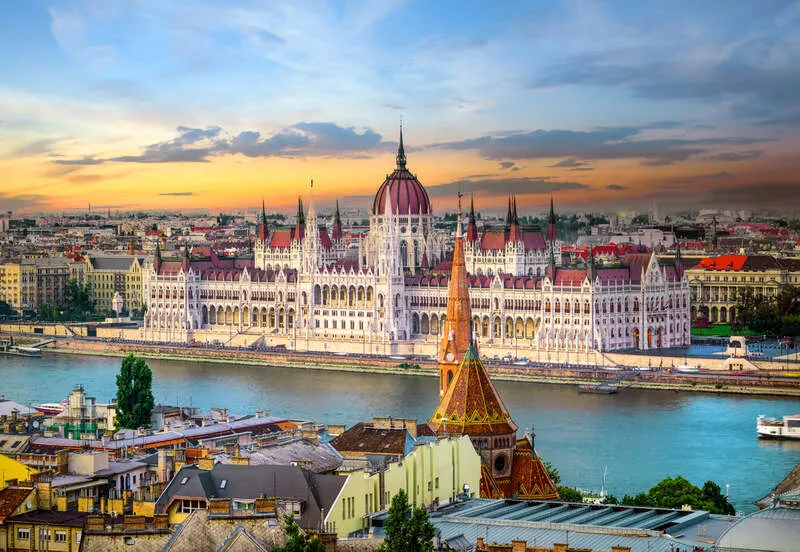
Budapest is making headlines in 2025 with bold urban investments and transformative projects that promise to reshape how both locals and visitors experience Hungary’s capital. Here are the most notable announcements driving excitement this year.
In October 2025, Hungary’s government unveiled a historic EUR 2.5 billion development plan centred on Budapest Liszt Ferenc International Airport. The flagship element is a rapid railway link from Nyugati Station to Terminal 2, slashing travel times to just 20 minutes and providing transfer-free access for passengers from major cities like Debrecen and Győr.
The project’s scope also includes a third airport terminal, elevated capacity for 40 million annual passengers by 2040, and the participation of private investors via an international concession tender expected to launch soon. Train tickets will offer a cheaper and more sustainable alternative to taxis, with trains operating at up to 160 km/h. Construction is scheduled to begin as early as 2026, with full completion eyed for 2034–2035.

One of Budapest’s Art Nouveau landmarks, the Gellért Thermal Baths, closed its doors on 1 October 2025 to begin a multi-year, EUR 50 million restoration. Experts have pushed for full renovation due to structural and safety issues, especially those arising from ageing mechanical systems shared with the adjacent historic hotel.
The upgrade will rejuvenate marble pools, Zsolnay mosaics, and stained glass interiors, aiming to preserve its heritage while elevating wellness facilities to 21st-century standards. The baths, drawing over 420,000 annual visitors, are expected to reopen in 2028 following completion of this ambitious cultural investment.

2025 has seen Budapest announce a raft of luxury hotel projects, including the transformation of iconic landmarks like the Gellért Hotel into a future Mandarin Oriental, scheduled to open post-renovation. Other international brands—St. Regis, Radisson Collection, Swissotel, and more—are set to establish new locations, totalling 22 hotels and 3,000 rooms across the coming years. Office building conversions are ramping up to meet surging demands for premium accommodation, marking a huge boost in city hospitality capacity.
At the same time, a massive residential construction drive was confirmed, with thousands of new apartments and homes set for sites in Budapest and nationally. Notably, developments in riverside districts and marina complexes are bringing new green spaces, pedestrian promenades, and sustainable living, catering to the evolving needs of urban dwellers and investors.

With these multi-billion euro investments and paradigm-shifting projects unveiled in 2025, Budapest is proving itself as a vibrant European capital that harmonises historic elegance with bold infrastructure upgrades and next-generation hospitality.
Featured image: depositphotos.com

 ZH
ZH IT
IT DE
DE

