In Budapest, an increasing number of street food kitchens are offering Hungarian classics with a modern twist. From dödölle to lángos, authentic soups, and even international street food adapted to Hungarian tastes, the city has a lot to offer. Here are five places where traditional flavors meet creative innovation in Budapest’s street food scene.
The golden age of Budapest street food
The internationally acclaimed lángos and kürtőskalács continue to be popular, but more and more exciting Hungarian street food kitchens and emerging spots are appearing across the city, offering inventive takes on traditional flavors.
Bors GastroBar
Bors GastroBar was one of the first soup-focused eateries in Budapest, offering creative soups alongside unique baguettes. “Hungarians love their soups, and we wanted to serve the best creative soups in the city,” say the owners. Their daily-changing menu ranges from dessert soups to savory baguettes, often including Hungarian-inspired elements, bringing classic flavors to life in a modern street food format.
Varied, creative soups from creamy potato to paprika-seasoned celery, served with extra toppings. Photo: Facebook / Bors GastroBar
Varied, creative soups from creamy potato to paprika-seasoned celery, served with extra toppings. Photo: Facebook / Bors GastroBar
Dödölléző
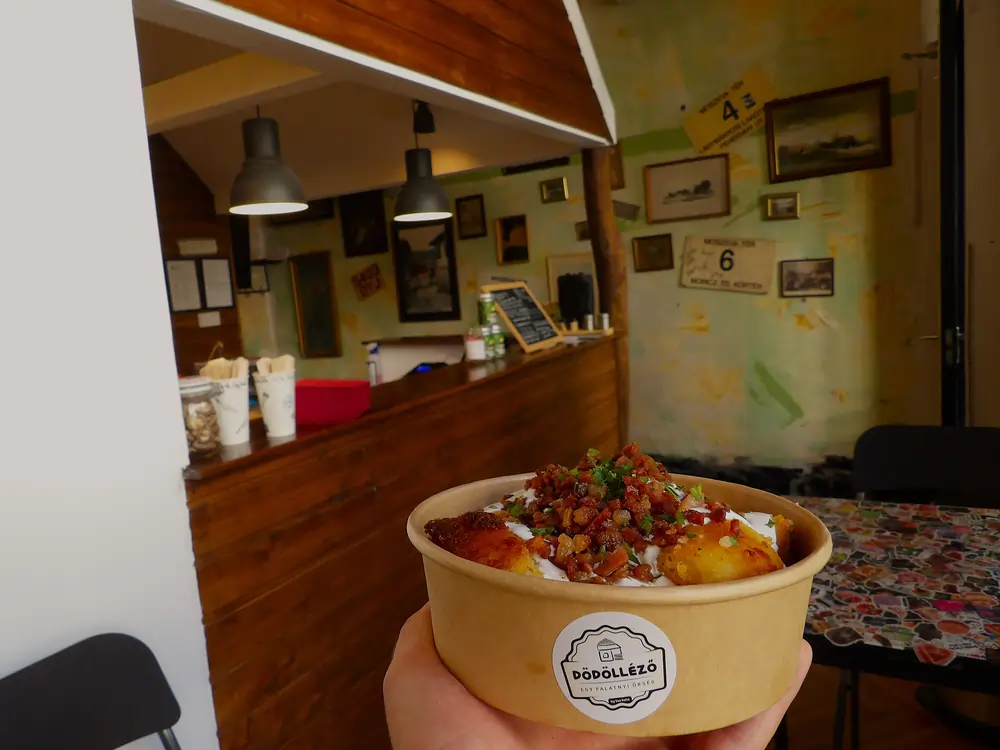
Dödölléző brings one of Őrség’s most iconic dishes, potato-and-flour dödölle, to Budapest’s street food scene. Their specialty is making this traditionally plated dish easy to eat on the go.
Traditional fried onion dödölle with sour cream and smoked bacon, served street food style. Photo: Dödölléző
Alongside the classic fried onion version, they offer several toppings – including sour cream, smoked bacon, or mushroom ragout – showing how a simple rural dish can become a modern urban street food experience.
Budapest Bites
Budapest Bites transforms traditional Hungarian flavors into street food form: the classic cheese-and-sour-cream lángos is available alongside sweet versions, like Nutella, apricot jam, or pistachio-raspberry. Their signature creation is the lángos burger, which sandwiches typical burger toppings between two mini lángos, with both meat and vegetarian options.
Lángos burger: two mini fried dough rounds layered with meat or vegetarian toppings. Photo: BudapestBites.com
Nokedlish
Nokedlish elevates a Central European classic – German-Austrian nokedli, which is also familiar in Hungarian cuisine – making it a standalone street food dish rather than a side.
Various Hungarian sauces and toppings are available – such as vadas, pörkölt, or creamy vegetable options – including gluten- and egg-free alternatives.
Töltő
Töltő reinvents the hot dog using Hungarian ingredients. The bun comes from a local bakery, the sausage from artisanal butchers, and the toppings often include traditional Hungarian flavors.
The menu features the classic Hungarian-style hot dog with house sausage, paprika-onion ragout, and sour cream, alongside seasonal specialties like smoked cheese with cherry peppers or plum jam with crispy bacon.
Authenticity is reflected in ingredients and cooking techniques, making these dishes accessible even to visitors from entirely different culinary cultures.
According to culinary historian Róbert Gyula Cey-Bert, the deeper layers of Hungarian cuisine trace back to Eastern pastoral traditions. These influences are still recognizable in core techniques: meat handling, spice use, and slow, stock-based cooking. Hungarian gastronomy can stay modern without abandoning tradition, combining old flavors with contemporary, health-conscious approaches.
Hungarian cuisine has several advantages in this regard:
Maintains strong rural traditions that preserve centuries-old culinary knowledge
Iconic dishes are rooted in recipes and stories passed down for generations
Food experts agree that Hungarian cuisine is in a strong position, it can remain authentic while innovating, blending traditional flavors with modern techniques and conscious ingredient choices.
Traditional Hungarian cooking . . . The first line of every Hungo recipe : “Take something that used to be a pig.”
As a refugee from the Arrow Cross used to say laughingly to me when I was a boy as he tucked into traditional Hungarian food, slick with fat — This is the real thing, just like what we had in Szeged ! Killed more Jews than Hitler !
Bonfires and bacon roasts. How does one “street-food” that ?





 ZH
ZH IT
IT DE
DE HR
HR NL
NL FR
FR JA
JA RO
RO RU
RU ES
ES TR
TR


Traditional Hungarian cooking . . . The first line of every Hungo recipe : “Take something that used to be a pig.”
As a refugee from the Arrow Cross used to say laughingly to me when I was a boy as he tucked into traditional Hungarian food, slick with fat — This is the real thing, just like what we had in Szeged ! Killed more Jews than Hitler !
Bonfires and bacon roasts. How does one “street-food” that ?
I thought Tolto is closed?