Subscribe to our social channels to get the latest news about Hungary!


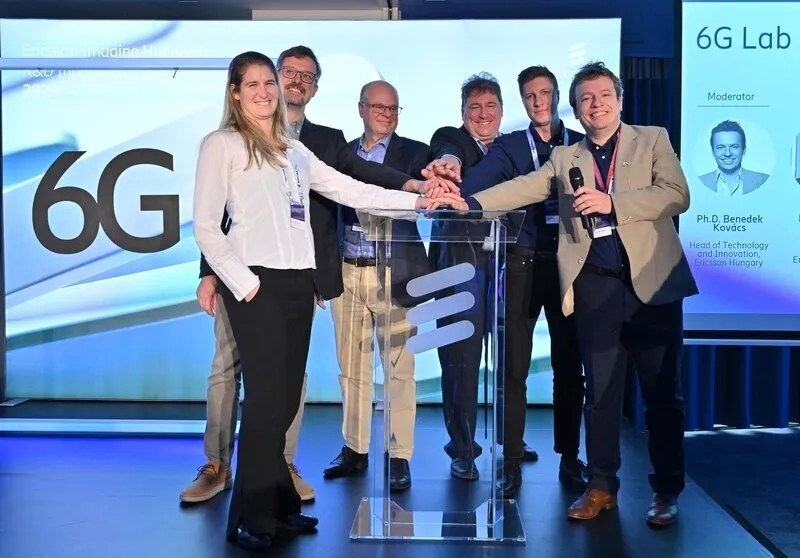
Ericsson has launched a new 6G laboratory at its Budapest Research and Development (R&D) centre, reinforcing Hungary’s role in developing next-generation communication technologies. The facility will focus on advancing core network evolution and key functionalities that will define future 6G systems.
Ericsson’s Budapest site is already one of the company’s largest R&D hubs worldwide. The new lab will expand its activities by supporting research on network exposure, programmability, and cloud-native technologies, alongside automation, artificial intelligence, and machine learning — all essential components of the upcoming 6G architecture.
The Swedish telecom giant emphasises that its 6G vision goes beyond faster networks: it aims to build a more sustainable, resilient, and human-centric digital society.
“The opening of our 6G Lab in Hungary reinforces our long-term commitment to research and innovation,” said Antonio Passarella, Head of Central Europe and North Balkans at Ericsson. “As we move toward the 6G era, our goal is to evolve today’s 5G Core technology into an even more flexible, open, and intelligent platform, paving the way for entirely new use cases, industries, and societal benefits.”
The new Budapest 6G Lab will work closely with Hungarian universities and research partners, including Budapest University of Technology and Economics (BME), Eötvös Loránd University (ELTE), Óbuda University, and the HUN-REN research network. These collaborations will help co-develop experimental technologies and foster new scientific breakthroughs.
“We established the Budapest 6G Lab to be both a site for scientific breakthroughs and a hub for practical innovation. Our work is not only about preparing for a post-5G world – we want to truly benefit society. We are striving to enable people to communicate and collaborate more effectively than ever in the future.”
The new facility will also contribute to Ericsson’s global 6G research programme, ensuring that Hungary plays an active role in shaping future communication standards. Beyond technology, the initiative is set to boost Hungary’s innovation ecosystem by encouraging academic collaboration and developing local talent.
Ericsson has been present in Hungary since 1991, and its local research team was established in 1996. With this new investment, the company aims to ensure that Hungary remains at the forefront of European telecommunications research.

 ZH
ZH IT
IT DE
DE HR
HR NL
NL FR
FR JA
JA RO
RO RU
RU ES
ES TR
TR

