


How good is the Hungarian metro system? – A regional comparison

Change language:
The underground system of the Hungarian capital has a relatively long history, as the Millenium Underground was built in 1896 and was the first underground line in the European mainland. But how do the current Hungarian underground system and general public transportation system fare against the cities of the surrounding Central and Eastern European countries?
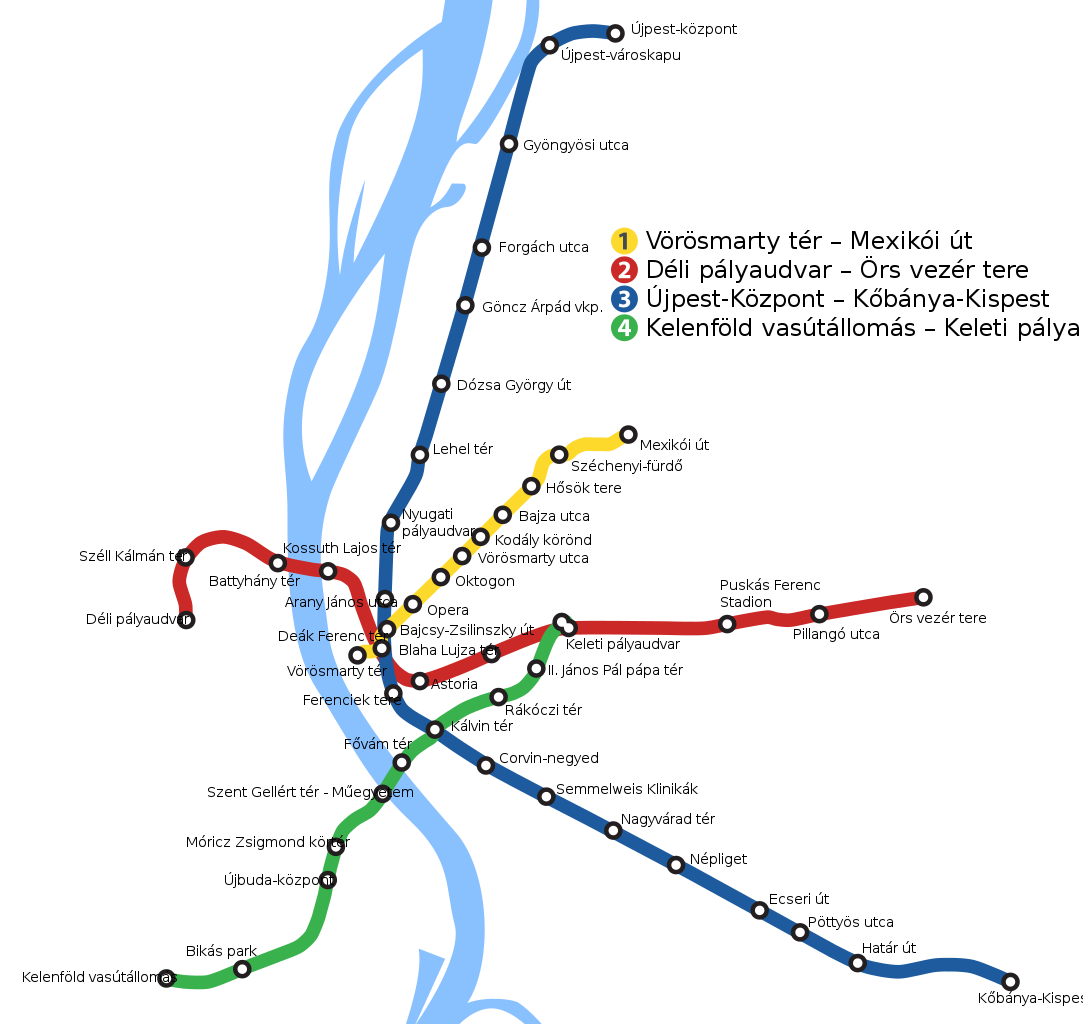
The underground system of the Hungarian capital is currently not in a bad place; metro line four (M4) is still relatively new and modern, line two (M2) has been renewed, and the modernisation of metro line three (M3) is currently underway. The Millenium Underground, although not in a particularly bad shape, is ready for a renovation, and according to some plans, it will also be elongated, says Növekedés.
There have also been talks of a fifth metro line (M5) and a major rework of the commuter railway lines in Budapest, with some of them being relocated underground and connected to the others. These and many other developments are part of the large-scale city development project: Budapestvasut2040. If the new underground line is built, the Hungarian capital might get a much better ranking than it currently has and would immediately soar to the top. Now let us see how it currently fares.
Cities without any underground
Quite many surrounding capitals do not even have an underground system, such as Slovenia and Croatia, but neither Ljubljana nor Zagreb is large enough to have one necessarily, Növekedés reported. In the Slovak capital, Pozsony, there were attempts to create two underground lines, and the construction of one of them even began, but they were never finished. While there are currently no undergrounds in Serbia either, the construction of a system in Belgrade has been the focus of political programmes in recent times.
Budapest’s new metro line 5 could cost over €1 billion!
Renovated Hungarian metro cars are the real Russian roulette
Cities with underground
Warsaw
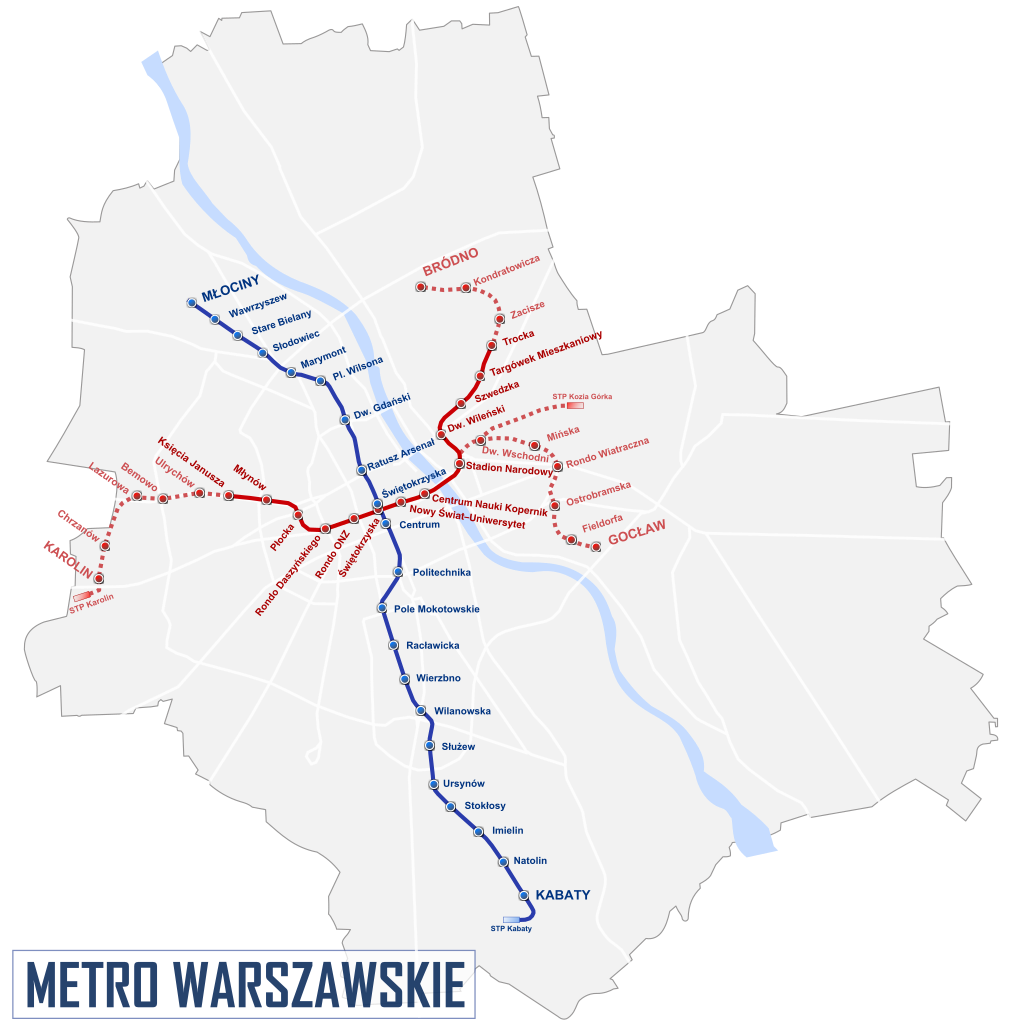
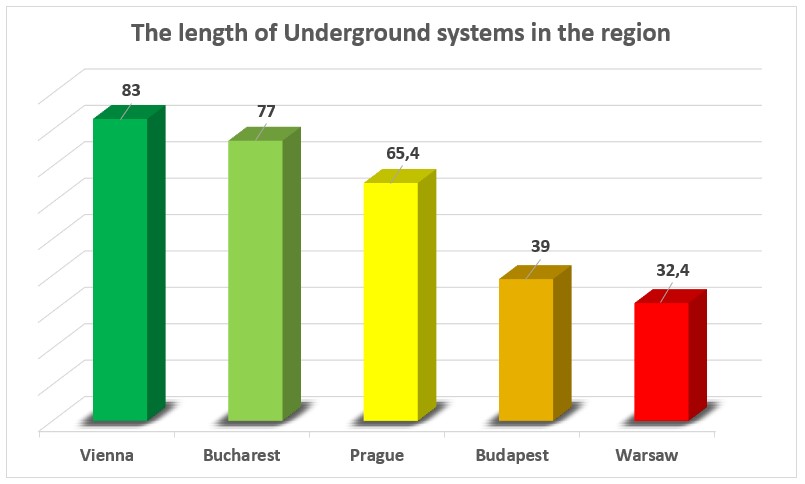
In the region, the last place goes to Warsaw, as it has only two underground lines to a city that is very similar in population to Budapest. The system is relatively new as the first underground was built in 1995, and the two lines are 32.4 kilometres in total lengths. It is also the only city in Poland with an underground.
Having lived the majority of my life in a much less densely populated City, the Budapest Metro System – passes superbly – all my needs to travel around Budapest.
The less densely City – that I refer, still does not have a metro system but it is under construction – one line only – and is expected to be in operation 2024.
City – that I use as an example ;
Population : 5.3 million.
516 people in a square kilometre.
Compare that just on population of my District V – that we live in Budapest.
We are “spoilt” personally, living in Budapest with the (4) four Metro lines Services and the (5) fifth to come – will be Magnificent for ALL.
Melbourne, Australia – a nightmare in public transportation – to what we joyously live and use daily in Budapest.
I think the Budapest Metro is great. There’s more space, it runs often and it connects well with the trams, compared with London and Paris I usually use Kalvin tér whih has great connections.
To Gary J. A. Booth-Hansen,
I am thrilled, at last you can say something good about this magnificent city/country.
All most all American cities have nothing that even compares to any of these systems. Line 4 being
Top notch- great design and very efficient.
Not sure who is responsible for the underground areas that lead to metro 3 and metro 2 Are poorly maintained – most were well designed except for signage- clThe stone used for floors and walls are great, considering when they were built.
The best station on SF bay area Bart was built about the same time and has not aged well, but the cars are much wider- more like train. The DC metro was cutting edge when it was built in the late 60s. Like metro 4 it still has a wow factor with its huge vaulted station.
Ted, are you familiar with the DC metro system. All of them are like that and there are many more than on L4. Maybe it’s just because I’ve lived in Philadelphia, Chicago, San Francisco, and DC, and ride the NYC subway all the time to JFK and NJ transit to Newark… maybe with that select experience I support what you say but not with the same enthusiasm. (I’ve ridden with Boston too. What is it, The T?) Connecting to the with rail airport is something all those cities do, and something that would be meaningful if they could focus new development around the train stations in bwtween.
Of you’re going to go as far as Bucharest, I think it would be fair to include neighbouring Ukraine and Kyiv. Lovely Soviet stations, more “mileage” than Prague (bigger city), and very affordable.