Subscribe to our social channels to get the latest news about Hungary!


New research into the Shroud of Turin may have revealed the blood type of the Son of God. Could you be Jesus’ ‘blood brother’? Read on to find out.
A well-known biblical scholar has made an extraordinary claim: the traces of Jesus’ blood may have been identified—together with His blood type—according to a report in the Daily Star. But is this really the burial cloth of Christ?
The Shroud of Turin is a 14.4-foot-long linen sheet which many believe to be the burial shroud of Jesus. For centuries, it has been the subject of fierce scientific debate. Dr Jeremiah Johnston recently revealed that tests conducted in the 1990s indicated the blood on the cloth is of the AB blood group. According to him, this type is “of Semitic origin, found in only about six per cent of the global population, and definitively from a male human—meaning it is neither animal blood nor a forgery.”
Even more striking than the identification of the blood type, Johnston emphasised that both premortem (before death) and postmortem (after death) bloodstains were discovered on the Shroud. This, he argued, suggests that any attempt to fabricate such a relic would have required the actual killing of a person. Moreover, current scientific knowledge shows such blood patterns could only occur naturally if the body had endured an extremely brutal execution—such as crucifixion.
The presence of AB blood was first reported by Italian researcher Dr Pierluigi Baima Bollone and his team, who analysed a sample taken from a wound mark on the side of the cloth, believed to have been caused by a lance thrust. Later, further traces of AB-type blood were identified near what appear to be footprints.
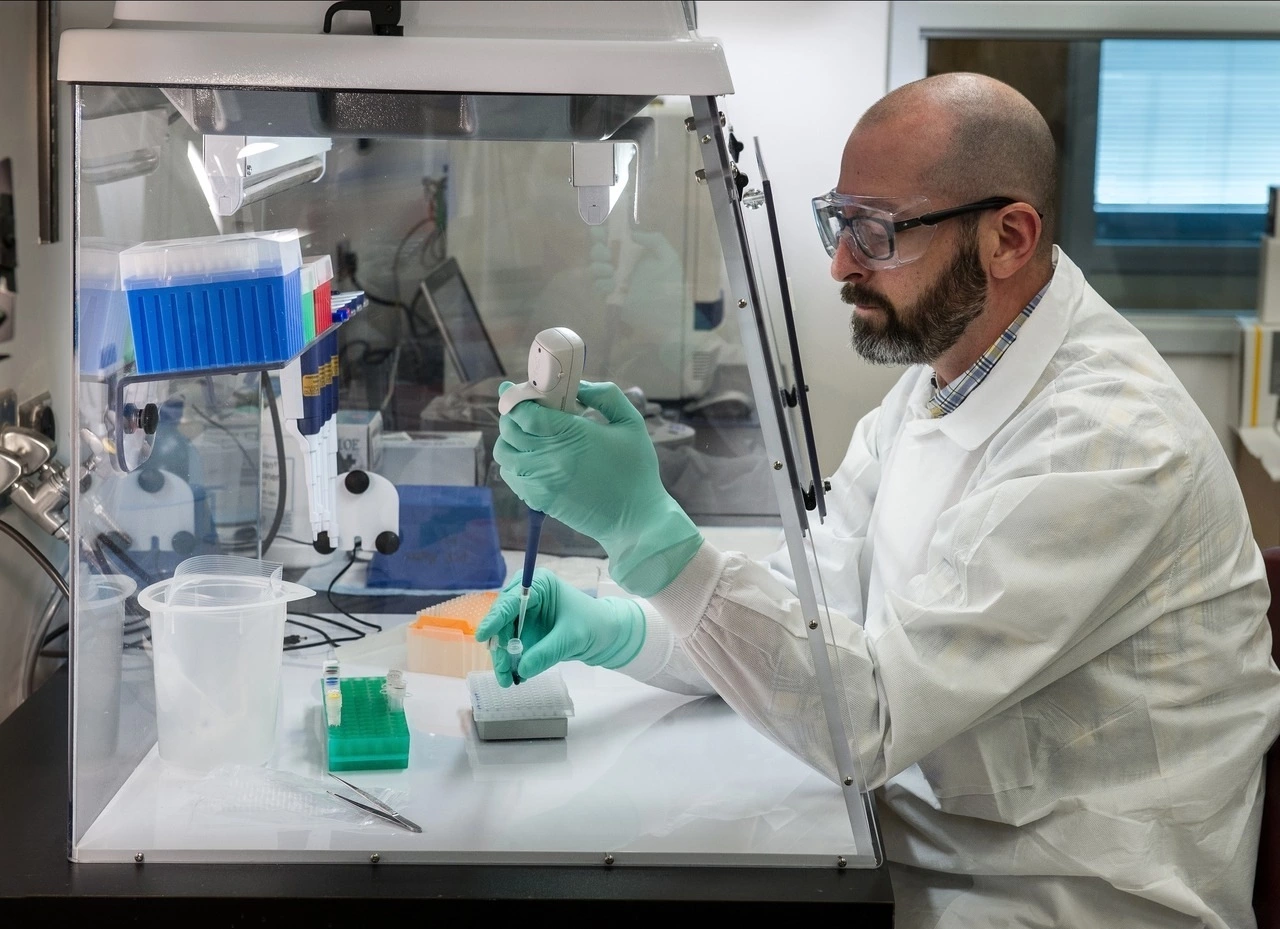
The analysis employed modern immunological techniques to examine antibodies and antigens under both light and electron microscopes. The findings demonstrated that the blood on the Shroud was unequivocally AB, and none of the linen fibres tested showed any antigens—thereby ruling out contamination. Johnston also pointed out that another famous relic, the Sudarium of Oviedo—which, according to the Gospel of John, covered Jesus’ face—also contains traces of AB blood.
Not all scholars are persuaded. Dr Kelly Kearse, an immunologist, has questioned the reliability of the research: “It may be AB, but in my opinion, there’s no solid scientific evidence for that,” he wrote in a 2020 study. He further suggested that centuries of blood degradation or bacterial activity could have distorted the results.
Johnston estimates that the Shroud displays around 700 distinct wounds, each consistent with injuries typical of Roman-era crucifixion. Yet it is not only the blood and wounds that appear remarkable. The iconic image of a full male figure imprinted on the cloth is neither paint nor scorch mark, Johnston claimed, and this has been confirmed repeatedly by scientific examination. “The image is just two microns thick and does not penetrate the fabric. If it were painted, the pigment would have soaked through. Instead, it could almost be shaved off,” he explained.
So, does this cloth truly preserve the blood of Jesus? Or is it the work of a medieval genius, who somehow anticipated modern science and created a remarkable forgery? Perhaps one day, we shall have a definitive answer.
Read also:
To read or share this article in Hungarian, click here: Helló Magyar


