Farkas Kempelen, the Hungarian creator of the world-famous first chess-playing machine
Change language:
He was a genius of his age since he made a typewriter for a blind girl, a steam engine, a special bed for Empress Marie Theresa, and he was also a poet, a writer and a goldsmith at the same time. His chess-playing machine defeated not only grandmasters of the time but also Napoleon Bonaparte and Benjamin Franklin.
A Hungarian polymath of the 18th century
Kempelen, who was born in 1734 in Pozsony (today Bratislava) and lived later in Vienna, was a polymath in the 18th century. Like Thomas Alva Edison more than 150 years later, he had countless inventions preceding his age. However, today, he is mostly remembered for his famous “Turk”, a chess-playing machine he created in 1769.
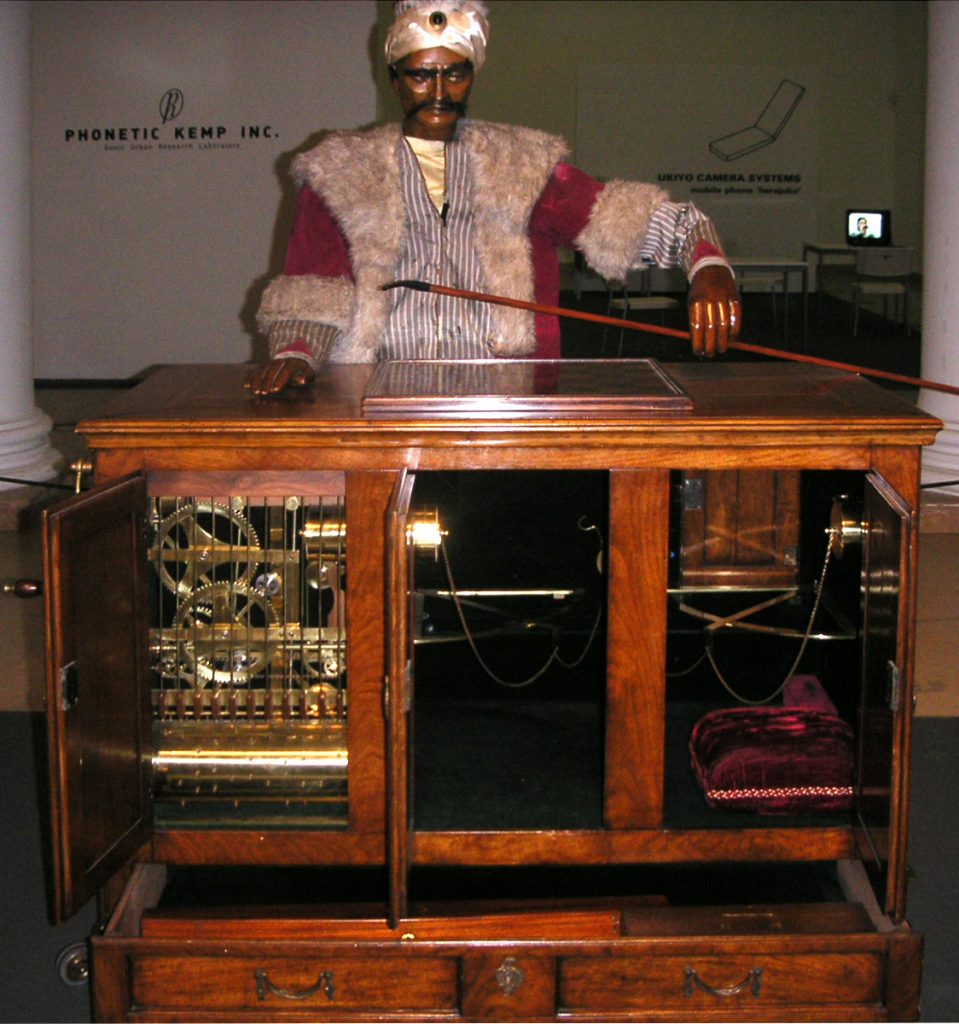
The reconstruction of Kempelen’s world-famous chess-playing machine.
Seemingly, the puppet played chess independently, and he was very difficult to defeat. People were suspicious, so they made Kempelen open the drawers and doors of the table, but they found nothing. Today, we already know that the whole thing was just
a very clever trick
since a human chess master was hiding inside and operated the machine. However, taking into consideration the technology level of the era, it was rather difficult to put somebody in the machine, allow him to see the chessboard, provide him light inside and make people believe that the “Turk” plays alone.
For example, there was an oil lamp inside, but its smoke had to be diverted invisible to the public. Therefore, they lighted the figure in a way nobody noticed that his turban was constantly emitting smoke.
The secrets of the “Turk” were preserved for long since
even its buyers did not want to reveal how it worked exactly.
In fact, it was first designed to entertain the Habsburg court, namely Empress Marie Theresa and his son, Emperor Joseph II. Following the death of Kempelen, his son sold the machine to Johann Nepomuk Mälzel, a Bavarian musician, who repaired it. In 1809, he arranged a match with Napoleon I, who was defeated by the machine or rather its operator, Johann Baptist Allgaier.
Speech synthesiser, typewriter and the fountains of Schönbrunn
Later, Mälzel took the machine to America, where it was observed by
Edgar Allan Poe who wrote the most famous essay on it
entitled “Maelzel’s Chess Player” even though many of his hypotheses were incorrect. In 1838, it was sold to a Philadelphia museum where it was lost to a fire in 1854.
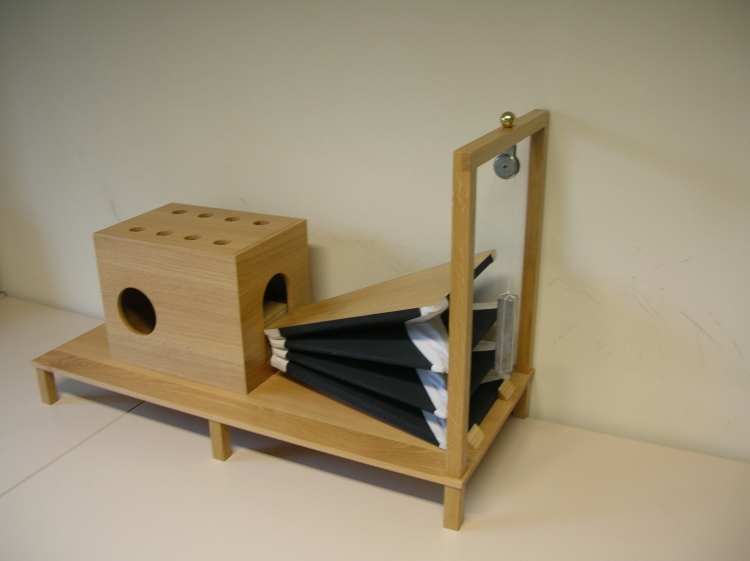
Farkas Kempelen’s other famous invention was a speech synthesiser built in 1788. To create such a device, he researched a lot in the fields of phonology and the physiology of speech. Therefore, the machine can be regarded as a functional representational model of the human vocal tract.
A replica of his speaking machine. Photo: Fabian Brackhane, Saarbrücken
He was also a fine architect who rebuilt the Carmelite monastery and temple of the Buda Castle as a theatre. This is the building PM Orban and his office moved into in January. Moreover, he created the fountains of Schönbrunn as well. He also designed a steam engine, and a special bed for the ill Empress Marie Theresa.
Kempelen designed a kind of typewriter for the daughter of one of his colleagues. Therefore, Mária Paradis was probably the first blind human ever who could read and write by touching instead of seeing.