The 500th anniversary of Reformation — the day when Martin Luther published the 95 theses on the gates of Wittenberg’s Cathedral — is upon us. Pestbuda.hu collected the 10 most significant churches belonging to the Hungarian Reformed Church in Budapest to commemorate this occasion.
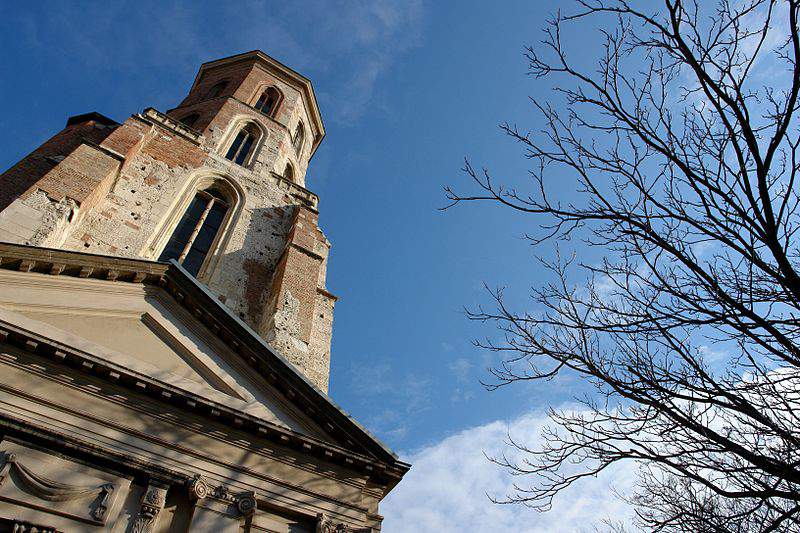
The Church of Mary Magdalene
Photo: Wikimedia Commons
The construction of this tower church began in 1250. As you might have noticed, it was before the beginning of Reformation. After the castle of Várhegy was conquered by the Ottomans in 1541, the local Calvinist community had the privilege to remain Christian. The pasha even requested some priests from Kassa to support the local Christians. The community was divided, though: the Lutherans were downstairs and the Helvetian Christians (who were later called Reformed) were on the gallery. Unfortunately, the whole community was scattered because of the later sanctions of the Ottomans and the Catholic Habsburgs.
Evangelical Church of Cinkota
Photo: Wikimedia Commons
Cinkota has the oldest Lutheran church in Budapest.
The settlement was abandoned during the Ottoman rule, but was repopulated with Evangelicals in the 18th century. They raised the church in 1709 based on the remains of the old church.
Reformed Church of Óbuda
Photo: Wikimedia Commons
The reformed community of Óbuda was formed in the mid-1700s. The church was finished in 1786 and a tower was added two years later. The building was based on the ruined walls of a royal castle. The church and its surroundings — due to their elevated position — served as an asylum during the great flood of 1838.
The church’s parsonage was renovated recently and was given unique wall paintings.
Deák Square
Photo: Wikimedia Commons
The first Protestant church of Pest was built on Deák Square. It was built during the late 1700s. It was built right next to Gránátos barracks, which was a good choice because Evangelical soldiers did not have to go to Cinkota every Sunday anymore. It used to have a bell tower, but it had to be demolished because it was not stable. It was further damaged by World War II and the construction of the metro.
Kálvin Square
Photo: Wikimedia Commons
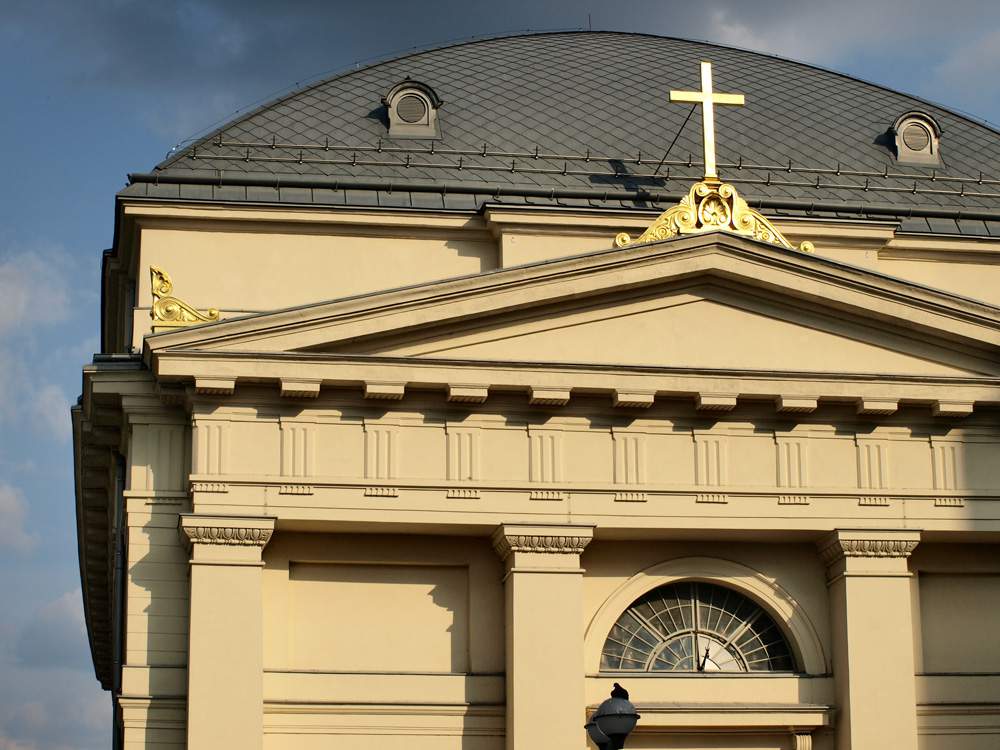
The Classicist building was built upon a former Ottoman graveyard in 1830. Just like the church in Óbuda, it also provided refuge to victims of the flood in 1838. The church was totally restored inside-out recently and it looks almost as new now.
The clock tower has been perfectly accurate for 170.
Slovakian Church in Rákóczi Street
Photo: Wikimedia Commons
Only a few people know about this small sacred place — however, it does not function today. As the population of Budapest was rapidly growing in the late 19th century, masses of Slovakians came to the capital, bringing their Evangelical faith with them. Prince Joseph provided a small land for them to construct their own church. The building was finished in 1867 in the area surrounded by residential buildings. The community of approximately 6,000 people was quartered by World War I and the relocations following it. Now only the small meeting house is used by the handful of Slovakians left there.
German Bilingual Church in Hold Street
Photo: Wikimedia Commons
Another church for people from abroad: the Evangelical church in Hold street was also built among houses.
During the Hungarian Reform Era, lots of Germans were attracted to Budapest.
They built the Neo-Gothic church building in Hold Street in 1878. World War II devastated almost everything belonging to the church. Fortunately, the bilingual services were restarted in March 2002.
Szilágyi Dezső Square
Photo: Wikimedia Commons
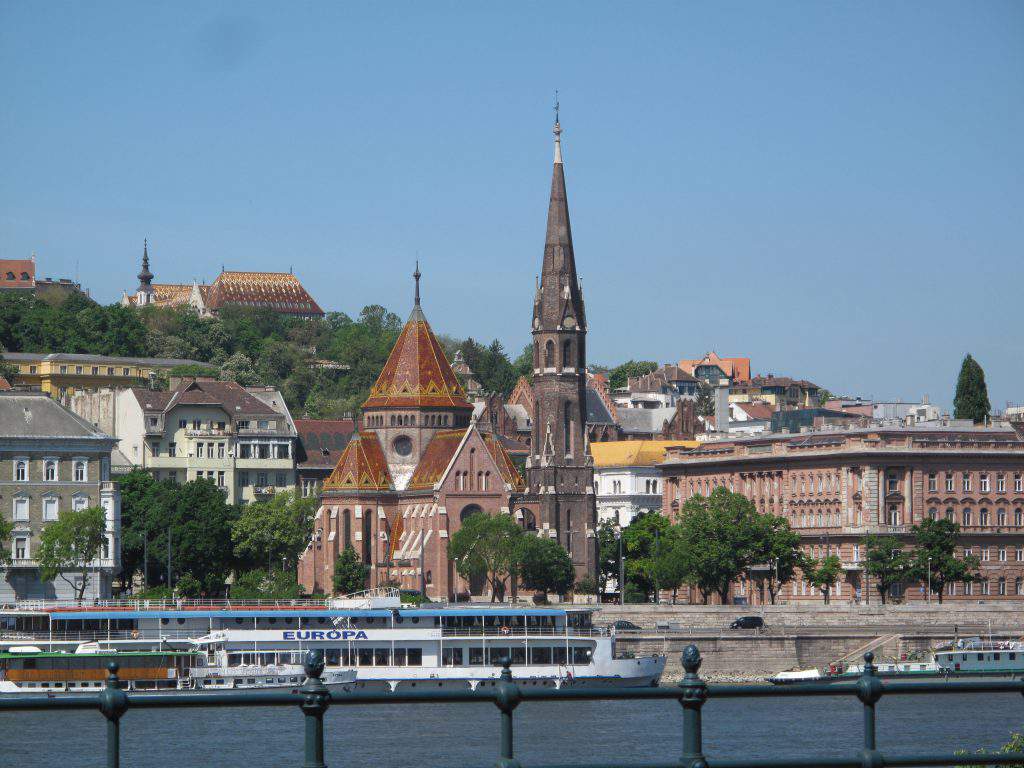
Reformation reached Buda much later than Pest: the first reformed church in Buda was constructed in 1889 in Neo-Gothic style. The building resembles to Matthias Church. The specialty of the building is that the table of the Lord with the open Holy Bible is right in the middle of the building.
Fasor Lutheran Church
Photo: Wikimedia Commons
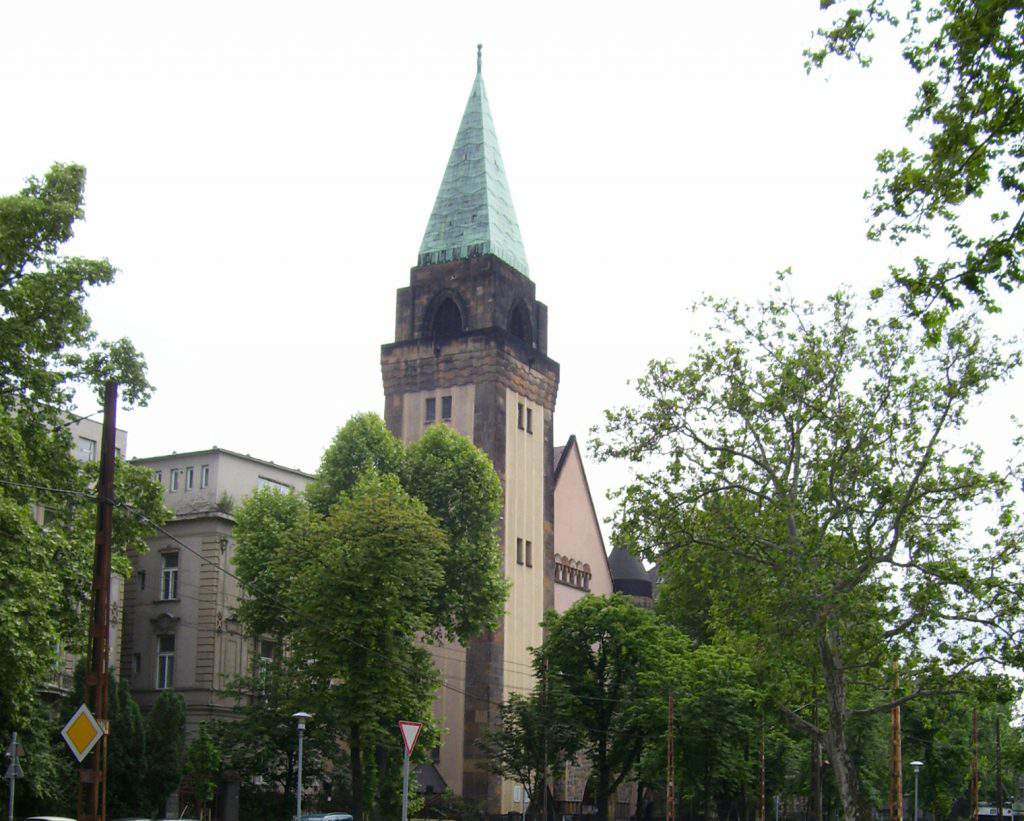
This church building reflects a new age: it has a central structure and lots of Zsolnay Manufacture’s works. The church was finished in 1913. The entire building gives the impression that it was designed by a single artist in every detail.
Pozsonyi Street
Another modern church on the Danube bank, but this one had a difficult beginning: it was built on soft ground which made the process difficult. The foundation consisted of six-meter-long steel rods and circles of concrete. The construction was finally finished in 1940. The first opening of the church did not last long as the war critically damaged it. Restoration came soon: in 1950, the services began again.