Minorities in Hungary #10 – Ukrainians and Ruthenians
Change language:
It is uncertain when the common history of the Eastern Slavic people and Hungarians began, but historians can track it back to the 13th century. It is said that they have come from Galicia, which is in the territory of Ukraine today. The earliest written source connected to this is a deed from 1326, which witnesses that King Coloman called the first Slavic dwellers of Nagyoroszi from Galicia.
Later, in the 17th century, multiple waves of Ukrainian and Ruthenian peasants fled from the wrath of some of the cruel Polish landlords.
Ukrainians and Ruthenians are difficult to separate in terms of Hungarian history, as they came mostly together from a similar direction. They are often referred to under the collective term “Carpathian Ukrainian” in Hungarian historical and ethnographic studies. The only known case when the Ukrainians came separately from Ruthenians was during the Ottoman conquest of the South when many of them settled in the Northeastern territories of Hungary. When the danger went away with the liberation of the country, they slowly moved southwards as well, spreading throughout Szabolcs County.
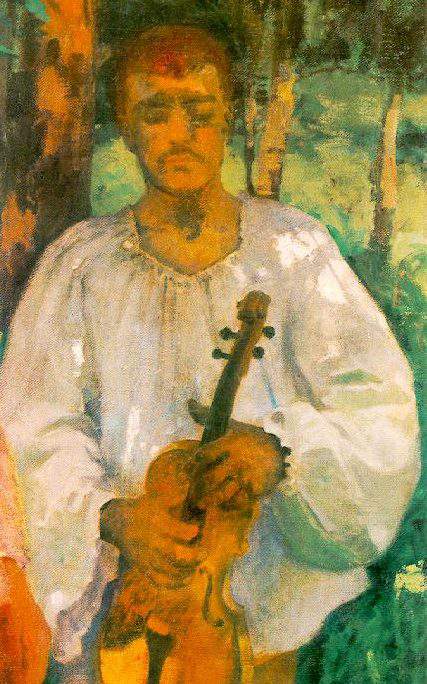
“Ruthenian Peasant Boy”, a painting from 1898 by Hungarian artist Károly Ferenczy. Photo: Wikimedia Commons
The name Ruthenian probably comes from the old expression “Rus”, which was the collective name of the Slavic population of the Kievian Rus — like the Russians.
That is the reason why Ukrainians and Ruthenians were both called by the latter’s name until World War I.
The two nations were also called “kisorosz” (Little Russian), “kárpátorosz” (Carpathian Russian) and “magyarorosz” (Hungarian Russian) in documents and media prior to World War II. After 1945, the “kárpátukrán” (Carpathian Ukrainian) came into knowing.
Many Ruthenians were called in by Hungarian landlords during the tripartition of Hungary. The most famous of these lords was Ferenc Rákóczi, who also convinced many of the Ruthenians settled by his family to fight on his side during the war of independence. Despite the failure of the uprising, most of the Eastern Slavic warriors stayed in Hungary afterwards.
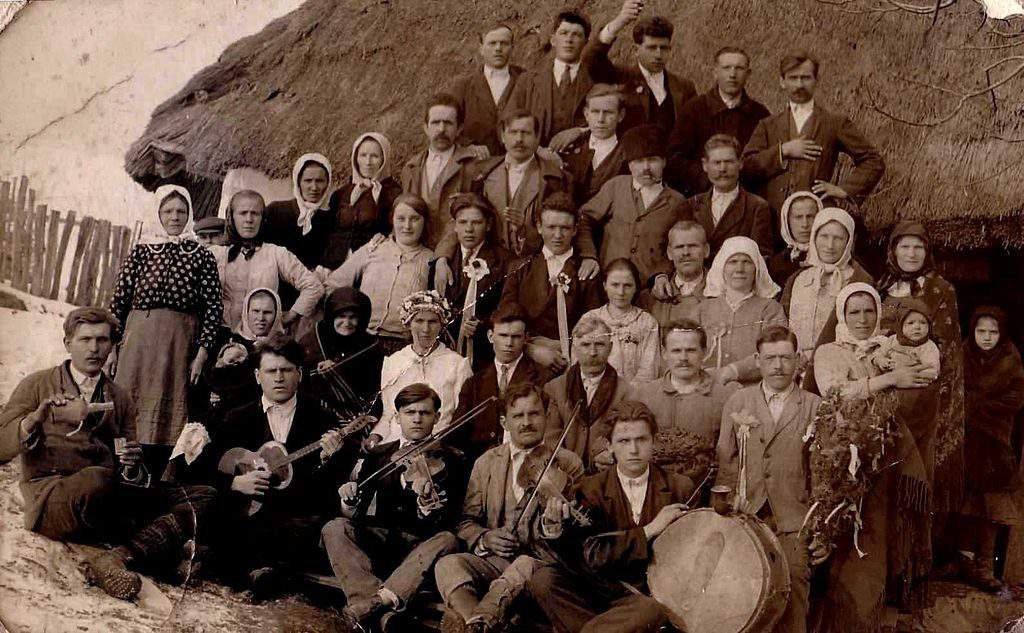
Ukranians in the Austro-Hungarian Monarchy, 1890. Photo: Wikimedia Commons
Maria Theresa, who was also famous for settling Romani people and Slovakians into Hungary, has also let in many Greek Catholic Ruthenians and Ukrainians to the southern parts of Hungary. This was the last major wave of the settlers. The descendants of those who were called in by Maria Theresa were living in the territories taken by Yugoslavia after the Treaty of Trianon, so they mostly live in Serbia now. The census of 1981 stated that 23,321 Ruthenians and 12,809 Ukrainians were living in the Vajdaság (Vojvodina).
Concerning Ruthenians living in Hungary, they mostly dwell in the eastern parts of Hungary; their greatest gathering areas are Borsod-Abaúj-Zemplén and Szabolcs-Szatmár-Bereg County.
However, the two most important settlements where the population preserved its Ruthenian identity are Komlóska and Mucsony. The Ruthenian language is spoken in about 30-40 settlements in Hungary.
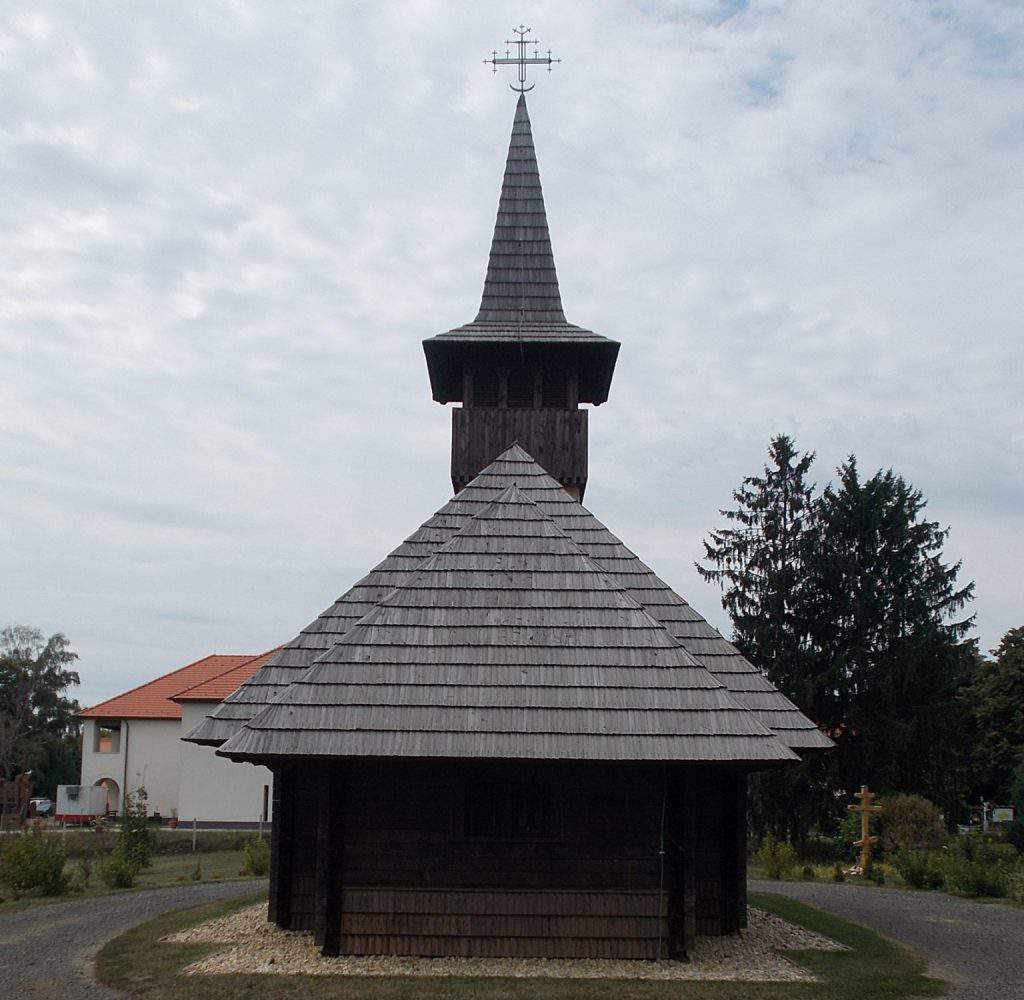
Ruthenian style wooden church in Máriapócs. Photo: Wikimedia Commons
The minority law in 1993 declared them as two separate minority groups, also evaluating the Ruthenians as an “ethnicity”, as their nation does not have its own country. The only country that does not admit them as a separate Slavic group of people is Ukraine.
The Ruthenian is a diaspora people, spreading from Ukraine and Romania to Croatia, from Poland to Serbia.
The Ukrainian minority has been celebrating the Day of the Ukrainian Culture in Hungary on 20 February since 1998. The Ukrainian municipal in Hungary also hosts the Taras Shevchenko Memorial Day every year.
As it was revealed from the population census in 2011, 5,633 Ukrainians and 3,323 Ruthenians are living in Hungary, which is 8,956 in total.
They are both from the area of Western Ukraine and they mostly live in the eastern parts of Hungary, but they can also be found in the capital and the southern regions as well. The Ruthenians are officially one of the historical minorities of the country. Budapest has a relatively large population of both: 1,643 Ukrainians and 643 Ruthenians live in the Hungarian capital, according to the most recent surveys.
There’s a man in the 1890 picture that looks like my great gramps how would I find out if it is him?
Thank you
Dear Cherie, you could contact the site from where we have obtained the images, and perhaps they can provide you with further information. We hope that you will manage to find out more soon! 🙂


There’s a man in the 1890 picture that looks like my great gramps how would I find out if it is him?
Thank you
Dear Cherie, you could contact the site from where we have obtained the images, and perhaps they can provide you with further information. We hope that you will manage to find out more soon! 🙂