Most of the Serbs in Hungary came to seek shelter after losing the battle at Rigómező in 1389. Prince Lazar of Serbia attempted to halt the Ottoman invasion with a mixed army of different Balkan Slavic troops, but he failed. As Serbia fell into Ottoman hands, a large part of its population fled North.
The first Serbian settlement in the territory of Hungary was Kevevár — it is known today under the name Ráckeve, “rác” meaning Balkan Slav in older Hungarian dialects. The Serbian men able to fight did not rest for long in their new home, as János Hunyadi led them against the Ottomans at Rigómező once again in 1448. Unfortunately, the result was similar to the one 60 years before. This led to another wave of Serbian refugees.
They came mostly to the territories that were abandoned by native Hungarians alongside the great rivers and the Serbian border.
Numerous Orthodox Serbian families chose to live under the rule of the Catholic Hungarians rather than the Muslim Ottomans. They came to Hungary almost continuously between the end of the 14th century and the middle of the 15th century, until the fall of the Serbian vassal state in 1459. They were the protectors of the Southern border as members of the Hungarian king’s army – note that their role at the border has not changed much, hence the cooperation concerning the Serb-Hungarian border today.
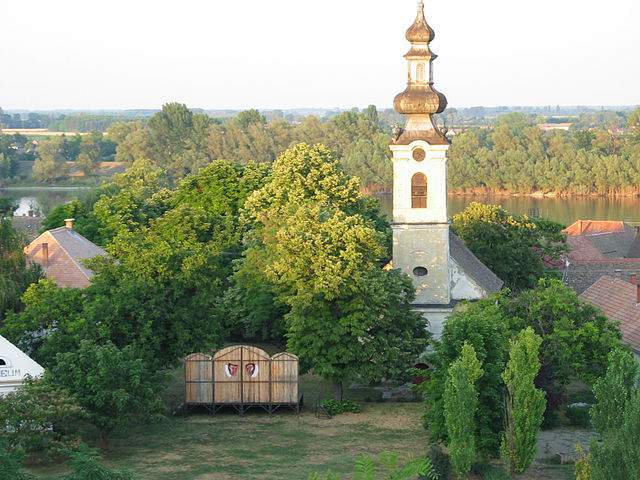
A Serbian Orthodox church in Dunaszekcső. Photo: Wikimedia Commons
1683 brought change for Hungary and all its minorities, as the liberation of the kingdom has begun. By 1699, the Ottoman occupation ceased throughout the entire country. Interestingly, not only the Ottomans left Hungary at that time, but many Serbs followed them. It was only nine years after Patriarch Čarnojević III’s „Velika seoba Srba” (“The Great Serbian Exodus”) in 1690 which brought a vast number of Serbian people to Southern Hungary. This was the process during which a mass of 60,000 Serbs crossed River Danube and Sava and reached up to Szentendre.
Their most important gathering spots were in Baranya, Bácska, Eszergom and Komárom, alongside the Danube.
Franz Joseph established the union of the Voivodship of Serbia and Tamiš Banat I in 1849 from the territories populated by Serbians in the southern area of the Austro-Hungarian Monarchy.
After the Peace Treaty of Trianon, most of the Serbian population belonged to Yugoslavia. The international agreements of 1920 made it possible for them to move to the newly formed state. The remaining Serbs were dwelling in Baranya, Csongrád and Békés, as well as in Szentendre and Ráckeve near Budapest.
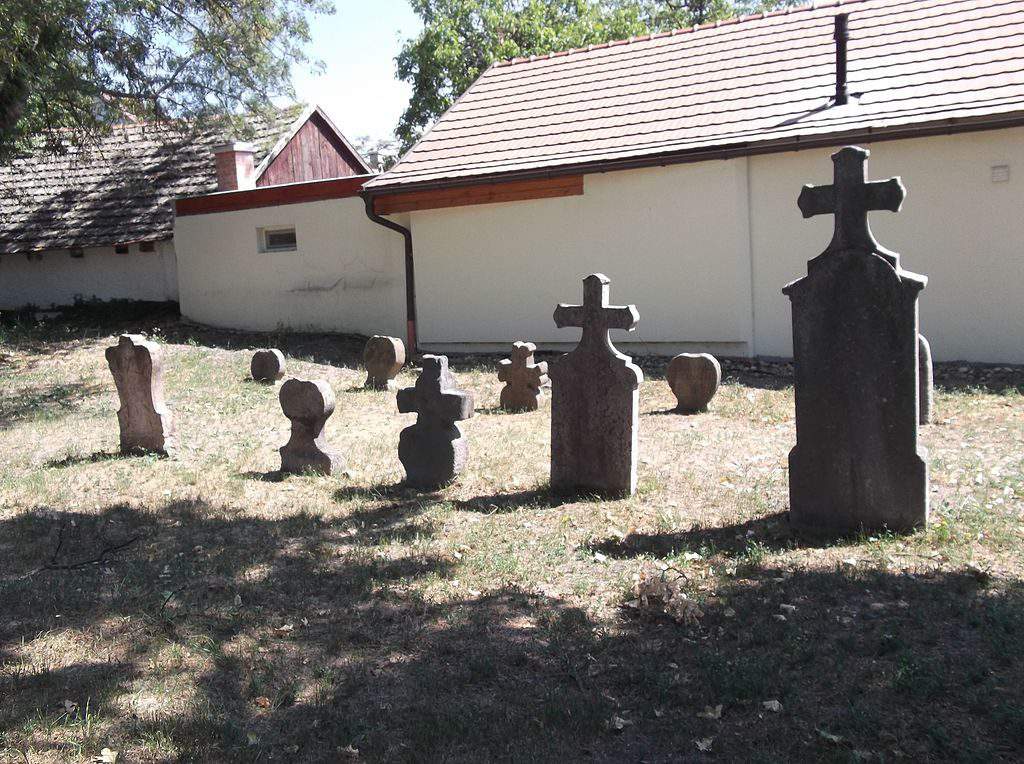
An ancient Serbian cemetery in Szentendre. Photo: Wikimedia Commons
Nowadays, there are about 40 settlements in Hungary where a significant number of Serbian people live. However, only a fourth of them have actual Serbian social life with education in Serbian language or clerical and cultural life.
The heart of the Serbian culture in Hungary is obviously in Szentendre: the city near Budapest can be considered the capital of Serbs in Hungary from the perspective of culture, education and society.
During the population census of 1990, 2,953 people marked Serbian as their mother tongue, and 2,905 said to belong to the Serbian nation. 11 years later, their numbers increased to 3,388 and 3,816, respectively. Besides these, 4,186 people claimed that they use the Serbian language in their environment, while 5,279 stated to be connected to the Serbian traditions and culture.
Until 1948, the education of the Serbs in their own mother tongue was provided by the denomination school system. These were nationalised after that year or were assimilated by the common Balkan Slavic institutions. The independent Serbian school network was established again in 1992. Serbian kindergartens can be found in Budapest and eight other cities and settlements in Hungary, while the only Serbian high school operates in the capital. Serbian teachers are mostly trained at Eötvös Lóránd University and the University of Szeged.
Magyar Rádió has been broadcasting programs in Serbian language since 1992.
Several figures in the Hungarian cultural life have Serbian origins, for instance, one of the greatest poets of Hungary, Sándor Petőfi (Petrovics being his original family name), the folk band Vujicsics or the Sztevanovity brothers: songwriter Dusán and singer/musician Zorán.
The most important achievement of the cooperation of Serbian and Hungarian communities in Hungary is the tolerance camp hosted in Szabadka (Subotica) and Szeged, which served the purpose of bringing the Serbian and the Hungarian youth closer to each other through a series of common activities.