Subscribe to our social channels to get the latest news about Hungary!


Geneticists at Harvard have analysed hundreds of ancient DNA samples, revealing that the origins of Uralic languages—including Finnish and Hungarian languages—go back much further than previously believed.
Linguists and genetic researchers have long been divided over the origins of Uralic languages. According to traditional theories, the cradle of this language family lies near the Ural Mountains, some 860 miles east of Moscow.
However, modern research—particularly ancient DNA analyses—suggests that the ancestral communities of the Finno-Ugric languages may have lived much further east, in what is now Yakutia in eastern Siberia, from where the language family spread westwards.
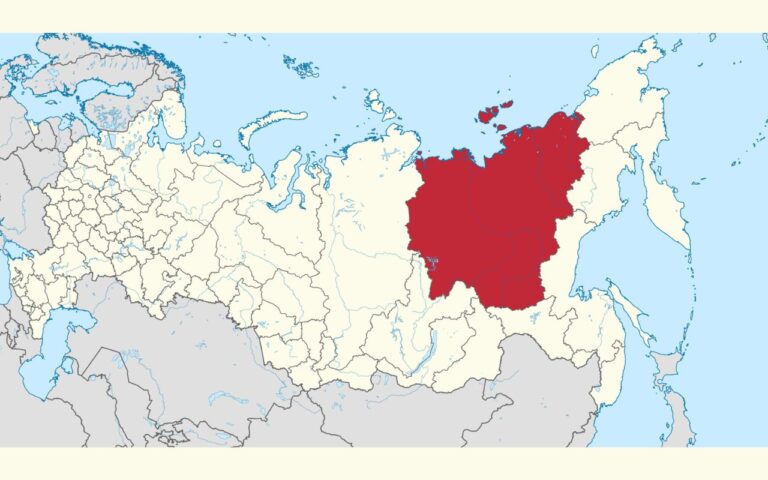
The study was led by two recent Harvard graduates in collaboration with ancient DNA expert David Reich. The team analysed more than 180 new Siberian DNA samples and compared them with over a thousand previously collected samples, representing roughly 11,000 years of human history.
Their findings, published in the scientific journal Nature, identified ancestral populations of two major linguistic families—including the Uralic languages.
According to the results, communities that spoke the ancestors of Uralic languages lived in eastern Siberia, in present-day Yakutia, about 4,500 years ago—far from the Urals.
The discovery was made possible by years of work from Alexander Mee-Woong Kim, who collected ancient DNA samples from rarely studied regions in Siberia.
The analysis showed that many present-day Uralic-speaking communities share the same genetic marker that first appeared in samples from Yakutia 4,500 years ago. This marker is almost entirely absent in other linguistic and ethnic groups.
Genetic data indicate that the spread of languages was not random but tied to specific communities. This interpretation is supported by archaeological evidence, particularly the Seima–Turbino phenomenon. Around 4,000 years ago, new bronze weapons and tools appeared in northern Eurasia, ushering in long-distance trade and new social connections—mechanisms that likely facilitated the rapid spread of languages across the continent.
“Bronze really catalysed long-distance trade. To use it, societies had to form new social ties and institutions,” said study co-author Tian Chen (T.C.) Zeng.
Genetic traces linked to Yakutia are also found among mobile hunter-gatherer communities, who likely carried Uralic languages to the indigenous Sámi of northern Scandinavia—and even as far as modern-day Hungary, which today is a linguistic island among Indo-European languages.
The research showed that the ancient Siberian genetic heritage that appeared in Yakutia 4,500 years ago is still present among Uralic-speaking populations today—but at widely varying levels:
“But based on ancient DNA analysis of medieval Hungarian conquerors, we know that the people who brought the language did carry this ancient genetic marker,” the researchers emphasised.
This study analysed hundreds of new and thousands of older DNA samples, providing conclusions supported by robust statistical foundations. While uncertainties remain—such as sample sizes, regional coverage, and chronological gaps—the research offers the most comprehensive and up-to-date genetic evidence on the origins of the Finno-Ugric languages.
Read more from us:
Click for more language-related articles.
To read or share this article in Hungarian, click here: Helló Magyar
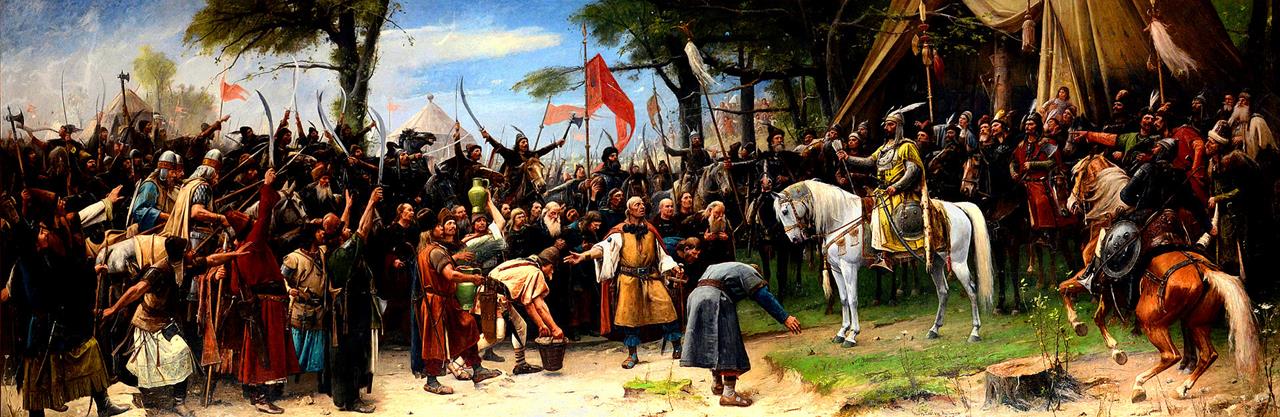
Featured image: Mihály Munkácsy’s famous painting, “The Conquest of the Carpathian Basin”. Here is the full painting:


Love reading the Hungarian news, thanks for the opportunity
Thanks for sharing this. It led me to quite a rabbit hole of different related and distantly-related topics to read about. I’m not sure if I would have encountered the article otherwise, especially in a reasonable timespan.