Subscribe to our social channels to get the latest news about Hungary!


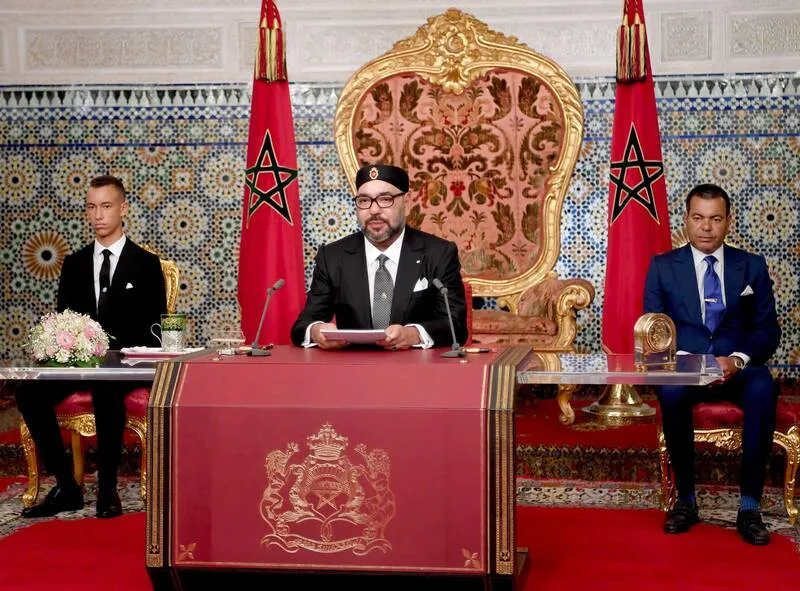
Every year, the Kingdom of Morocco celebrates the ‘‘Green March’’ on 6th November, and this year, this event coincides with the adoption by the UN Security Council of a Resolution regarding the Sahara issue. On this occasion, Daily News Hungary is pleased to give its readers a compilation of articles about these important events for Morocco, combined with an extensive review of the relations between Hungary and Morocco, as well as the perspectives of their development for the months and years to come.
The UN Security Council adopted last Friday, 31 October, the Resolution 2797 on the issue of the Moroccan Sahara. On this occasion, His Majesty the King Mohammed VI delivered a very important Speech emphasising the significance of this Resolution, which marks a historic shift in the negotiation process led by the United Nations.
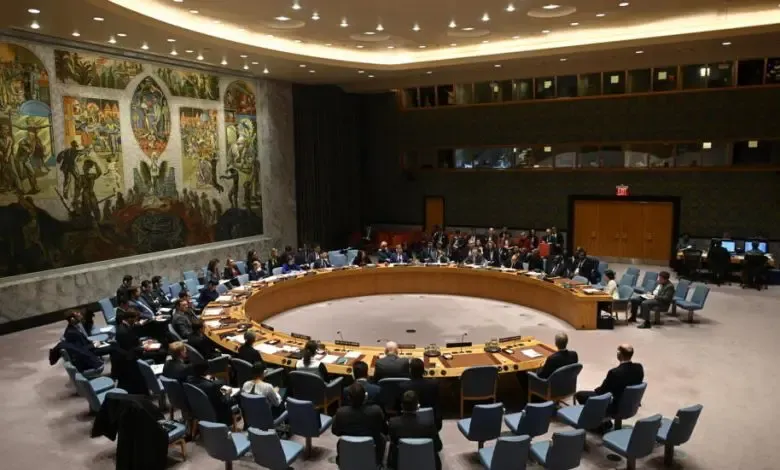
Indeed, by this Resolution, the UN Security Council officially recognises and supports Morocco’s Autonomy Plan as the only credible and feasible solution to this issue while underlining that henceforth, all the negotiations related to this issue will take place within the framework of the Moroccan Autonomy initiative and the Moroccan sovereignty. The Moroccan Autonomy Plan will be updated within the next few months and presented to the United Nations.
In this context that among the 15 members of the UN Security Council, the Resolution 2797 was adopted by 11 votes in favor and zero vote against, reflecting the overwhelming support of the Internaitonal community and the International legitimacy to the rights of Morocco and his efforts to fulfill its territorial integrity from the city of Tangier in the Noth to the city of Lagouira in the extreme south of Morocco.
Moreover, His Majesty the King Mohammed VI emphasised that the latest international developments concerning the territorial integrity of Morocco should not be considered a victory but steps toward a lasting solution that preserves the dignity of all parties, in order to put an end to the political stalemate and consequently, unlock the great potential of cooperation, economic development, stability and regional integration.
Following the adoption of the 2797 resolution, wide and massive celebrations took place in Morocco, where hundreds of thousands of people gathered in the streets, holding portraits of His Majesty King Mohammed VI, waving flags and singing patriotic songs across all the cities of the Kingdom, especially in the Southern Provinces, which have seen record participation in these celebrations.
To millions of Moroccans, the celebrations that took place all over the Kingdom are reminiscent of the great patriotic spirit of the Green March, which we celebrate this year, the 50th anniversary.
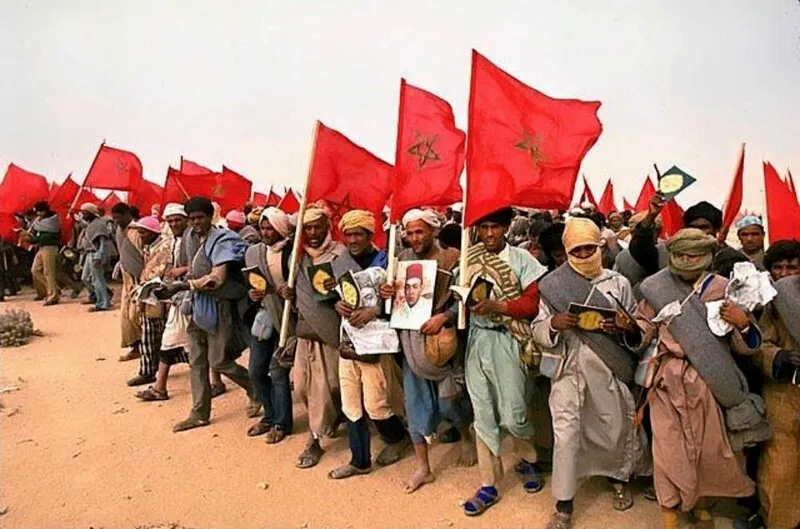
The Green March stands as an extraordinary chapter in the history of Morocco. This historic event, which took place on 6 November 1975, is commemorated annually as a national holiday in Morocco.
This year, Morocco celebrates the 50th anniversary of the Green March, which is by far more than just a historic milestone; it is a strong testament to Morocco’s restoration of its territorial integrity and the recovery of its lands from foreign colonisation.
Fruit of a unique Royal Leadership and Vision, it unfolded in the form of a peaceful march of 350.000 people from the north of Morocco to its southern provinces, recalling in this regard, the rich and very old ties between the people of this region and the Moroccan Monarchs, which date back centuries.
The Green March is also an annual occasion for Morocco to pay tribute to the enduring spirit, the sacrifices and the unity of all the persons involved in this historical event that evokes deep patriotism and pride among Moroccans and will remain a source of inspiration and collective memory for generations ahead.
Since the Green March in 1975, and under the leadership of His Majesty King Mohammed VI, Morocco has achieved major successes with regard to its territorial integrity.
Indeed, over the past years, we have been witnessing a strong and steady international dynamic in favour of the Moroccan stand regarding the regional dispute over the Moroccan Sahara. In April 2007, Morocco put forward the autonomy plan as a unique and definitive solution to this artificial dispute, and since that date, this plan has been described as serious and credible in all UN Security Council resolutions up to this day.
Not only by the UN Security Council, the international momentum driven over the years by His Majesty King Mohammed VI, in favor of the Moroccan Sahara and in support of the autonomy Initiative continues to grow from countries all around the world mainly the USA, France, UK, Spain, Germany, Portugal, Arabic Gulf countries and many other African and Latim American countries. In this context, Hungary is also among the countries supporting the Moroccan autonomy plan as the basis for the solution regarding this issue.
It is also worth mentioning the highly commendable opening of diplomatic consular representations by many Arab, African, American and Asian countries in the Southern region of Morocco.
The above-mentioned dynamic and the strong political signals reflect the international community’s conviction on the need to put an end to this regional dispute, within the framework of Morocco’s national sovereignty and territorial integrity.
Although the Moroccan Sahara has experienced sustained development for decades, this region has been witnessing a new era since 6 November 2015, following the launch, by His Majesty King Mohammed VI, of a huge development program for the southern provinces of Morocco.
With a budget of USD 14 billion, this ambitious plan has completely transformed this region and continues to do so to this day, with major projects covering all aspects of political, social, economic and cultural life. Consequently, the southern region of Morocco has one of the highest rates of human development indexes on the continent.
To this day, the Southern Provinces of the Kingdom are continuously experiencing profound changes in terms of development, as evidenced by the remarkable achievements in various economic fields such as industry, agriculture, the agri-food industry, tourism, energy, renewable energies, mining, maritime industries and fisheries.
Thanks to this commitment, the region’s infrastructure has flourished. Expressways, industrial parks, logistics zones, and energy platforms have reshaped the region’s landscape, establishing it as a regional economic hub.
Indeed, this reform dynamic is further reinforced by projects with a strategic dimension such as the Dakhla Atlantic Port which will connect Europe and Africa, as well as the Atlantic Initiative, launched by His Majesty King Mohammed VI, giving access to the landlocked countries of the Sahel region to the Atlantic Ocean, which will make the Moroccan Sahara a logistics and commercial platform between the Kingdom, Europe, Africa and the Americas.
Such development projects bring countless economic, commercial and industrial opportunities that are generating enthusiasm worldwide, as evidenced by the holding, on October 9, 2025, of a major business forum between the General Confederation of Moroccan Enterprises (CGEM) and the Movement of the Enterprises of France (MEDEF), which will be followed by many other similar events. Morocco has already invited Hungarian companies to seize the countless investment opportunities that this region offers in all areas, as several countries are already planning huge investments in this area of Morocco.
Based on shared values of mutual respect, promotion of peace and cooperation, political relations between Morocco and Hungary are excellent and have witnessed in the past few years a great and steady dynamic that laid strong foundations to further strengthen the partnership between the two countries in all fields.
Last year, Morocco and Hungary celebrated the 65th anniversary of the establishment of their Diplomatic relations. On this occasion, His Excellency Mr Nasser Bourita, Minister of Foreign Affairs, African Cooperation and Moroccan Expartiates, signed with His Excellency Mr Péter Szijjártó during his visit to Morocco, a Joint Declaration which serves as an ambitious roadmap for strengthening relations between the two countries in all areas for the years to come.
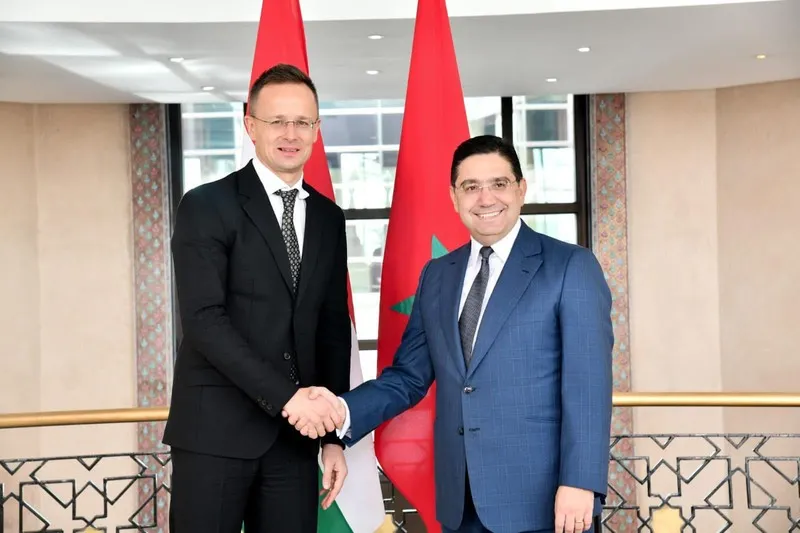
Contacts through the diplomatic channels take place on a regular basis and also in the form of continuous political dialogue and high officials’ visits at various levels, both in Rabat and Budapest. Cooperation between the two countries within International Organisations is also excellent, marked by continuous mutual support in various international forums.
Furthermore, and despite being quite far from each other, Morocco and Hungary share a lot of points in common, such as rich history and strategic geographical positions, making the two countries undeniably important crossroads between east and west, north and south. It is worth noting also that these configurations put our two countries at the crossroads of real security challenges.
Finally, bilateral relations are also very rich in the cultural field with quite a big Moroccan student community in Hungary, which is growing year by year, reflecting the quality and confidence in the Hungarian educational system.
The Joint Declaration signed in November 2024 is a very important step in bilateral relations between Morocco and Hungary. It paves the way to further expand the partnership between the two countries in all areas.
In this context, both Ministers agreed to build on this dynamic to reinforce the cooperation in key sectors of particular interest, such as economy, industry, automotive industry, agri-food industry, agriculture, energy and tourism.
Indeed, the two countries are pursuing very similar strategies regarding economic diversification, and this offers limitless opportunities for bilateral cooperation, especially between the business communities of both sides. We recall in this regard the real success of the fifth joint economic commission that took place in Rabat in October 2024.
Thanks to these efforts, and since 2023, Morocco has been the first trade partner of Hungary in Africa with a trade turnover of hundreds of millions of euros and this year, a new record of +17% has been reached from January to August 2025 compared to the same period in 2024.
But both countries are convinced that this volume of exchange remains below the potential of cooperation and are confident that it will continue to expand in the years to come, taking into consideration the growing interest of Hungarian companies in Morocco as a strategic hub to expand into Africa, particularly for exports and investments.
There is also a very important point that needs to be outlined is that Morocco has 55 free trade agreements (FTAs) granting access to a market of over one billion consumers, as it has agreements with the European Union, the United States, Arab and African countries. This provides investors with privileged access to a huge market, offering opportunities for growth across sectors like consumer goods, digital solutions, and infrastructure. Morocco has successfully built an economic model based on its integration with the global economy through these agreements.
Written by: Embassy of Morocco in Budapest
Disclaimer: the author(s) of the sponsored article(s) are solely responsible for any opinions expressed or offers made. These opinions do not necessarily reflect the official position of Daily News Hungary, and the editorial staff cannot be held responsible for their veracity.
Become a guest author at Daily News Hungary: write for us!

 ZH
ZH IT
IT DE
DE


I support Morocco’s approach but riddle me this:
Morocco marched into “Western Sahara” and effectively annexed it. The Polisario Front fought against it, including through terrorism. “The World” now nevertheless recognizes Moroccan sovereignty over the region.
Israel seized Judea and Samaria in a defensive war. Various Palestinian factions fought against Israel continued hold on the region, including through terrorism (far worse than Polisario’s). “The World” demands the Palestinians be given a state and Israel relinquish said territories.
I guess the Moroccans are lucky they’re not Jewish; otherwise, it’d be a whole different story…
The article is propagandistic and ignores important details related to the resolution 2797 adopted by the UN Security Council and the history of Western Sahara issue. Let me clarify to the Hungarians the following:
– The international Law and Justice confirm that the Western Sahara is an issue of decolonization and has to be solved according to the United Nations Charter and resolutions that confirmed the right of self-determination. It is important to underscore that the Sahrawi cause remains discussed within the 4th UN Commission as a decolonization issue. The UN resolutions 34/37 (21 November 1979) and 35/19 (11 November 1980) identify clearly who is the occupier of Western Sahara.
– The press article referenced above ignored to mention that the new resolution extends the mandate of United Nations for the Referendum in Western Sahara (MINURSO), which is responsible for organizing a self determination referendum in Western Sahara, allowing the Sahrawi population to choose their future. The MINURSO remains active on the ground to this day.
– This article also ignored that the new resolution reaffirmed the inalienable right of the people of Western Sahara to self-determination and highlights the need to reach a mutually acceptable political solution, in accordance with the purposes and principles of the UN Charter, including the right to self-determination.
– There is nothing in the resolution that qualifies the autonomy plan as “the only basis ” and there is no recognition of any rights of the Moroccan Occupier in Western Sahara. Sot your proaganda is not funded and Morroco is known to be a layer, with the complicity of the Izraéli occupier. Palestine and Westerna Sahara are two issue of occupation.
-The Security Council has only stated that the autonomy plan could/could /could be a solution to the conflict (among other solutions) and did not approve its implementation. So if you want to thruth , go listen to the special envoy of UN Secretary general who confimed thta the resolution dit not fix any result and the resolution recognize of the right of Watern Sahara for self determination.
– Indeed, the new resolution explicitly encourages the parties to submit other proposals that could encourage a definitive and mutually acceptable solution to the Western Sahara conflict. One of the two parties is the Front “Polisario” which is legitimately recognized as representative of the Sahrawi Population by the UN Organization and its resolutions 34/37 (21 November 1979) and 35-19 (11 November 1980).
These same resolutions recognize the legitimacy of the struggle of the people of Western Sahara against the occupation and its right to self-determination, which is a fundamental principle of decolonization.
Morocco and Israel are both occupiers of a land that is not their own… so occupiers support other occupiers… but you have to see it in history: never has an occupation remained.
It is important to mention that whatever recognition Morocco is seeking, the last word will be that of the Sahrawi Population.
the Hungarian opinion has to know that King Hassan 2 accepted to sign with the Polisario an agreement in 1991, and in front of the UN General Assembly, he expressed as well as his Minister of Foreign Affairs of that time, his support to organize a referendum for the Saharawi Population and to accept its results.
Morocco is a rogue State and never implements its commitments… the Court of Justice of the European Union confirmed the legitimacy of the Sahrawi cause and the right of self-determination for the Sahrawi population….. Whatever Morocco does, the truth will prevail. Do not worry ….in this world and life, there is a Justice that will prevail one day.
the fake celebration raised in this article took place in Morocco and not in Western Sahara, because in Morocco there are slaves and not citizens and if you compare Moroccans to the Sahrawi you will see a big differences in culture and behaviors…another proof that the Western Sahara was never Moroccan. So the International Court of Justice and the European Court of Justice have both rights ro conclude that Western Sahara is separate from Morroco .
To the keyboard warriors up there, I want to state that your comments are just full of lies 100 % lies. They just show how painful was the Moroccan diplomatic and historic victory within the UNSC, there is a good proverb i know very much that they’re familiar with, the screaming is at the level of the pain. Just to state the evidence, once again, to bring the truth and the reality of this issue, the Sahara has always been Moroccan since the dawn of History, way beyond the creation by colonization of those whose screaming separatism now while they’re doing the exact opposite to any other opinion within their failed countries where people are oppressed to unimaginable levels. Like I said the Sahara has always been Moroccan and more importantly it will always be and stay Moroccan to the end of times.